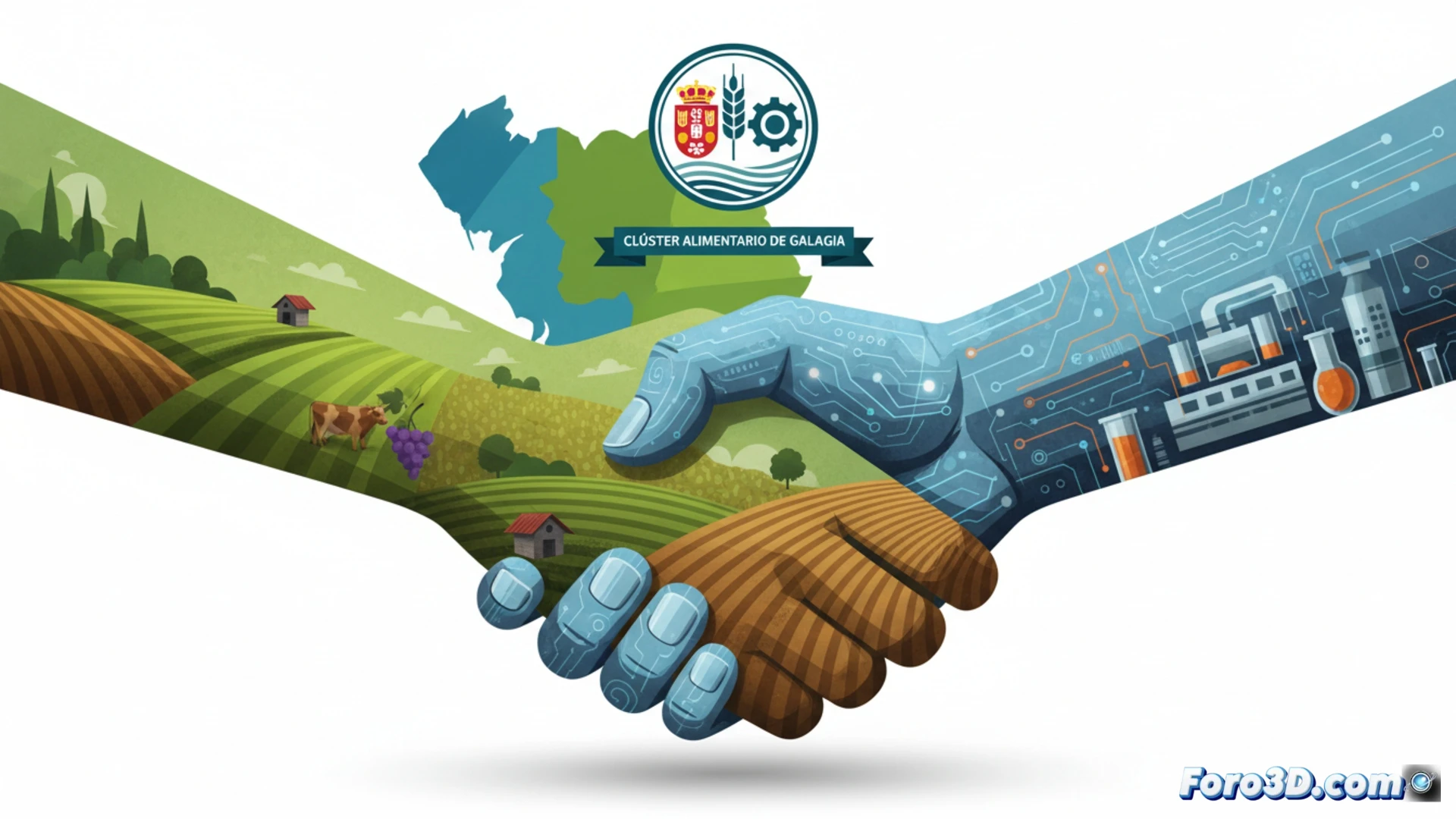
The recent alliance between the Consellería de Medio Rural and the Galician Food Cluster sets a clear course: innovation and modernization of the primary sector. In this context, 3D visualization and modeling technologies emerge as underutilized strategic tools. Their ability to create precise and interactive representations can be the ideal vehicle to materialize the objectives of knowledge transfer, commercial improvement, and education promoted by this cooperation.
Practical applications of 3D in nutrition and commercialization 🚀
The implementation of 3D can revolutionize several fronts. In nutritional education, interactive food models would allow breaking down their composition, origin, and benefits intuitively, promoting conscious eating. For commercialization, virtual design and prototyping of packaging reduces costs and time. Additionally, immersive digital catalogs with 3D modeled products facilitate the opening of international markets, allowing buyers to evaluate qualities without travel. These tools are also key to visualizing and optimizing sustainable supply chains, simulating complete production processes to identify efficiency improvements and reduce environmental footprint.
Beyond visualization: a bridge to the future 🌉
Integrating 3D is not just a technical matter, but a strategic vision. It acts as an understandable bridge between the producer, the product, and the end consumer, adding value and transparency. For Galicia, adopting these tools means not only modernizing, but also positioning its agri-food sector as a pioneer in digital innovation, attracting new talent and ensuring future competitiveness. Institutional collaboration is the perfect moment to incorporate this digital dimension into the comprehensive rural development plan.
How can 3D printing of personalized foods, based on nutritional data, transform food education and the competitiveness of the Galician agri-food sector?
(P.S.: virtual reality for kids: where carrots taste like pizza (if you program the shaders right))