The Spanish futsal team, European champions, faces friendlies against Finland with a renewed squad and multiple absences. This scenario, far from being a problem, can be the ideal testing ground for 3D technology. 3D analysis and simulation tools would allow Jesús Velasco's technical staff to accelerate the tactical integration of the new faces and analytically compensate for the absence of key figures during the training camp in Las Rozas.
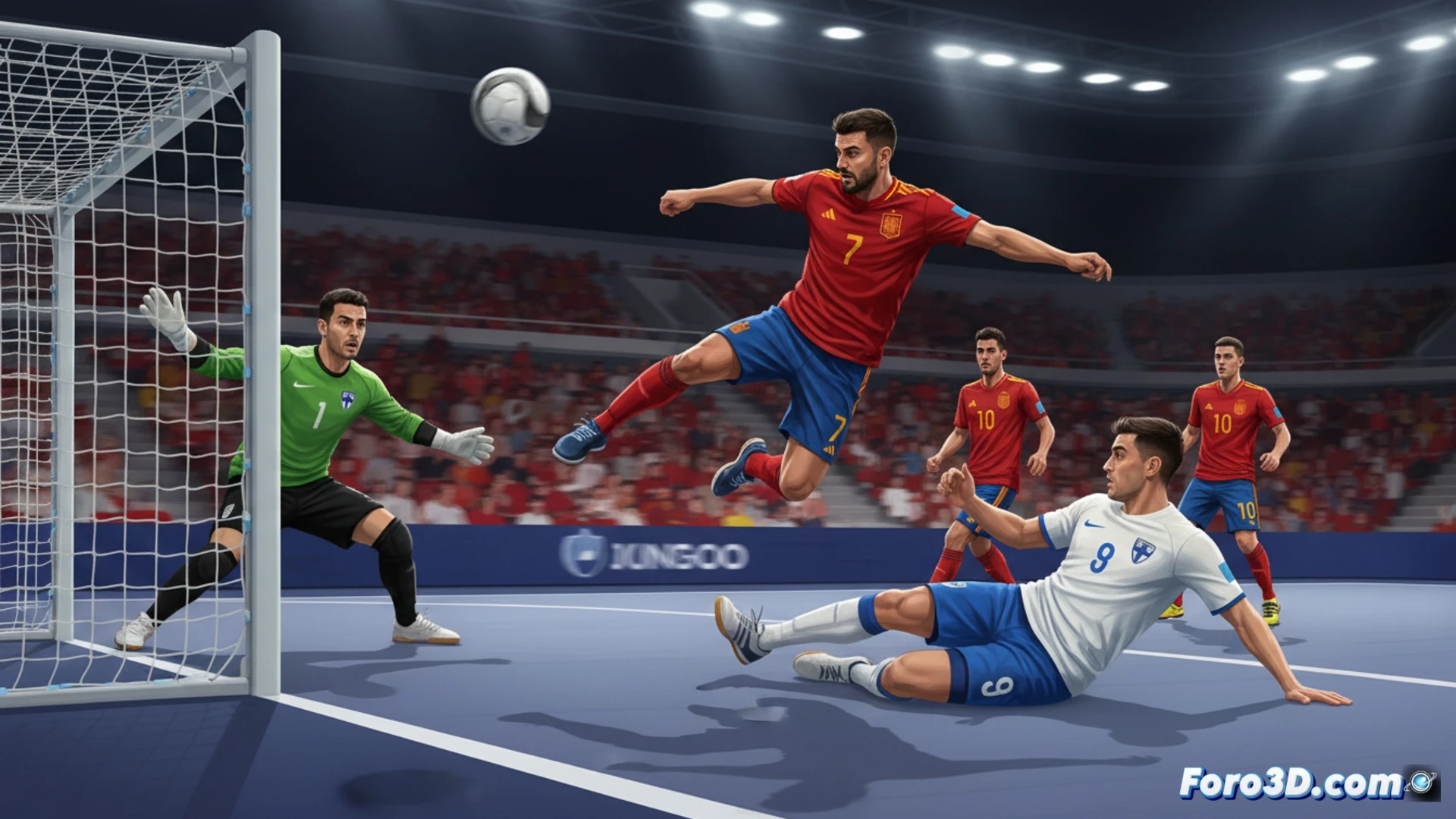
3D Simulation for Tactical Analysis and Rapid Adaptation 🤖
The integration of new players like Antonio Navarro or the three elements from Jaén requires deep analysis and rapid adaptation to the team's systems. Through 3D digitization of their movements and recreation of specific plays, the technical staff can visualize and quantify their tactical fit in record time. Additionally, against an opponent like Finland, their playing patterns can be simulated in a virtual environment, allowing the squad to train very specific strategic responses. This technology is crucial for communicating complex concepts and for returns, like that of Eric Martel, to reconnect with the collective dynamics efficiently.
The Future of Preparation: Digital Substitutes and Biomechanics 🚀
Forced absences pose a challenge, but they also highlight the future path. 3D technology not only simulates plays, but can create digital substitutes for absent key players, to rehearse combinations. Likewise, 3D biomechanical analysis of the summoned players helps optimize workloads and prevent injuries in the final phase of the season. This technological approach turns the preparation in Las Rozas into an advanced laboratory, where visual and metric information in three dimensions becomes an assistant coach of incalculable value.
How is the Spanish futsal team using 3D scanning and modeling of its players to optimize tactical and physical preparation against opponents like Finland?
(P.S.: reconstructing a goal in 3D is easy, the hard part is making it not look like it was scored with the leg of a Lego doll)