Kylian Mbappé's recent knee sprain injury, and former footballer Luis Figo's comments on playing through discomfort, open a crucial debate. Figo speaks from experience, about decisions made without all the information, sometimes with sequelae. Today, 3D technology changes the landscape. Simulation and biomechanical analysis tools allow visualizing, quantifying, and predicting risks, transforming an intuitive decision into a data-based one, benefiting the player, the medical staff, and the team.
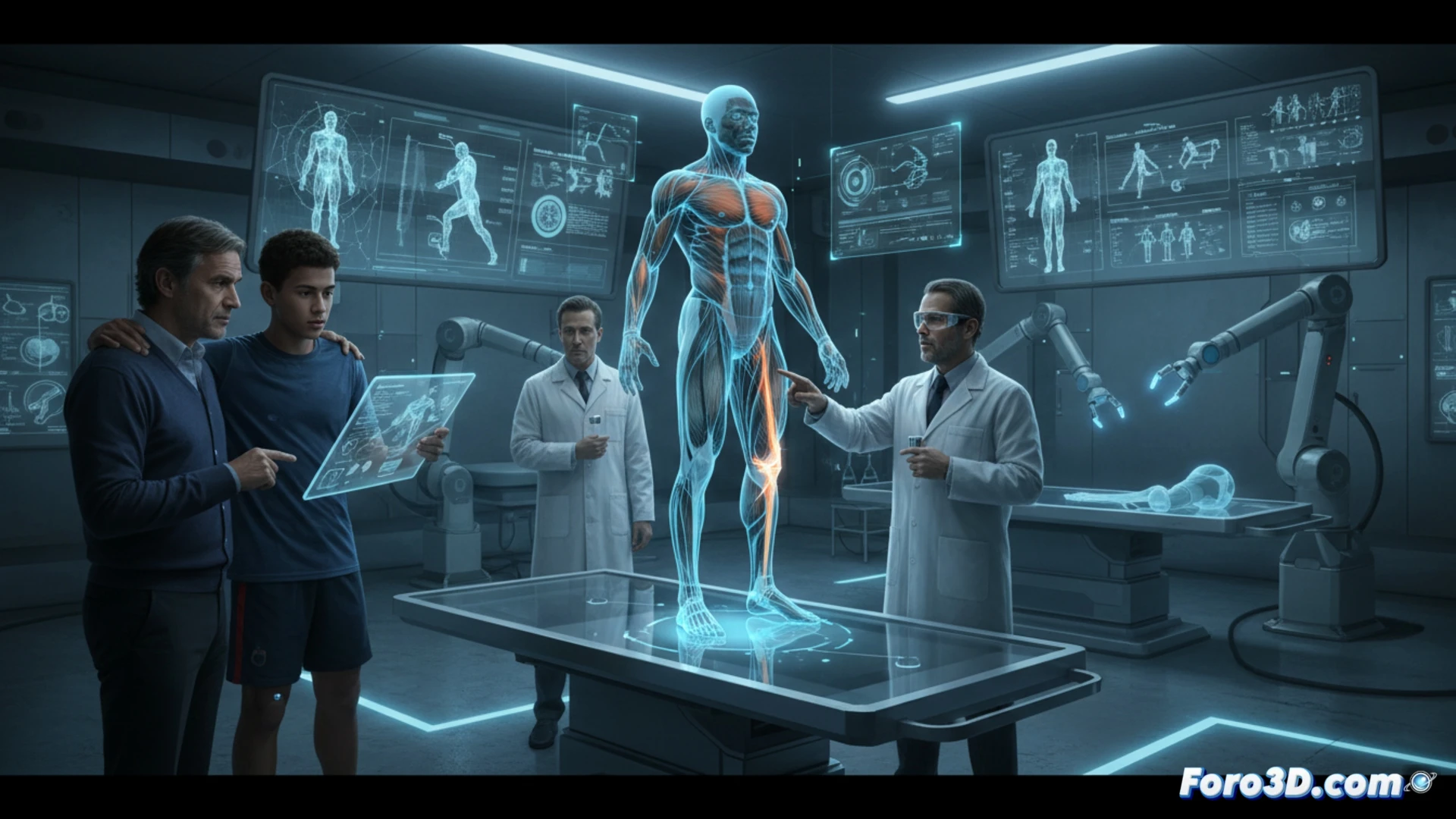
Digital twins and biomechanical simulation: beyond MRI 🤖
MRI shows the damage, but 3D technology can recreate how it happened and simulate the future. A digital twin of the player, created with 3D scanners and motion data, allows analyzing the exact mechanics of the injury. Beyond that, simulations can be run: how does the injured knee respond to a high-speed direction change? What stress do the ligaments endure in a specific movement? These virtual tests offer a dynamic risk prognosis, essential for the consensus between player, doctor, and coach that Figo mentioned, moving from subjective pain perception to objective metrics.
From experience to data: a new paradigm in decision-making 📊
The wisdom of veterans like Figo is invaluable, but now it can be complemented with visual and numerical evidence in 3D. These tools are not only useful for acute injuries. They enable designing personalized readaptation plans in simulated environments and analyzing team tactics, like those of Madrid or City that Figo cited as favorites, recreating collective movements to optimize performance and minimize risks. The fusion of human experience and 3D technology paves the way toward a more precise, safe, and competitive sport.
How can 3D simulation and biomechanical analysis technology predict and prevent injuries like Mbappé's knee sprain, and what lessons does it draw from historical cases like Figo's?
(PS: VAR in 3D: now with replays from angles that didn't even exist)