The confirmation of Islam Makhachev's return in August, after overcoming an injury and Ramadan, puts the focus on his preparation. In the MMA elite, details make the difference. Today, 3D technology emerges as a crucial ally for champions and teams, transforming traditional training and analysis methods into precision scientific tools to achieve excellence inside the octagon.
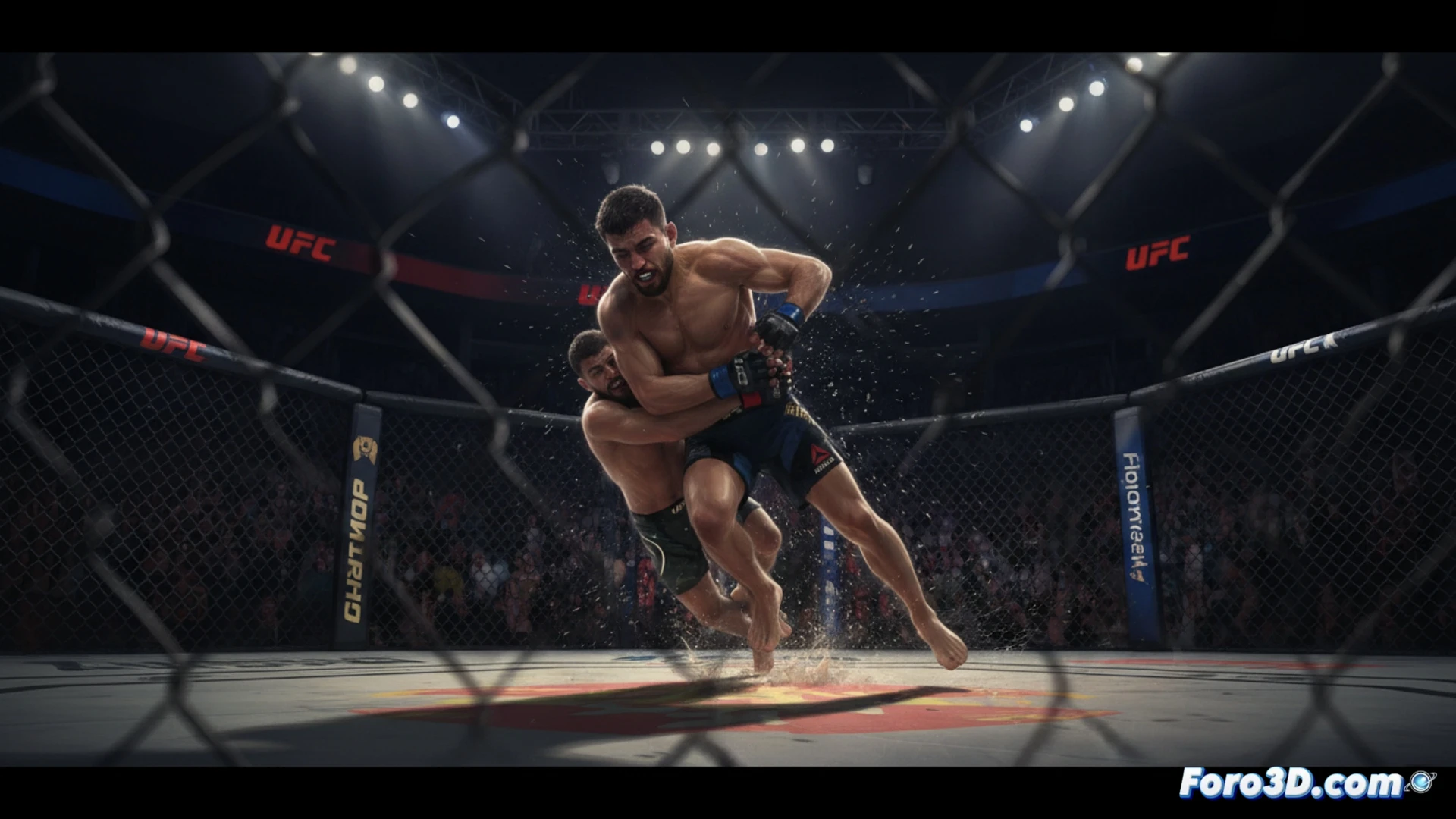
From body scanning to tactical simulation: tools for a competitive edge 🥊
Let's imagine the process. A 3D body scanner of the athlete allows monitoring with millimeter precision the evolution of their musculature and physical composition during the preseason. Beyond that, 3D motion capture can analyze the biomechanics of each strike or takedown, optimizing efficiency and reducing the risk of new injuries. But the most disruptive application is tactical simulation. With realistic 3D models of potential rivals like Garry or Morales, generated from hours of footage, Makhachev could fight against them in a virtual environment, testing strategies and reactions to their attack patterns in a safe and repetitive way.
Beyond training: the immersive future for fans 🥽
This revolution is not limited to the gym. 3D technology can enrich the television experience. Holographic visualizations of key combinations or real-time analysis of attack angles, overlaid on the broadcast, would educate the fan's eye. In the long term, it could even simulate an anticipated Makhachev vs Topuria fight before it happens, although nothing replaces the unpredictability of real sport. Technology does not replace the essence of MMA, but it is redefining the limits of preparation and spectacle.
How is the new generation of MMA fighters, like Islam Makhachev, using 3D scanning and simulation technology to analyze rivals and perfect tactics in a revolutionary way?
(PS: reconstructing a goal in 3D is easy, the hard part is making it not look like it was scored with the leg of a Lego doll)