Olympic athlete Águeda Marqués faces the 2026 season after overcoming her first serious knee injury. Although saddened by missing the Indoor World Championships, she looks optimistically toward the Birmingham Europeans. Her case is a perfect example of how current 3D technology can transform the recovery and preparation of an elite athlete, going beyond traditional methods.
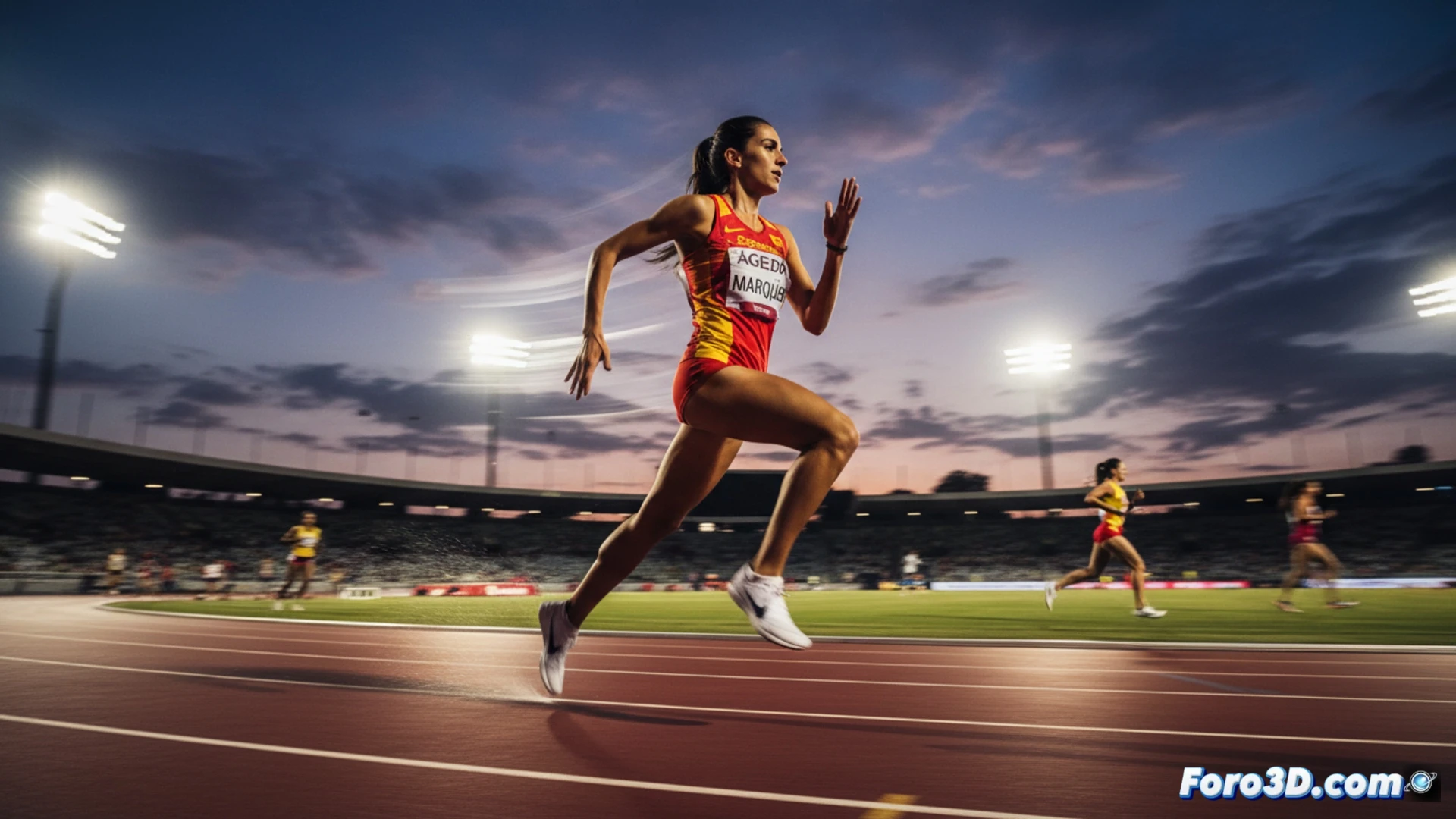
3D Scanning and Biomechanical Simulation: Precision in Rehabilitation 🦿
Tools like 3D body scanning allow the creation of an exact digital model of the athlete to analyze muscular imbalances. Movement simulation in virtual environments can reproduce Marqués' running technique, calculating the exact loads on her injured knee during each phase of the stride. This enables her coaches and doctors to design a personalized strengthening and technical correction plan, minimizing the risk of relapse. The 3D visualization of this biomechanical data makes the complex comprehensible, guiding each step of her return to the 1,500 meters.
A Future Modeled in Three Dimensions 📐
Marqués' path to the Europeans is not based solely on sensations. 3D technology provides objectivity, turning recovery into a measurable and optimizable process. Her next event, the Madrid 10K, will be a first real test monitored with these tools. This approach, which combines the athlete's spirit with spatial data analysis, not only seeks to return her to the tracks but to take her to her maximum performance with a more solid and safe technical base.
Do you think VAR would improve with real-time 3D reconstructions?