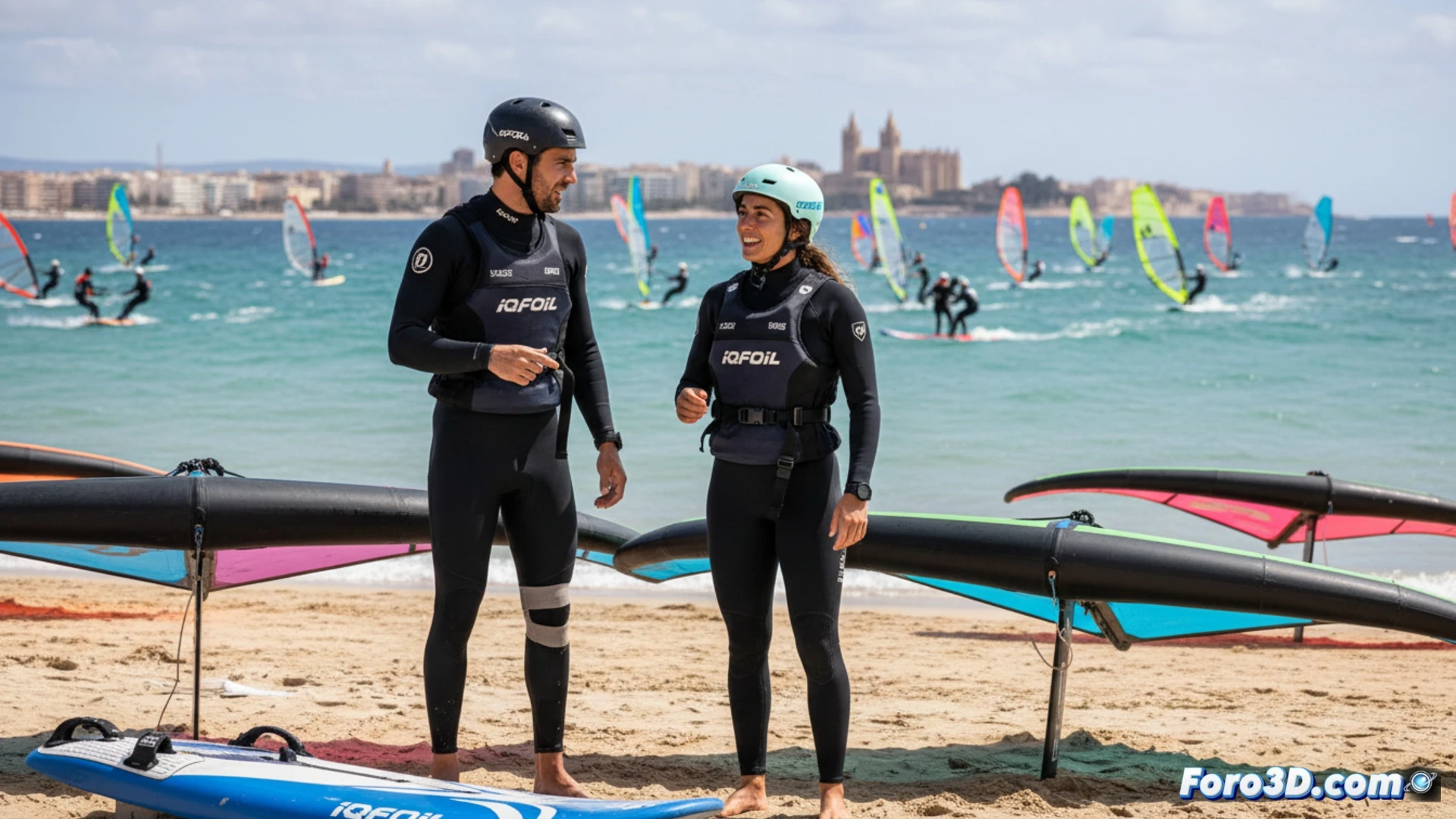
The Spanish iQFOiL team, with Nacho Baltasar and Pilar Lamadrid, competes in the Princess Sofia Trophy marked by physical challenges. After the learning experience in Paris 2024, their sights are set on Los Angeles 2028. This path of continuous improvement finds a fundamental ally in 3D technologies, tools that revolutionize preparation in elite sailing sports through biomechanical analysis, tactical simulation, and material optimization.
3D Modeling and Simulation: the Digital Laboratory of the Windsurfer 🧪
3D technology allows creating exact digital replicas of the board, the sail, and the athlete. Using 3D scanners and computational fluid dynamics software, the team's behavior can be simulated under different wind and sea conditions, optimizing the setup without physical wear. Additionally, 3D biomechanical analysis of the windsurfer, through motion capture systems, identifies inefficiencies in posture or sailing technique. This is crucial for cases like injuries or recovery, allowing technical gestures to be adjusted to maximize power while minimizing risk.
Towards LA28: 3D Data for a Winning Strategy 🗺️
For athletes like Baltasar and Lamadrid, these tools go beyond training. They enable the creation of predictive race models, simulating strategies against specific rivals. Digitally analyzing every wake and maneuver turns every competition, like the Princess Sofia, into a goldmine of data to build a solid competitive advantage for the next Olympic cycle, where the difference will be in the precision of the analysis.
How is 3D simulation and analysis technology transforming training and strategy in sailing sports like iQFOiL?
(PS: reconstructing a goal in 3D is easy, the hard part is making it not look scored with the leg of a Lego doll)