FC Barcelona resumes training with the good news of improvements from Koundé and Balde, key for the crucial clash against Atlético de Madrid. This scenario is a perfect example of how elite sports can no longer be understood without technology. Beyond the work on the pitch, 3D analysis tools allow monitoring the readaptation of injured players and dissecting the opponent with a level of detail previously unthinkable, transforming data into tactical decisions.
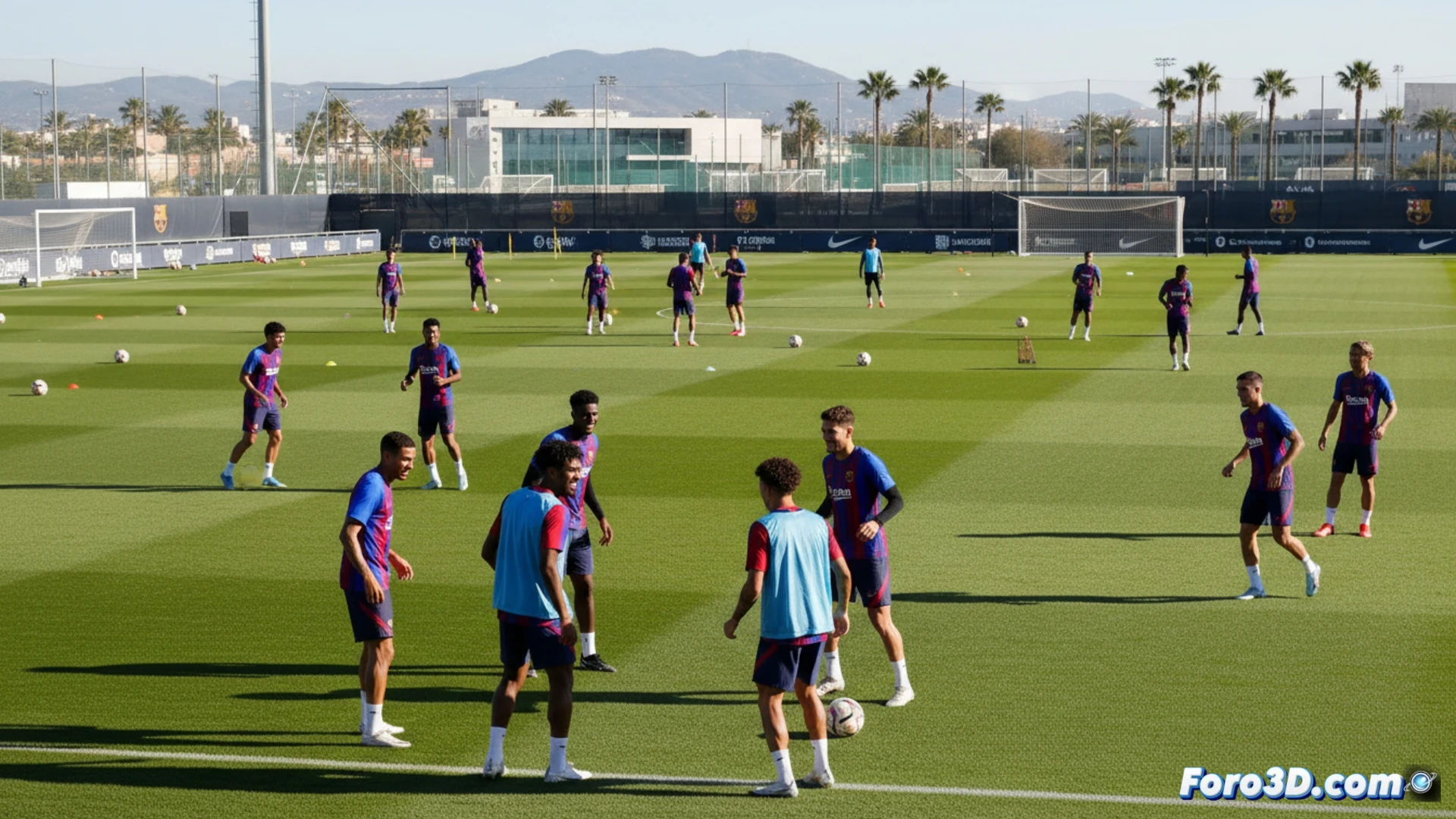
3D Modeling and Biomechanics for Injury Readaptation 🤖
The partial participation of the defenders in the group is a milestone measurable with precision using 3D technology. Motion capture systems and biomechanical scanners allow creating digital three-dimensional models of the player. Thus, readapters can analyze joint angles, gesture symmetry, and impact loads during exercises, comparing them with the optimal pre-injury model. This objectifies the evolution, minimizes the risk of relapse, and determines with data when a player is truly ready for competition, as in the case of Koundé and Balde for Atlético.
Tactical Simulation: Preparing for Three Clásicos in Ten Days 🧠
Facing the same opponent three times in a short time requires extraordinary preparation. Here, 3D simulation is crucial. Analysts can recreate tactical scenarios from Atlético, modeling their defensive movements and transitions. The coaching staff can visualize and virtually test different schemes, marking assignments, or set-piece plays, anticipating responses. This simulation-based planning provides a decisive strategic advantage in such a critical sequence of matches.
How is FC Barcelona using 3D scanning technology and volumetric data analysis to accelerate injury recovery and optimize the team's tactical setup?
(P.S.: 3D tactical simulation never fails, players on the pitch do)