Lanzarote kicks off the international triathlon season with the 2026 World Cup, an elite event that consolidates the island as a sports destination. Beyond the competition, this setting is perfect for exploring the application of 3D technologies. Tools like LIDAR scanning, photogrammetry, and digital twins can revolutionize the planning, analysis, and experience of complex sports events like this one.
Practical applications: from tactical analysis to logistics 🗺️
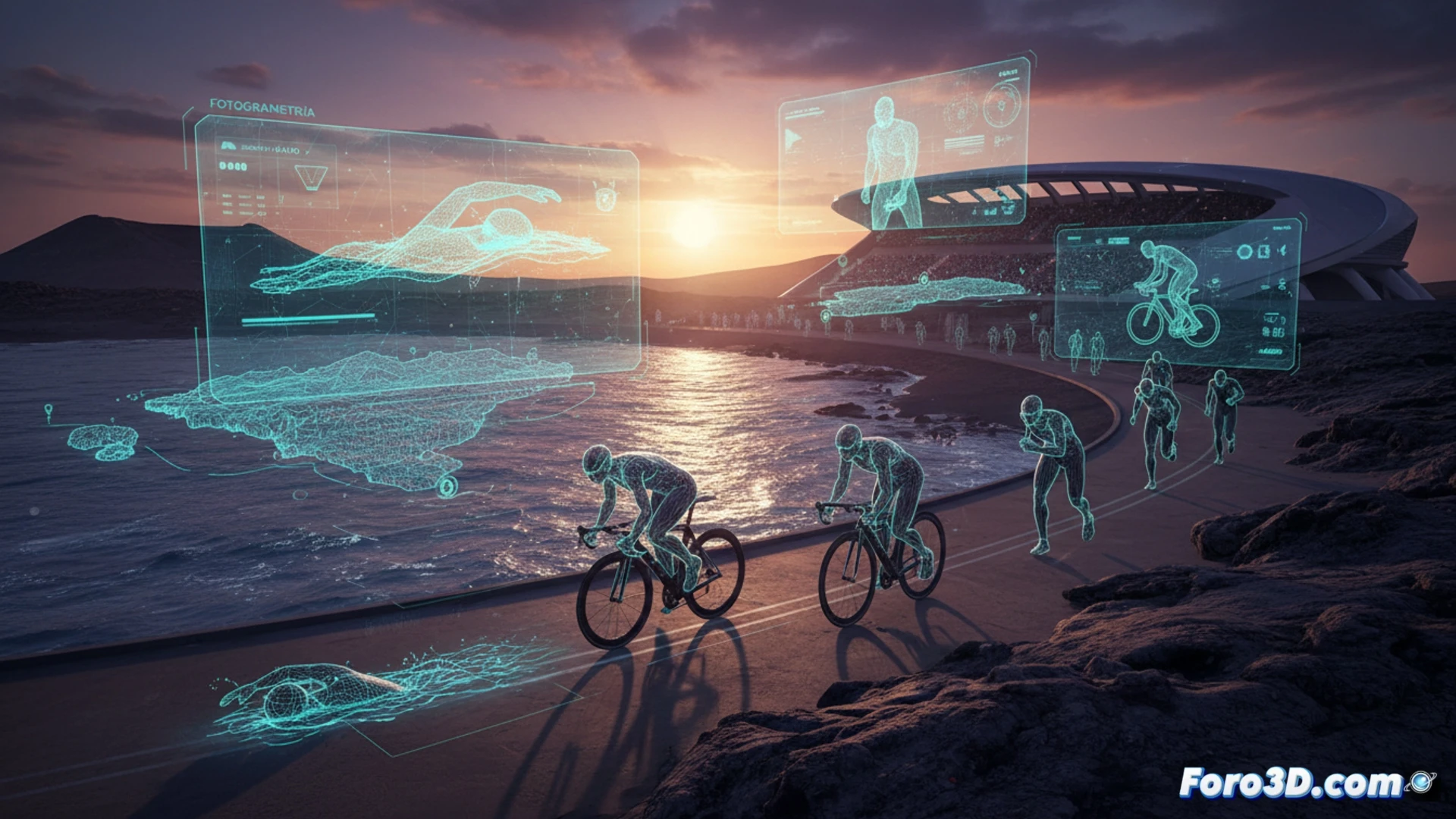
3D technology offers concrete solutions for a triathlon. A digital twin of the Costa Teguise course, created with LIDAR, would allow teams to analyze tactics and study every curve or slope. Photogrammetry could reconstruct dubious actions in 3D to assist refereeing. Additionally, biomechanical simulation on the 3D circuit model would help optimize athletes' performance. Parallelly, a 3D model of the event area would be invaluable for logistical and safety planning, simulating crowd flows and service locations.
The future of sports organization is digital 🚀
Events like the World Cup in Lanzarote are the ideal testing ground for these technologies. Their implementation would not only elevate organizational precision and high-performance analysis but also generate immersive content for fans. The integration of the physical and digital through 3D models marks the path toward a new era in the management and coverage of top-level sports competitions.
How is 3D technology transforming the preparation and performance analysis of triathletes in extreme environments like those of the Lanzarote World Cup?
(PS: 3D tactical simulation never fails, the players on the ground do)