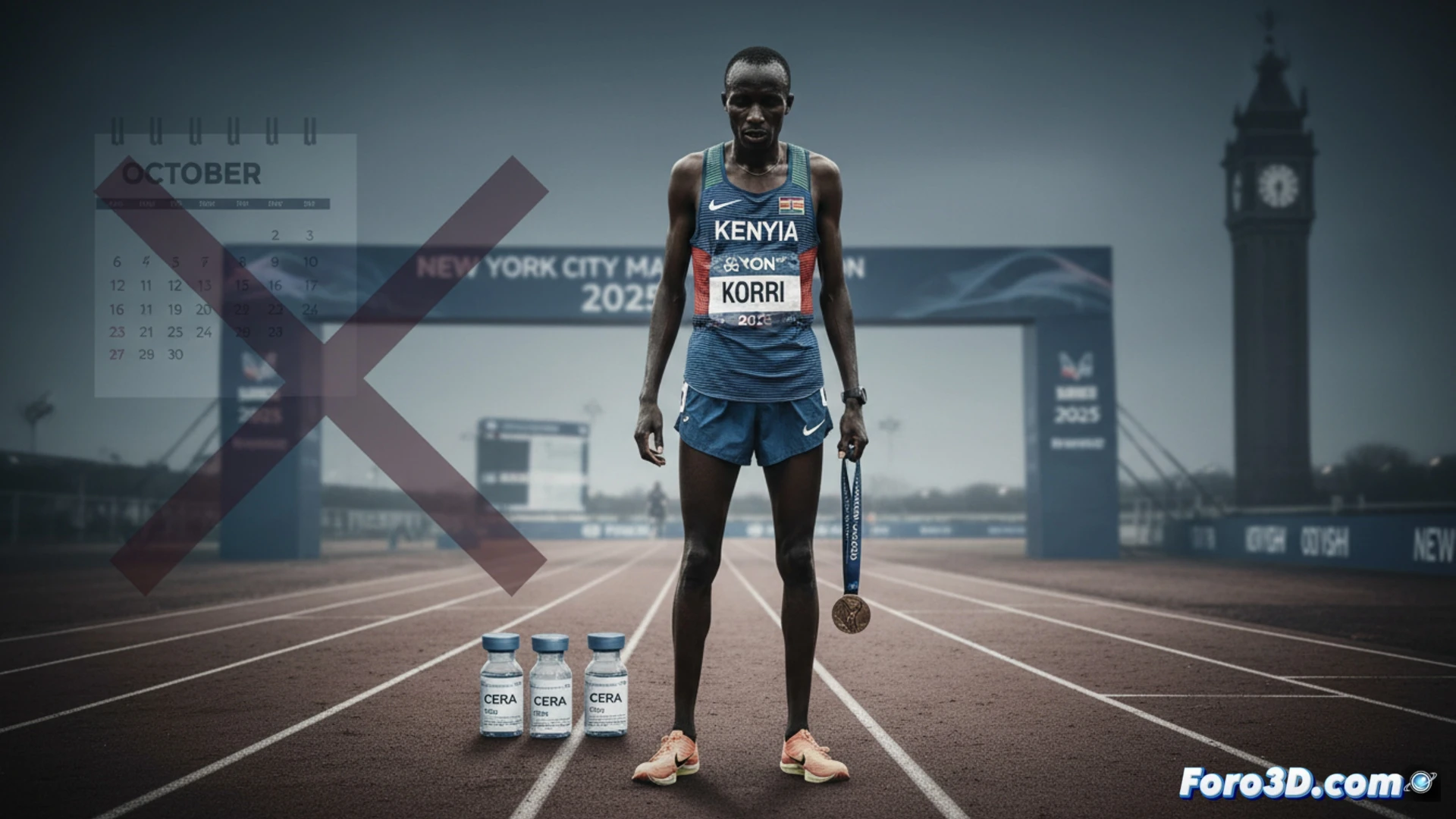
The recent five-year suspension of marathoner Albert Korir, 2021 New York champion, for a positive CERA test, reopens the debate on methods to preserve the cleanliness of sport. Beyond biochemical controls, 3D technology emerges as a powerful and complementary tool. Its ability to model, simulate, and visualize human performance offers new avenues for detecting anomalies, investigating cases, and educating athletes about the consequences of doping.
Biomechanical simulation and clean performance baselines 🧬
3D scanning and biomechanical simulation technologies allow the creation of personalized digital models of an athlete. These avatars can integrate physiological and movement data to establish a baseline performance profile under clean conditions. Any subsequent deviation, not justified by training, could be a red flag. Additionally, the theoretical impact of substances like CERA on running efficiency or oxygen economy can be simulated, visualizing in a virtual environment the artificial advantage sought, which reinforces the deterrent message in a very graphic way.
Visualize to deter and educate 👁️
The 3D recreation of real cases, like Korir's, could be impactful educational material. Visualizing the digital annulment of his achievements, such as the disappearance of his podium in New York 2025 from a model of the course, has a strong effect. The technology does not replace controls, but it does build a culture of integrity by making the cost of doping tangible: the loss of the immersive and eternal glory that 3D can represent so well.
Could 3D modeling and analysis of muscular biomechanics detect doping-induced anomalies before traditional biochemical tests?
(PD: 3D tactical simulation never fails, players on the field do)