The arrival of competitive electric vehicles like the Hyundai IONIQ 5 is not just a matter of traditional engineering. Behind its spacious cabin, aerodynamics, and efficient battery pack lies extensive work with 3D digital tools. These technologies, central to our forum, are key to optimizing every centimeter, simulating behaviors, and creating immersive experiences long before a physical prototype exists.
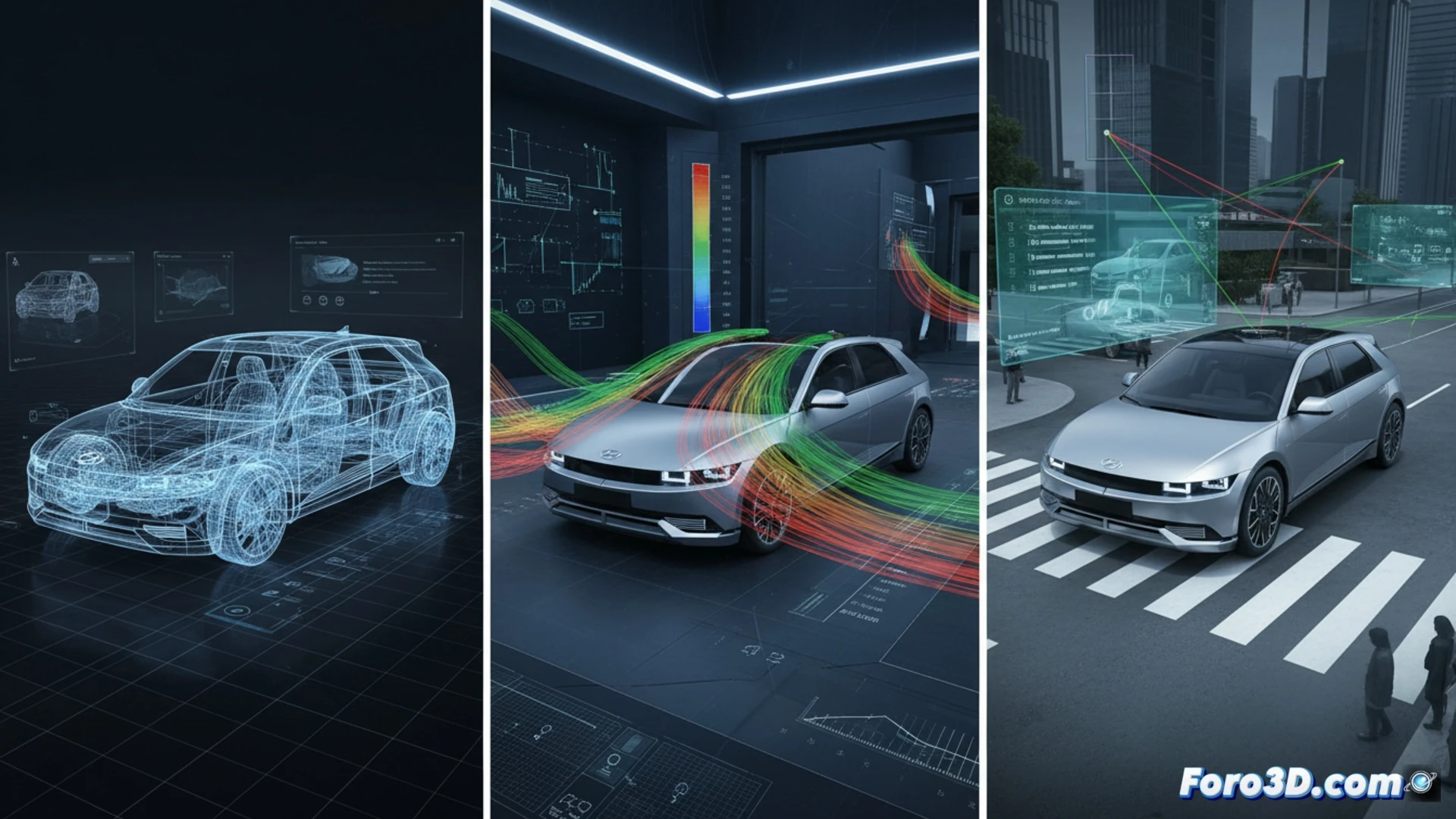
CAD, simulation, and digital twins in the EV 🚗
The design of the IONIQ 5, with its 4.66 meters in length and 520-liter trunk, starts from advanced CAD modeling to maximize interior space and integration of the E-GMP platform. CFD simulations analyze its aerodynamic coefficient, crucial for range. Digital twins allow virtual testing of battery durability and thermal performance. Even the standard ADAS systems are validated in 3D virtual environments, recreating infinite driving scenarios to adjust their algorithms safely and precisely.
3D Visualization: the bridge with the customer 👁️
Beyond development, 3D technology is fundamental in commercialization. Online configurators that allow customizing the Light trim with its 12.3-inch screens or dual-zone climate control are based on photorealistic renders and interactive models. These tools, created with 3D visualization software, offer an immersive experience to the customer, showing every detail of the equipment and closing the gap between the digital concept and the purchase decision in an increasingly competitive market.
How are 3D modeling, simulation, and additive manufacturing technologies transforming the design and optimization of cabins in modern electric vehicles, like the Hyundai IONIQ 5? 🔋
(P.S.: car electronics are like family: there's always a fuse that blows)