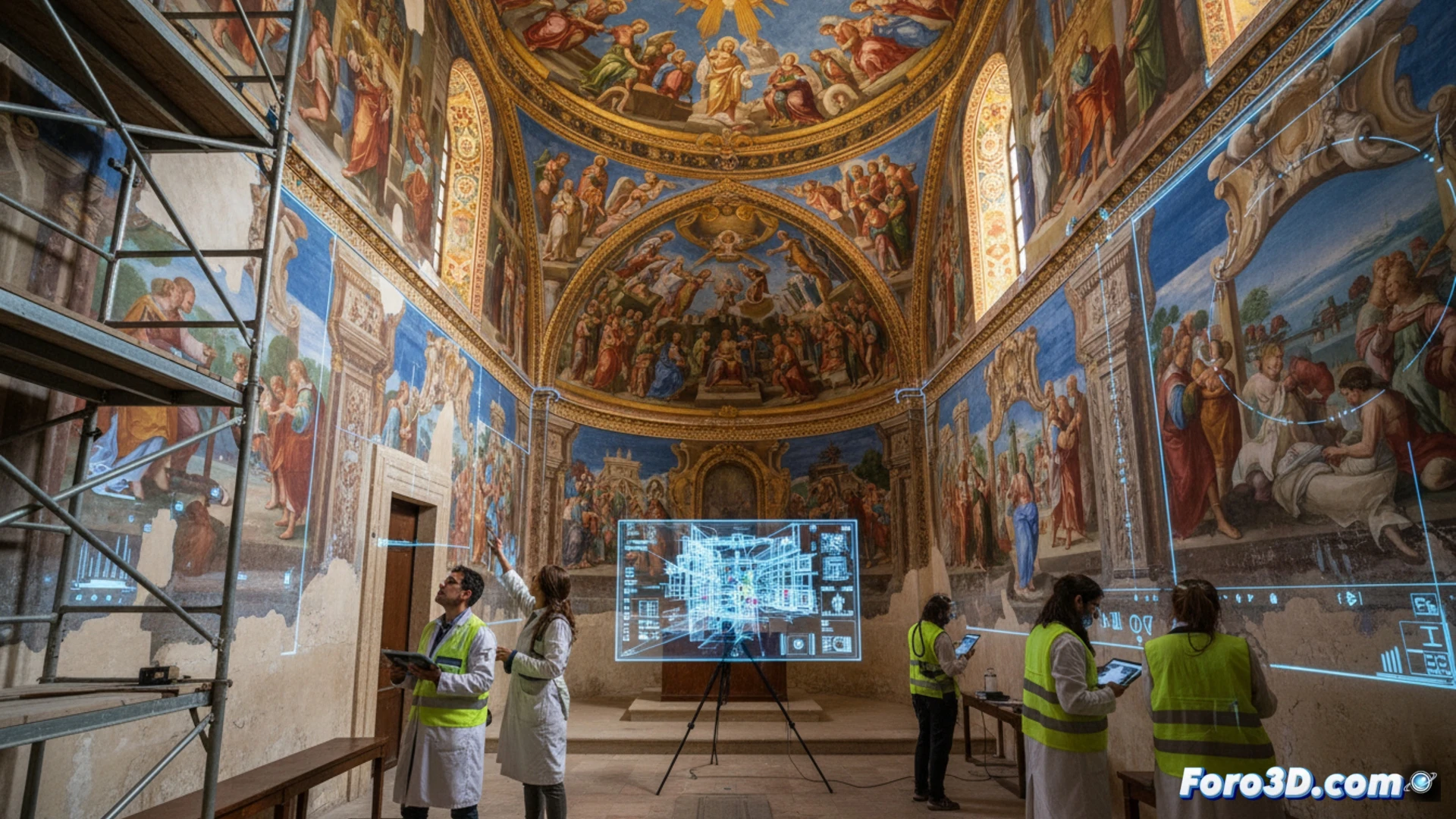
A monastery in Barcelona has recovered the splendor of its 17th-century frescoes, known as the Catalan Sistine Chapel, thanks to a pioneering project that fuses traditional restoration art with the most advanced digital technology. Hidden for years under layers of dirt and deterioration, these valuable murals have been revitalized through a process that prioritized minimal physical intervention, supported by a thorough prior digital analysis that guaranteed an action of extreme precision and safety for the original work.
Digital twin and millimeter precision: the technical process 🧠
The heart of the intervention was the creation of a digital twin of the chapel. Using high-resolution 3D scanners and various sensors, the exact geometry and surface condition of every centimeter of the frescoes were captured. This three-dimensional model, enriched with spectral data, served as a scientific work map. Restorers were able to diagnose pathologies, plan each cleaning, and document the process in real time. The technology acted as a magnifying glass and a perpetual archive, allowing contaminants to be removed with millimeter precision to reveal the original colors without risks, and generating a comprehensive record for future studies or interventions.
The new paradigm in heritage conservation 🔬
This case sets a fundamental precedent. Restoration no longer culminates with physical intervention, but generates an invaluable digital asset. The 3D twin ensures the preservation of the cultural asset's information in its current state, serving to monitor its evolution, facilitate research, or even create outreach resources. This project exemplifies how 3D technology does not replace the restorer, but expands their capabilities, establishing itself as an indispensable tool for preventive conservation and the transmission of heritage to future generations.
How was 3D scanning and printing technology used to precisely restore the damaged frescoes of the monastery, considering the challenges of replicating historical materials and original colors?
(P.S.: Virtual restoration is like being a surgeon, but without blood stains.)