The intersection between hunting tradition and modern technology is shaping a new conservation practice. More and more hunters are choosing to replace the natural skulls of their trophies with replicas created through 3D printing. This alternative arises not only from the logistical and legal difficulties of preserving biological remains, but also from a growing ethical sensitivity. The digital replica thus becomes an object of memory, enduring and customizable, that preserves the essence of the trophy without the need to manipulate the original specimen.
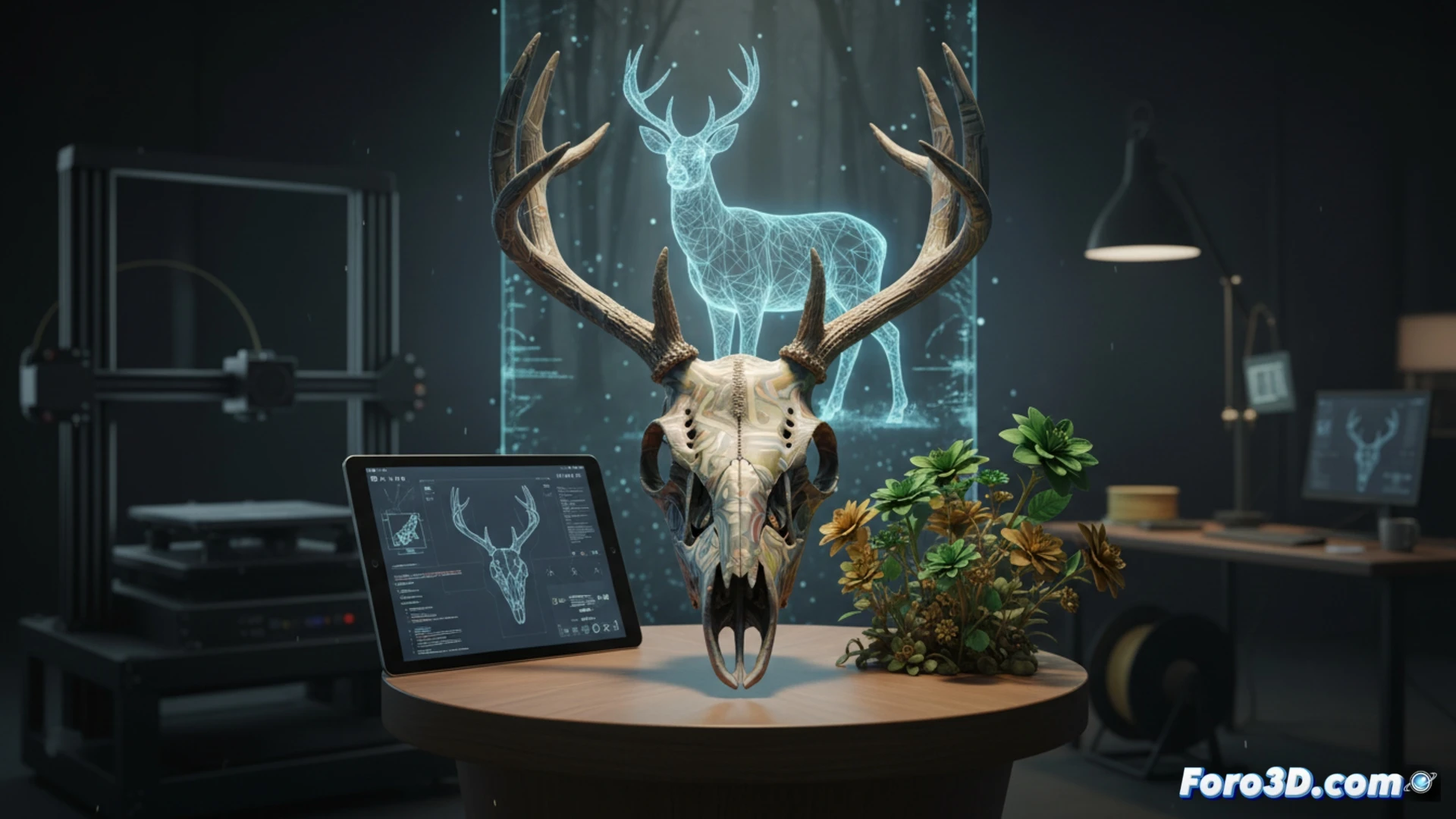
Technical process: from scanning to physical replica 🛠️
The process begins with obtaining a precise digital model of the skull. This can be achieved through 3D scanning of the original trophy or by using pre-existing models from online libraries. Once the file has been edited and prepared, printing proceeds, generally using FDM technology with materials like PLA or PETG for their balance between detail and strength. The printed piece requires post-processing: sanding, treatment with putty to fill the layers, and finally painting with an airbrush to achieve extreme realism, mimicking the texture and coloration of natural bone. The result is a lightweight, indestructible, and easy-to-transport replica.
Beyond the trophy: a paradigm shift 🔄
This trend represents a profound change in hunting culture. It goes beyond the purely technical to address issues of conservation, legality, and ethics. The 3D replica allows perpetuating the memory of the animal and the hunting feat without the drawbacks of traditional methods, which are often invasive and subject to regulation. It is not about distorting tradition, but reinterpreting it with the tools of the present, offering a practical, durable, and respectful solution that could well define the future of trophy conservation.
How can 3D replicas of hunting trophies transform species conservation and satisfy hunting tradition without damaging the original specimens?
(P.S.: Virtually restoring is like being a surgeon, but without blood stains.)