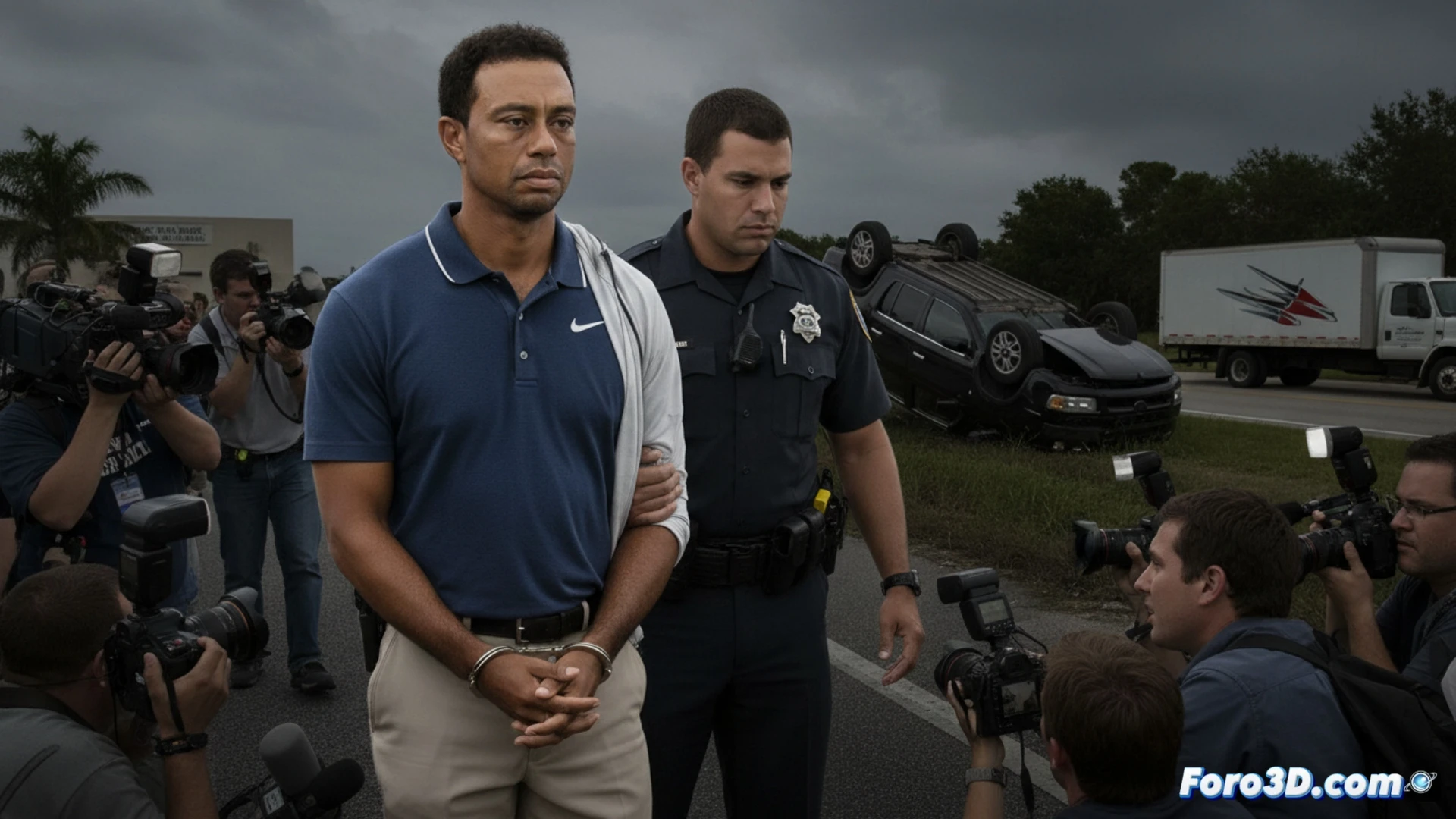
The recent Tiger Woods accident in Florida, where his vehicle rolled over after grazing a truck, is a textbook case for forensic scene analysis. Beyond the driver's circumstances, the physical truth of the crash is imprinted on the road. This is where 3D documentation becomes crucial. A precise digital reconstruction allows investigators to analyze the scene permanently and objectively, separating material facts from speculations, and determining the exact dynamics of the collision.
Key technologies for scene capture and analysis 🔬
For a case like this, the ideal methodology combines 3D laser scanning and photogrammetry. A stationary laser scanner captures millions of points from the road, involved vehicles, and tire marks, generating a metrically exact point cloud. Simultaneously, photogrammetry with drones or cameras provides texture and visual context. This hybrid model allows measuring braking distances, impact angles, and pre- and post-collision trajectories with millimeter precision. Investigators can digitally simulate the graze with the truck and the subsequent rollover, calculating speeds and forces involved to verify the statements of those involved.
Immutable evidence beyond the driver's state ⚖️
The great advantage of forensic 3D reconstruction is its independence from witnesses. While authorities investigate possible medication influence, the digital model provides incontrovertible evidence on how property damage occurred. This 3D file, essential in complex crashes, serves as clear expert evidence for judges and insurance companies, demonstrating that technology is the definitive tool for clarifying the mechanics of any accident, without room for subjective interpretations.
What minimum resolution would you need for this analysis?