The recent attack against the UN Interim Force in Lebanon, which caused three deaths and serious injuries following the destruction of a vehicle, goes beyond a mere press report. In the niche of 3D conflict analysis, this incident becomes a tangible case study. Technology allows transforming diplomatic condemnation into spatial and forensic analysis, reconstructing the scene to understand the dynamics of the attack and visualize the vulnerability of peacekeeping personnel on the ground.
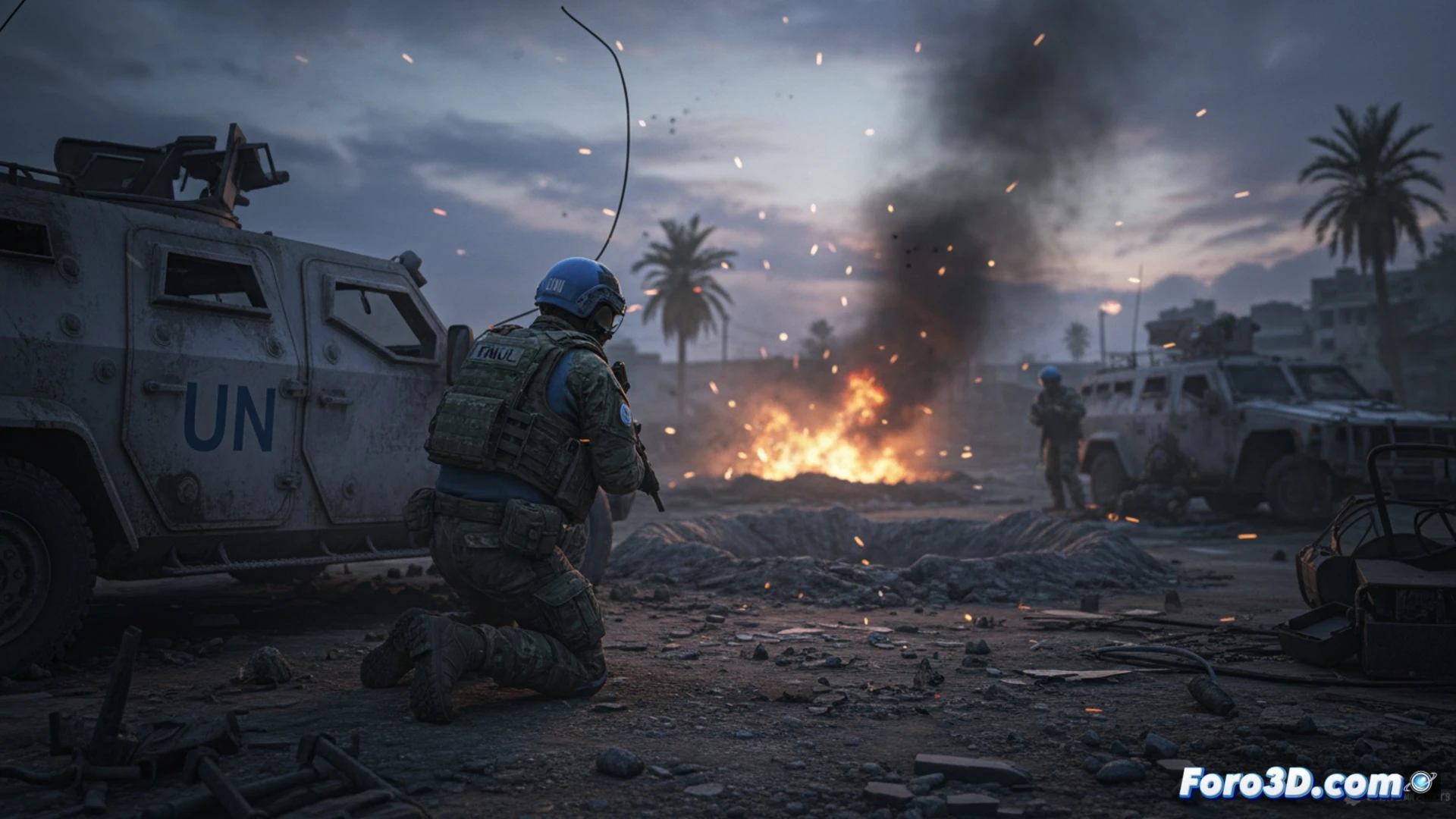
Photogrammetry and simulation: From news to virtual model 🔍
From satellite images, photographs of the damaged vehicle, and geographic data of the area, it is possible to generate a faithful 3D model of the incident site. Through photogrammetry, the scene is reconstructed. With simulation tools, the type of explosion that destroyed the vehicle can be analyzed, estimating its origin and power, and projecting the possible shrapnel dispersion. This model not only illustrates the event but allows a technical analysis of tactics and effects, providing a layer of objective information that supports calls for respect of international humanitarian law.
Visualize to protect: Spatial awareness in peacekeeping missions 🛡️
Beyond forensic analysis, 3D reconstruction serves as a powerful awareness tool. Visualizing the attack in an immersive virtual space conveys with rawness the risks faced by blue helmets. This clear spatial representation visually supports the demand to protect peacekeeping forces and intuitively reinforces the urgent need for the Lebanese State to exercise the monopoly of force in its territory to ensure regional stability.
What photogrammetry techniques would you use to model conflict zones remotely?