The tragic incident at Olga Beach in Hadera, where a diver lost his life after being attacked by several sharks, raises critical questions about the dynamics of the event. The proximity to the shore and the animals' habituation to human presence are key factors. A detailed forensic analysis of the scene is essential to understand the sequence of events, interactions, and failures in safety protocols. 3D reconstruction technology presents itself as the ideal tool for this investigation.
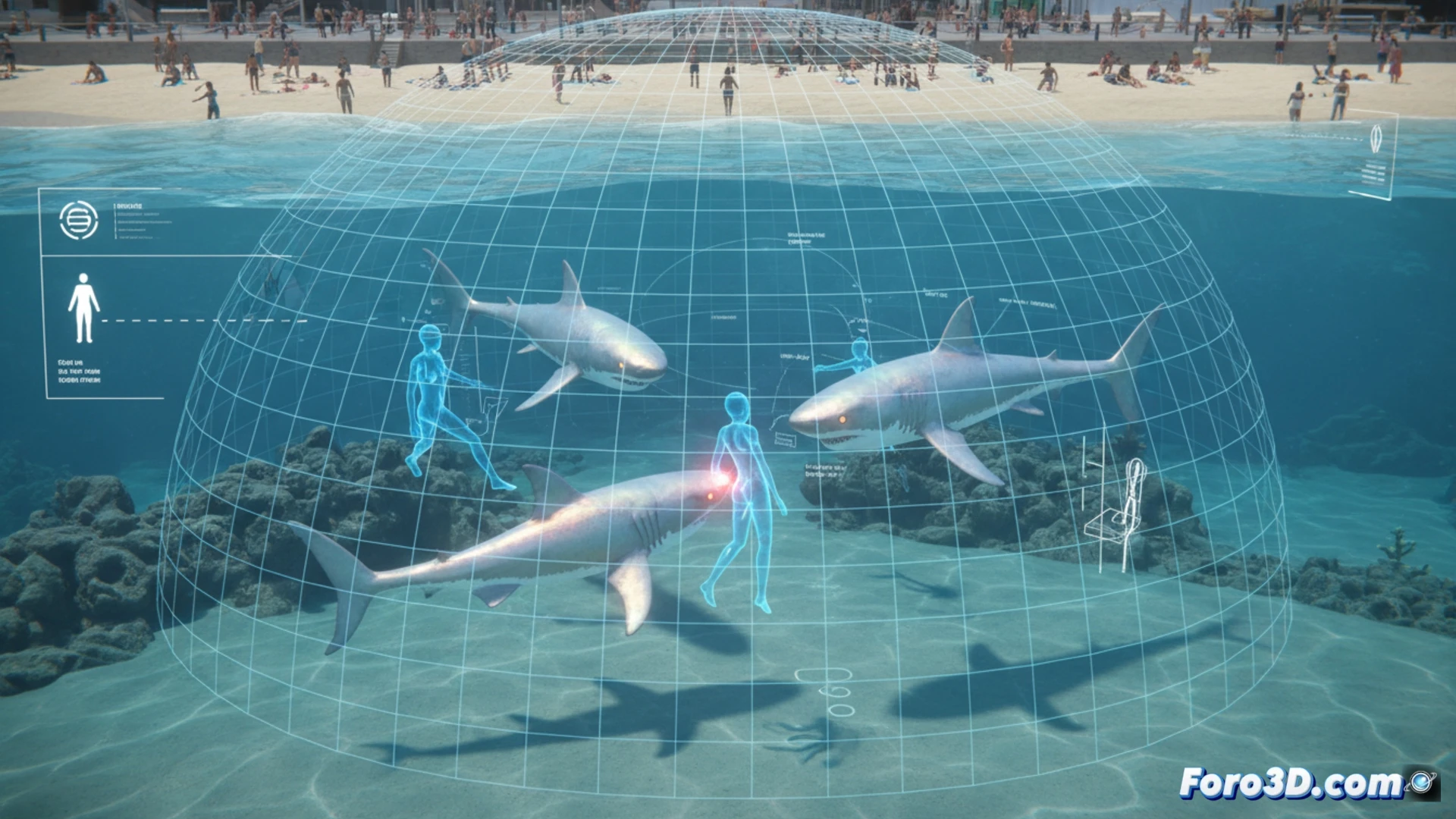
Forensic Documentation and Analysis Using 3D Technology 🔍
The virtual reconstruction of this incident would begin with the exhaustive documentation of the scene using aerial and terrestrial photogrammetry, and possibly laser scanning from the coast. This would generate a georeferenced 3D model of the beach, shoreline, bathymetry, and nearby structures. On this model, data from expert reports would be integrated: the victim's position and injuries, visual testimonies, and shark behavior patterns in the area. This would allow simulating trajectories, distances, attack angles, and visibility, evaluating factors such as depth, currents, and proximity to known feeding points.
Virtual Lessons for Real Safety 🛡️
The resulting 3D model is not just a visual recreation, but a powerful analytical tool. It allows forensic investigators and marine life experts to test hypotheses non-invasively, precisely determining the chain of events. The conclusions can be translated into tangible improvements: delineating risk areas, adjusting alert signs, and designing surveillance protocols based on objective data. Thus, digital reconstruction contributes to preventing future tragedies, transforming data from a tragic scene into knowledge for public safety.
How can underwater scene forensic analysis and 3D reconstruction be used to determine the sequence of events and the dynamics of the multiple shark attack in Hadera?
(PS: In scene analysis, every scale witness is an anonymous little hero.)