A research project in the United Kingdom, led by Spellman Care and the University of Leeds, explores the additive manufacturing of food for patients with dysphagia. This initiative seeks to offer alternatives to traditional modified texture diets, which often present issues with presentation and nutritional value, impacting the quality of life of those who need them.
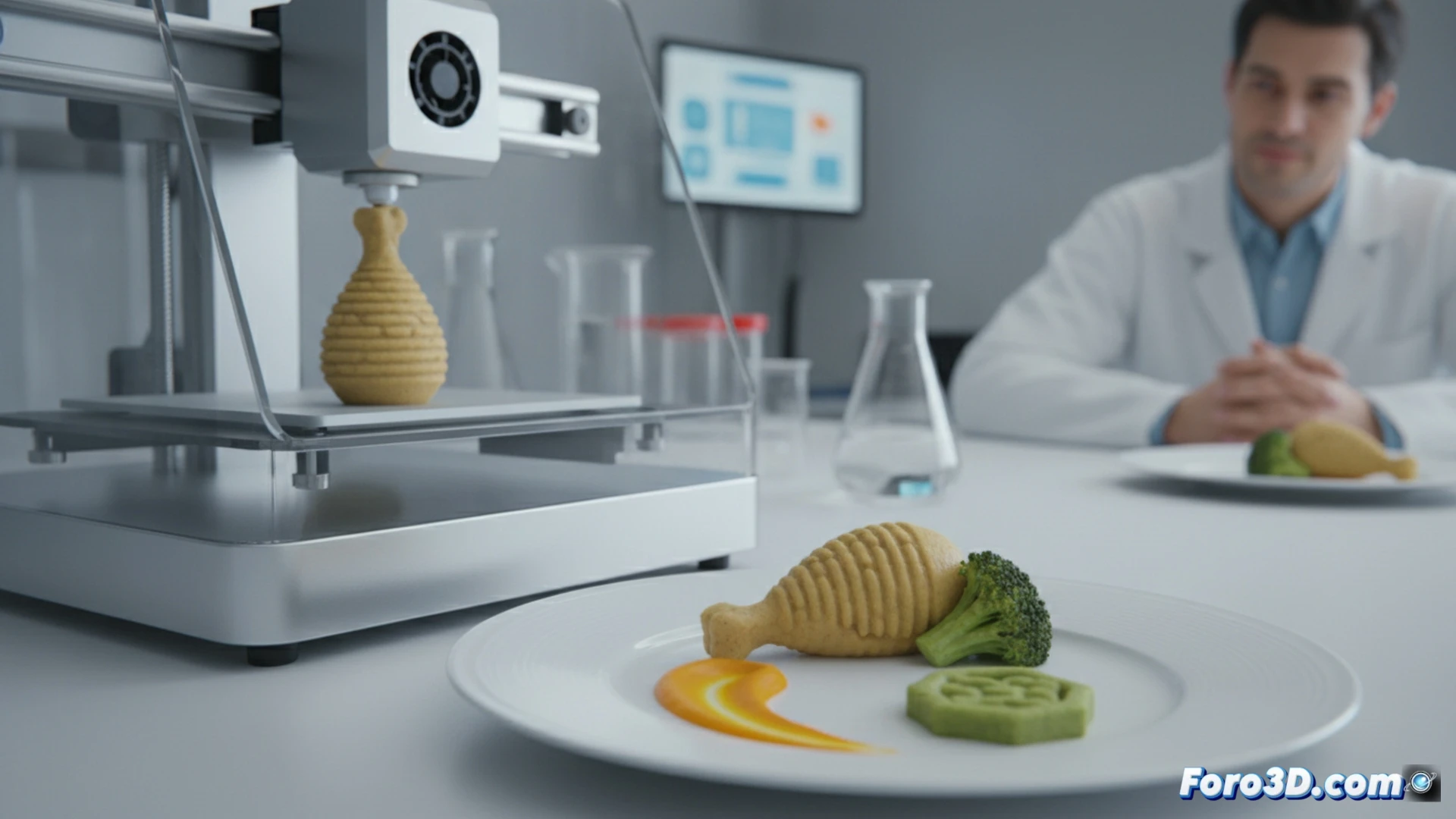
The technical approach: customization and stability 🧪
The study focuses on developing food inks based on purees that maintain structural stability during extrusion printing. Parameters such as viscosity and temperature are analyzed to ensure that the printed shapes (from steaks to flowers) do not deform. The technology allows adjusting caloric density and adding supplements precisely for each patient.
From shapeless puree to designer puree 🍽️
The culinary evolution is clear: we have gone from a lumpy pile in a deep plate to serving a salmon medallion with broccoli foam printed in 3D. Now the debate will not be whether the food tastes like anything, but whether the cauliflower replica has enough layer resolution. A major advance for criticizing the presentation with new arguments.