The union of technical knowledge and social experience demonstrates, once again, its transformative power. The Aspid and Makers Lleida partnership has culminated a solidarity project that has improved the autonomy of 23 people with disabilities. Through digital manufacturing and 3D printing, they have created 18 customized technical aids, adapted to specific needs. This case exemplifies how accessible technology can break down everyday barriers and foster inclusion in a practical and direct way.
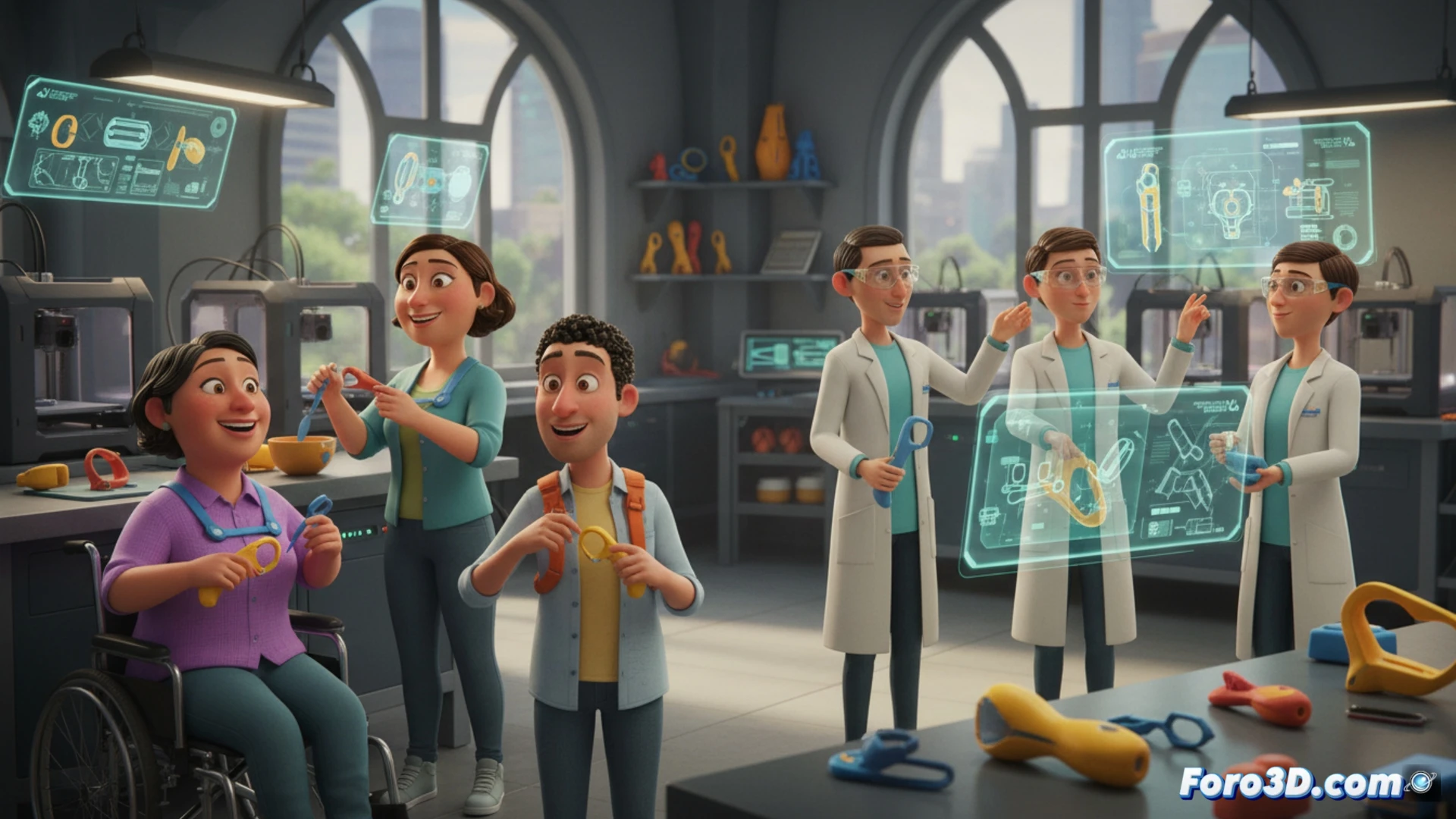
From problem to solution: the collaborative design cycle 🤝
The success of the project lies in its collaborative methodology. It all began with the identification of specific needs by Aspid, which knows the daily challenges of its users. These challenges, from difficulties using kitchen utensils to getting dressed, were passed on to the makers. They applied their expertise in 3D design to devise custom solutions, print them, test them, and adjust them. This iterative process ensured that each tool, made with materials like PLA, perfectly adapted to the user's anatomy and capabilities, offering key advantages: very low cost, fast development times, and a level of customization unattainable with standard products.
More than objects: impact on quality of life ✨
The final result transcends the physical object. Each tool delivered represents a tangible increase in independence and self-esteem for its beneficiaries. It facilitates everyday tasks that previously posed an obstacle, reducing dependence on third parties. This project is a replicable model that demonstrates the potential of 3D printing in the field of technical aids, not as a substitute for complex medical devices, but as an agile and person-centered response to very specific problems, putting technology at the service of social inclusion.
How are makers and patient associations overcoming the main technical and regulatory challenges to bring personalized and affordable 3D prostheses and orthoses from prototype to daily life?
(P.S.: 3D prostheses are so personalized that they even have a fingerprint.)