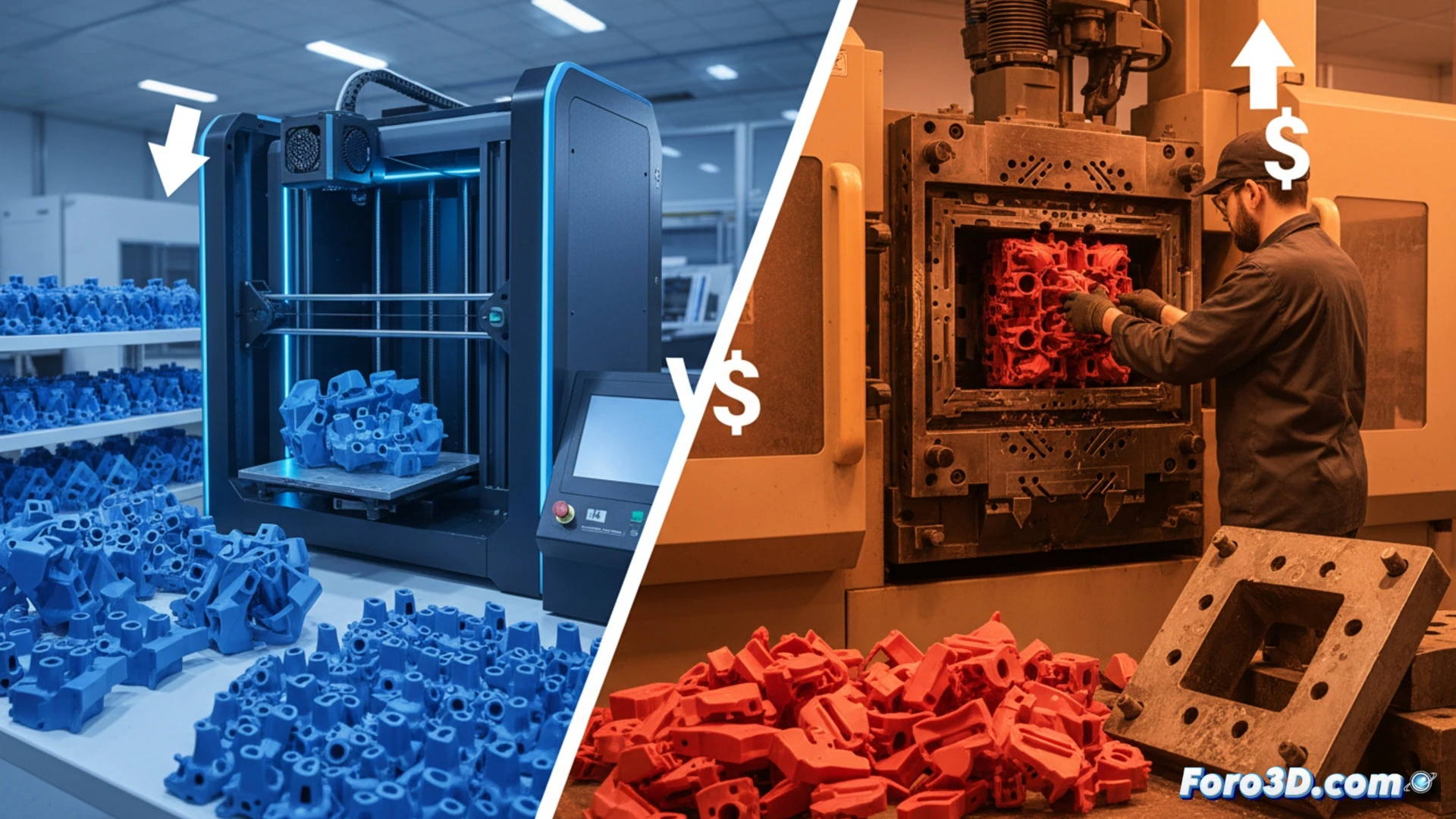
A study from Sungkyunkwan University, published in a specialized journal, analyzes the economic viability of additive manufacturing versus injection molding. The conclusion is clear: for low-volume and high-variety productions, 3D printing can be a cost-effective alternative. The key lies in its flexibility and much lower initial costs, by eliminating the need for complex and expensive molds.
Analysis of five technologies and the real productivity metric 📊
The research evaluated five 3D printing methods: Material Extrusion, Vat Photopolymerization, Powder Bed Fusion, Binder Jetting, and Directed Energy Deposition. Compared to the 1,920 parts/hour of injection molding, the productivity of additive manufacturing is lower, but technologies like Binder Jetting achieve up to 32.25 parts/hour in continuous mode. The study introduces the Effective Parts per Hour metric, which considers the complete process, revealing that polymer systems have shorter post-processing than metallic ones.
Your 50,000€ mold vs. the 3D printer's 'print' button ⚖️
It's the classic dilemma: requesting a quote for an injection mold and being asked if you want to pay for it in one lifetime or twelve, versus loading an STL file and pressing print. The Korean study simply puts numbers to what many already intuited: for those projects of ten units that change every week, 3D printing is like having a workshop at your own pace, without the awkward conversation with the bank to finance a piece of steel. Mass productivity can wait.