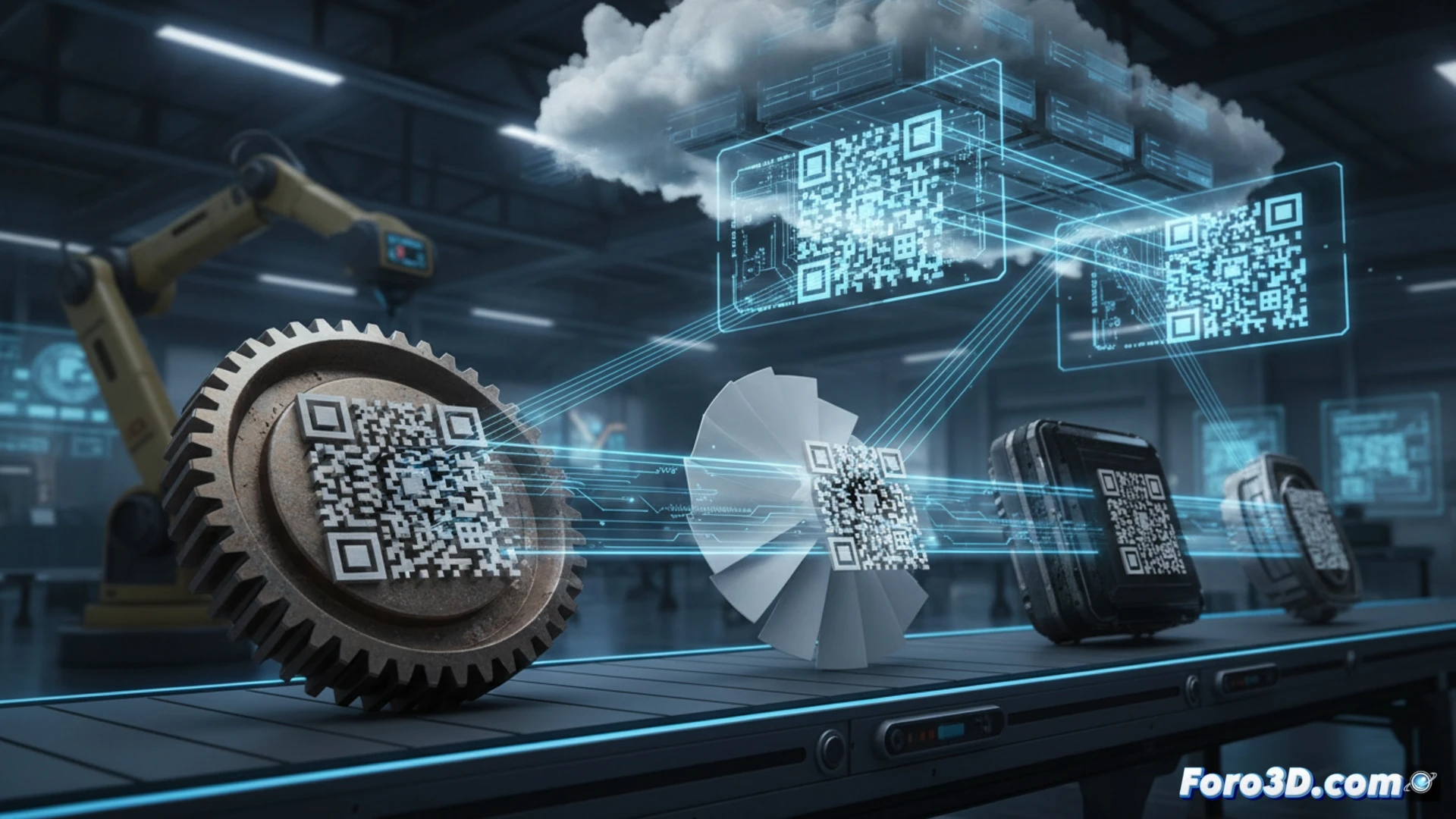
The unbreakable connection between a physical object and its digital twin is a pillar of Industry 4.0. A key innovation to achieve it is QR codes integrated directly during 3D printing, replacing fragile adhesive labels. This permanent identifier, created by geometric contrast or ink injection, fuses with the part, surviving extreme environments and ensuring absolute traceability from the first moment of its useful life.
Marking technologies and the strategic decision: static vs dynamic 🔍
The QR integration is mainly done through two methods. The first is geometric contrast, altering the surface texture to create the code. The second is the injection of special ink directly onto the layer of fresh material. The most critical choice, however, is the type of data. A static code contains fixed and unchangeable information, such as a serial number. A dynamic one redirects to a URL where the digital twin's data can be continuously updated. This decision is permanent and must align with the product's life cycle strategy.
Beyond traceability: integrity and real-time context ⚙️
The true value goes beyond mere identification. In sectors like aerospace or medical, this physical-digital bridge ensures the integrity of regulatory data, linking each part with its complete history. For tooling and prototypes, it eliminates ambiguities between versions. By scanning the code, not only is the part identified, but access is gained to its living digital twin, with its maintenance history, simulations, and updated documentation, closing the digital twin cycle.
How can 3D printed QR codes overcome the limitations of traditional labels to ensure permanent traceability of an asset in its digital twin?
(P.S.: My digital twin is currently in a meeting, while I'm here modeling. So technically, I'm in two places at once.)