Additive manufacturing takes a monumental leap with the development of a 3D-printed hypersonic rocket capable of reaching Mach 5. This milestone not only demonstrates the potential of 3D printing to create complex and high-performance systems, but also redefines the paradigms of cost and production time in the aerospace industry. Its reusable design, intrinsically linked to the additive methodology, promises to revolutionize access to space and defense applications.
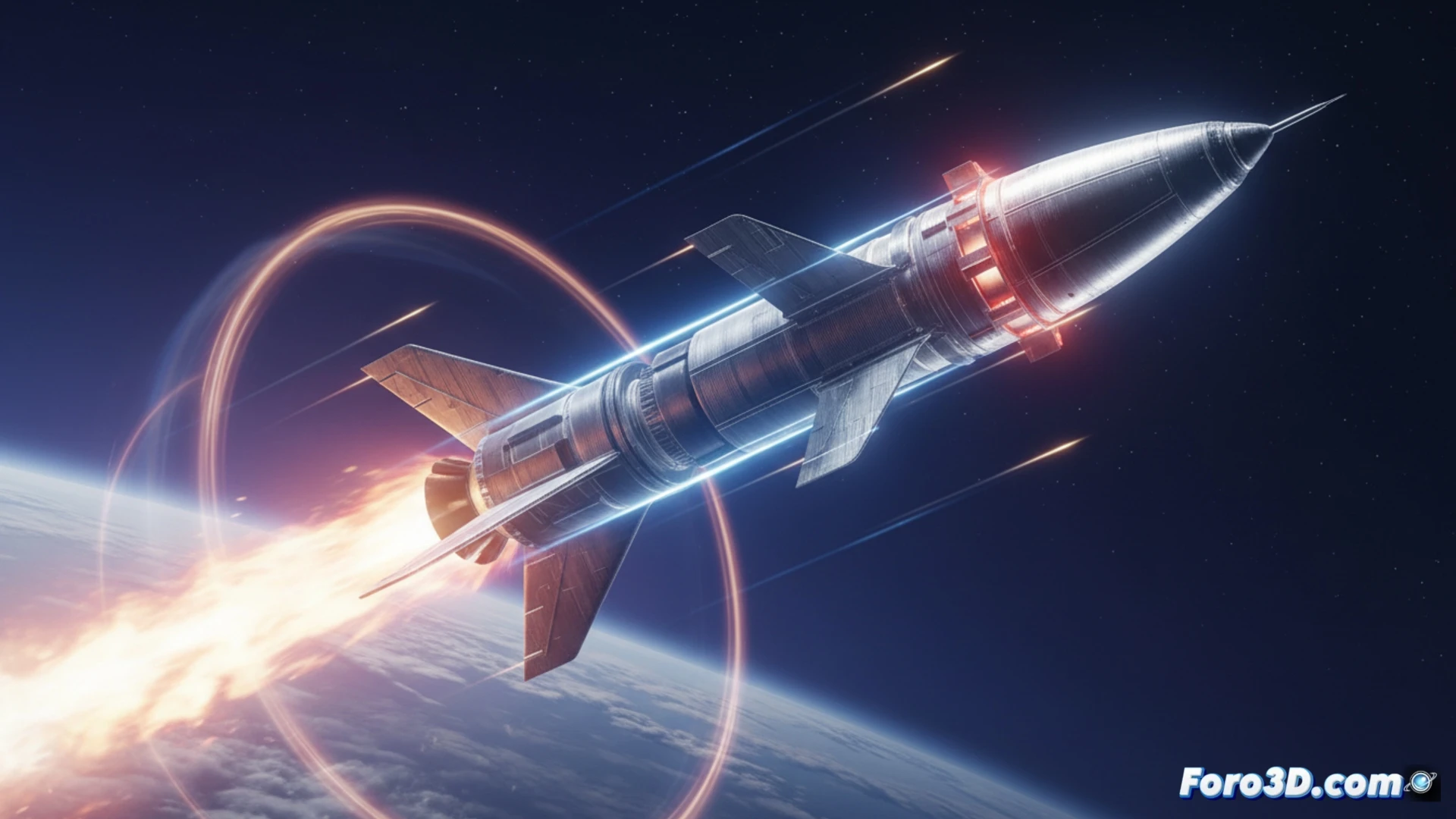
Technical challenges of large-scale aerospace 3D printing 🚀
The success of this rocket lies in overcoming the critical challenges of large-scale additive manufacturing design. It's not just about printing a model, but optimizing the print orientation to minimize supports and ensure directional strength under extreme heat and pressure loads. The material, likely a superalloy or advanced composite, must maintain its properties in hypersonic conditions. The integration of internal systems, such as cooling channels or fuel ducts, directly into the printable design, is where additive manufacturing shows its greatest advantage over traditional assemblies, allowing impossible geometries and a significant reduction in parts.
Beyond the rocket: the industrial impact of the methodology ⚙️
The true revolution behind this rocket is the production methodology. The ability to manufacture critical components quickly, cheaply, and locally, with reuse options, transcends military applications. For the civil aerospace sector, this means agile prototypes, more efficient engines, and a drastic reduction in development timelines. The printable model itself becomes the most valuable asset, democratizing access to technologies that were previously prohibitive.
What combination of materials and 3D printing parameters are critical to ensure the structural integrity of a hypersonic rocket under the extreme thermal and mechanical conditions of Mach 5 flight? 🔥
(P.S.: don't forget to level the bed, or your print will look like abstract art)