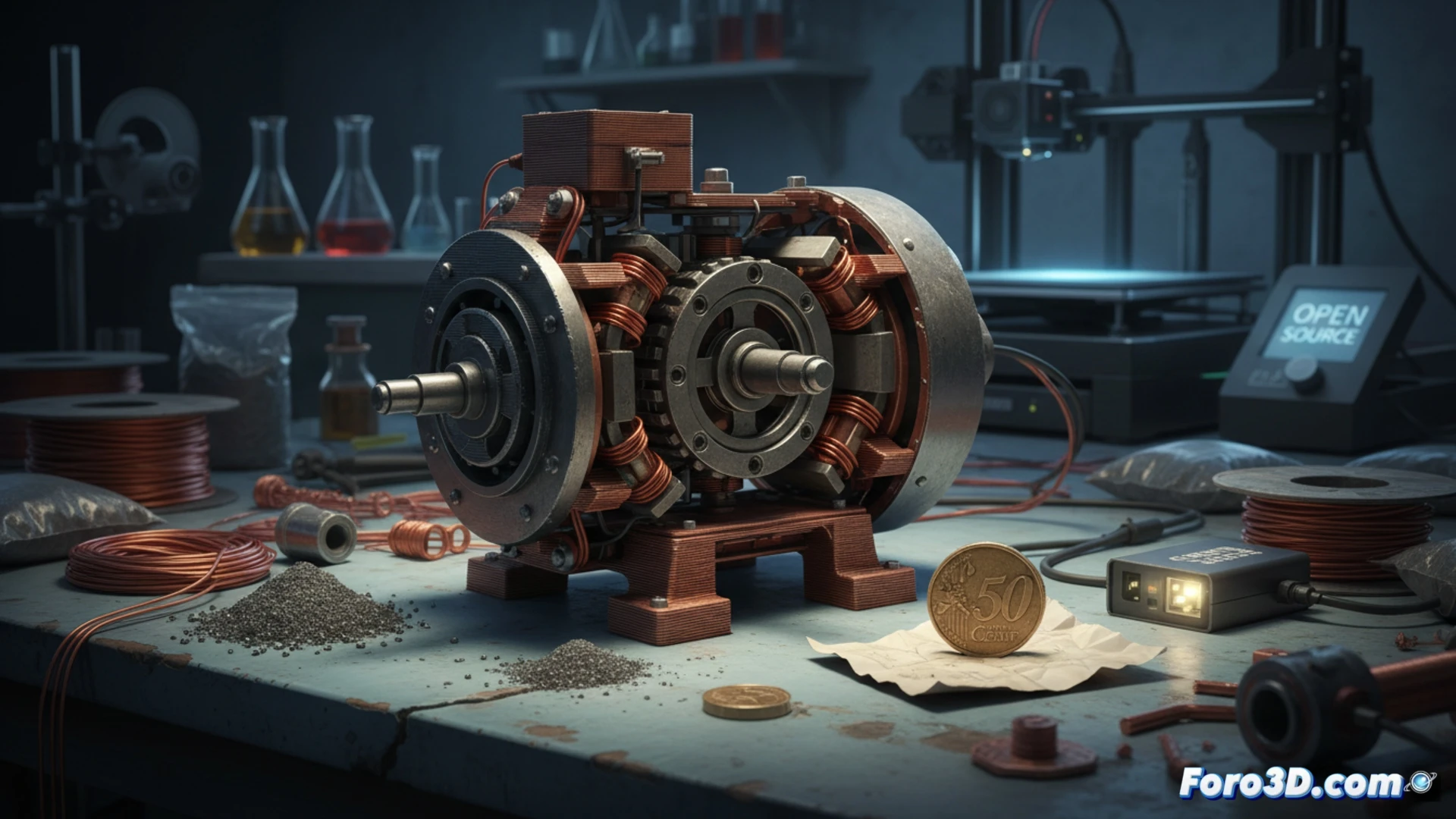
A team of researchers from the University of Chemnitz has achieved a milestone in additive manufacturing: a fully functional 3D-printed electric motor whose material cost is around 50 euro cents. Manufactured in about three hours using common materials like iron and copper, this development is not just a technical curiosity. It demonstrates the disruptive potential of 3D printing to produce complex electromechanical components quickly, extremely economically, and decentralized, opening a new chapter for makers, educators, and prototypers.
Technical details and optimization for additive manufacturing 🔧
The key to the achievement lies in the design specifically optimized for 3D printing. The researchers used a metal additive manufacturing process to create the stator and rotor, integrating the copper windings precisely. This approach eliminates the need for complex assemblies and expensive tools, consolidating into a single printing step what traditionally requires multiple separately manufactured components. The use of standard, non-specialized materials is fundamental to the low cost and accessibility. The resulting motor, although of basic performance, validates the viability of creating functional electromagnetic devices starting solely from a digital file and a 3D printer capable of handling metals.
The future of decentralized and open manufacturing 🌍
This symbolic 50-cent motor transcends its technical function. It represents a conceptual advance toward a radically decentralized production model, where any workshop with a suitable 3D printer could manufacture motors on demand, drastically reducing the logistics chain and associated costs. For the maker community and education, it means the possibility of accessing and studying electromechanical technology with minimal investment. The true potential will be unlocked if these designs are released under open source philosophies, fostering local innovation, customization, and democratized access to technology in regions with limited access to traditional manufacturing.
Could low-cost metal 3D printing finally democratize the manufacturing of customized electric motors?
(PS: A good printable model is like a good friend: it doesn't need supports.)