Biofabrication advances with an innovative project from the Bauhaus University of Weimar. It combines 3D printing with chitosan, a biopolymer extracted from crustacean shells, to create smart dressings. These devices are customizable, biodegradable, and leverage the antibacterial properties of the material. The initiative promises to revolutionize wound care through adapted geometries, optimizing healing and reducing interventions.
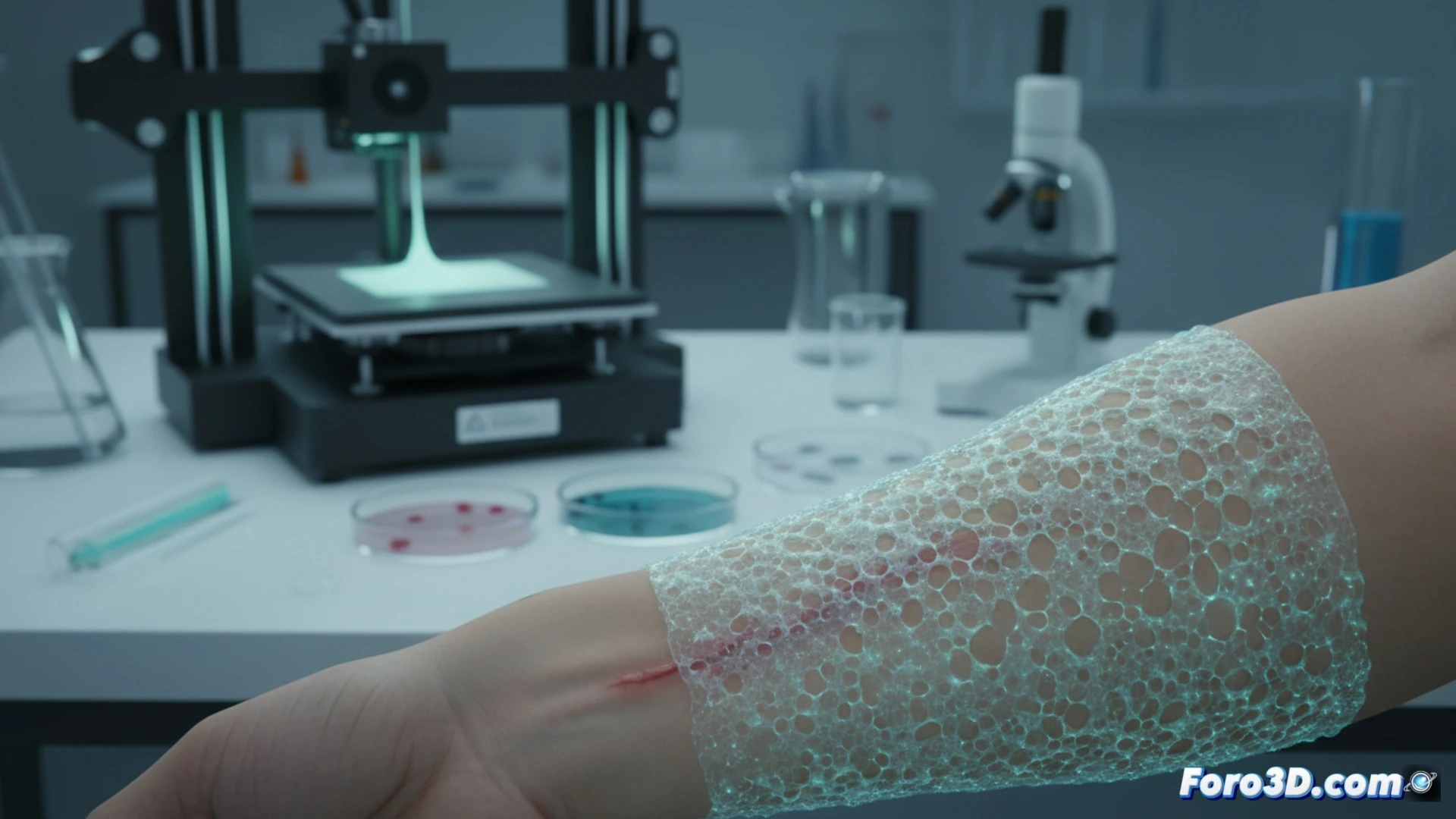
The technology behind chitosan bio-printing 🔬
The key lies in additive manufacturing to control the microarchitecture of the dressing. 3D printing allows designing structures with specific porosity, which regulates the absorption of exudates and the controlled release of therapeutic agents. This geometric customization adapts to the exact topography of the injury, improving contact and efficacy. Chitosan, a biocompatible material derived from fishery waste, is processed as bio-ink to create scaffolds that promote tissue regeneration.
A model of sustainable innovation in biomedicine ♻️
This project goes beyond the technical, standing as an example of circular economy applied to health. It transforms an industrial waste into a high-value medical product. By fusing sustainability, customization, and digital manufacturing, it establishes a new paradigm. It not only seeks to improve clinical outcomes but also to reduce environmental impact, paving the way for future developments in 3D biomedicine.
How is 3D printing of chitosan revolutionizing the creation of smart and customized dressings for the regeneration of complex wounds?
(P.S.: If you print a heart in 3D, make sure it beats... or at least that it doesn't have copyright issues.)