The recent cancellation of Rosalía's concert in Milan due to food poisoning underscores the fragility of live performances. Beyond immediate logistics, this incident highlights the critical importance of thorough visual and technical planning. In the niche of 3D scenography, we have tools that not only allow designing, but also simulating and managing contingencies in a complex tour like the Lux Tour, anticipating scenarios for a more agile response.
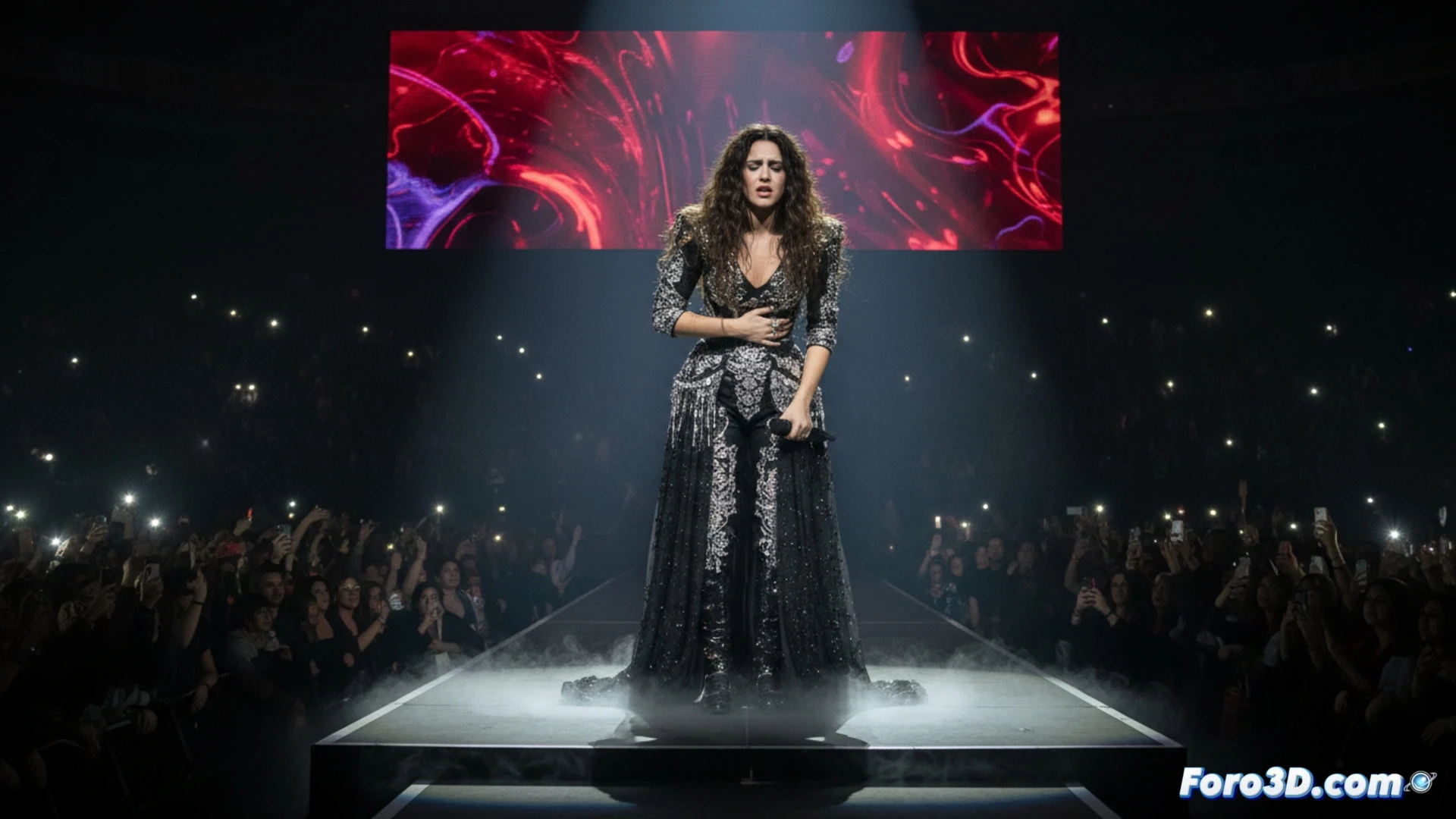
3D Modeling and Simulation: Anticipating Critical Scenarios 🎯
Tour planning with 3D scenography tools goes beyond visual design. Through detailed modeling of each venue, lighting simulation, and the exact arrangement of the stage and audience, a digital twin of the event is created. This model allows rehearsing the setup and teardown logistics, optimizing times. Additionally, it is a key tool for anticipating the impact of a cancellation: by having the entire chain visualized, from equipment transportation to chained dates, resources and routes for subsequent concerts can be quickly reevaluated and adjusted, such as those announced in Madrid, Lisbon, or Barcelona.
3D Technology as a Safety Net Against Uncertainty 🛡️
Rosalía's case shows that, despite the best planning, the unforeseen happens. 3D scenography provides a safety net. With all spatial and technical information centralized and visualized, teams can make informed decisions in record time, minimizing losses and reorganizing the tour on a solid foundation. Technology thus becomes the pillar that supports the resilience of a modern show.
How can 3D planning anticipate and mitigate the impact of critical unforeseen events, such as an artist's cancellation, on the logistics of a performance tour?
(PS: lighting simulation always looks better than reality... like Tinder photos)