The lavish official post-Oscar party is much more than celebrities and luxury. It is a monumental logistical and event design challenge. With over 1,500 guests, 70 dishes, and hundreds of employees, its execution requires meticulous planning. This event becomes a perfect case study to analyze how scenography and 3D modeling tools are crucial for visualizing and optimizing every detail before the key day, from crowd flow to food station layouts.
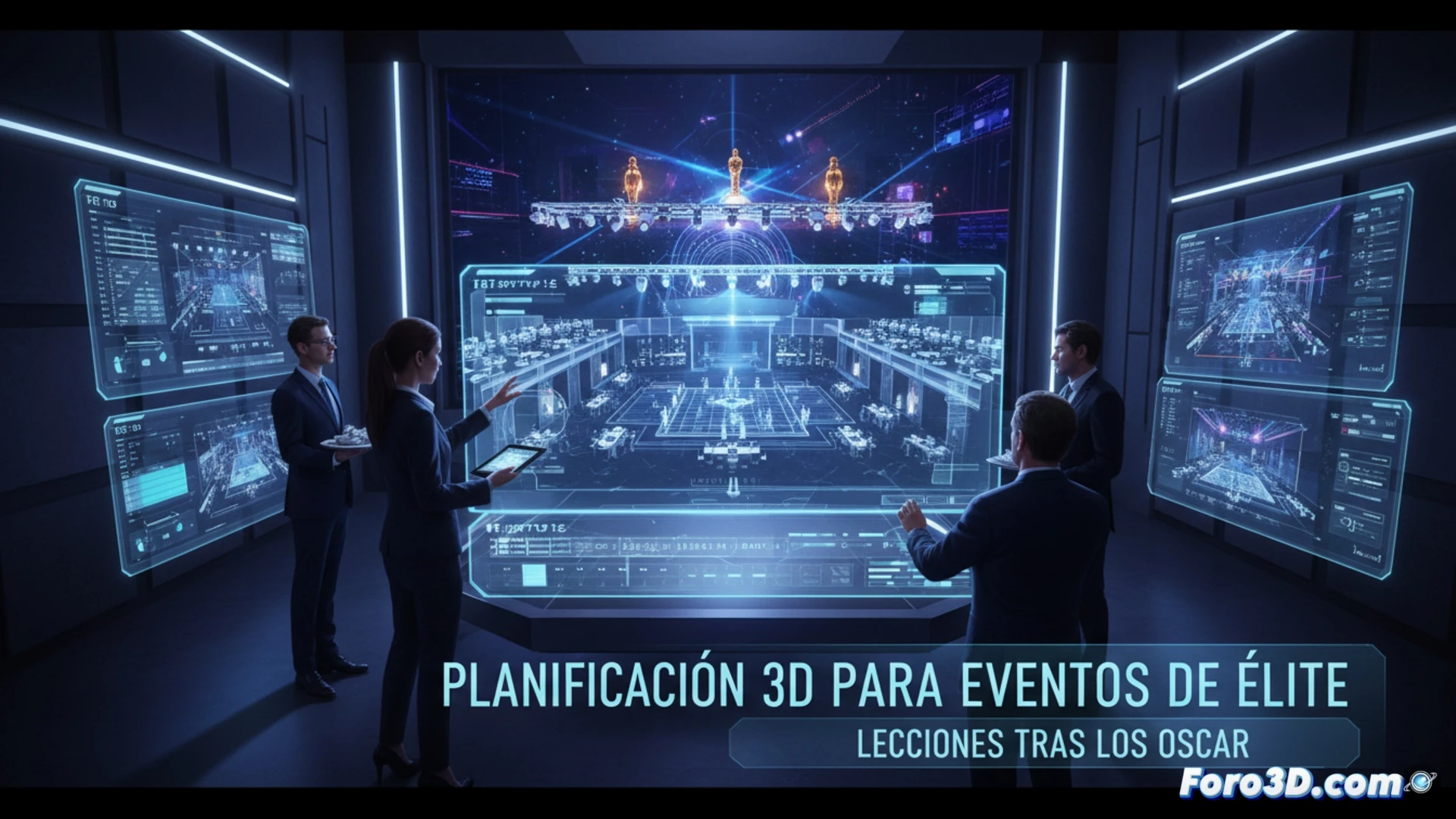
From conceptualization to execution: Digital simulation of spaces and services 🎬
The complexity of this event, with its multiple zones such as the main buffet, the new izakaya station, the sushi corner, and rest areas, demands precise spatial preview. Through 3D modeling and digital floor plans, the location of each service station, congestion points, and staff routes can be simulated in advance. This allows optimizing the distribution so that 600 pizzas or 2,000 desserts circulate efficiently. The technology enables testing different layouts, calculating service times, and ensuring the overall visual experience is impactful and functional, integrating elements like the statuette-themed scenography.
Beyond design: Efficiency and sustainability in planning ♻️
Advanced digital planning directly impacts operational efficiency and sustainability. Simulating food and people flows helps minimize waste and optimize quantities, although the event already stands out for donating surpluses. An integral 3D model allows coordinating the 75 chefs and service staff, anticipating space and equipment needs. Thus, show technology becomes a key tool not only for visual impact but for responsible resource management in large-scale events.
How does the logistical complexity and ephemeral design of an event like the Oscar party translate into an integral 3D model that allows foreseeing problems and optimizing resources in real time?
(PS: lighting simulation always looks better than reality... like Tinder photos)