3D pens have democratized three-dimensional creation, allowing drawing in the air with molten plastic. This technical evaluation compares several models to determine which one best suits your needs. We thoroughly analyze key metrics such as ease of use, precision, heating speed, and ergonomics. Our goal is to provide you with a clear guide that distinguishes between ideal options for beginners and advanced tools for experienced users, helping you materialize your designs in the most efficient way.
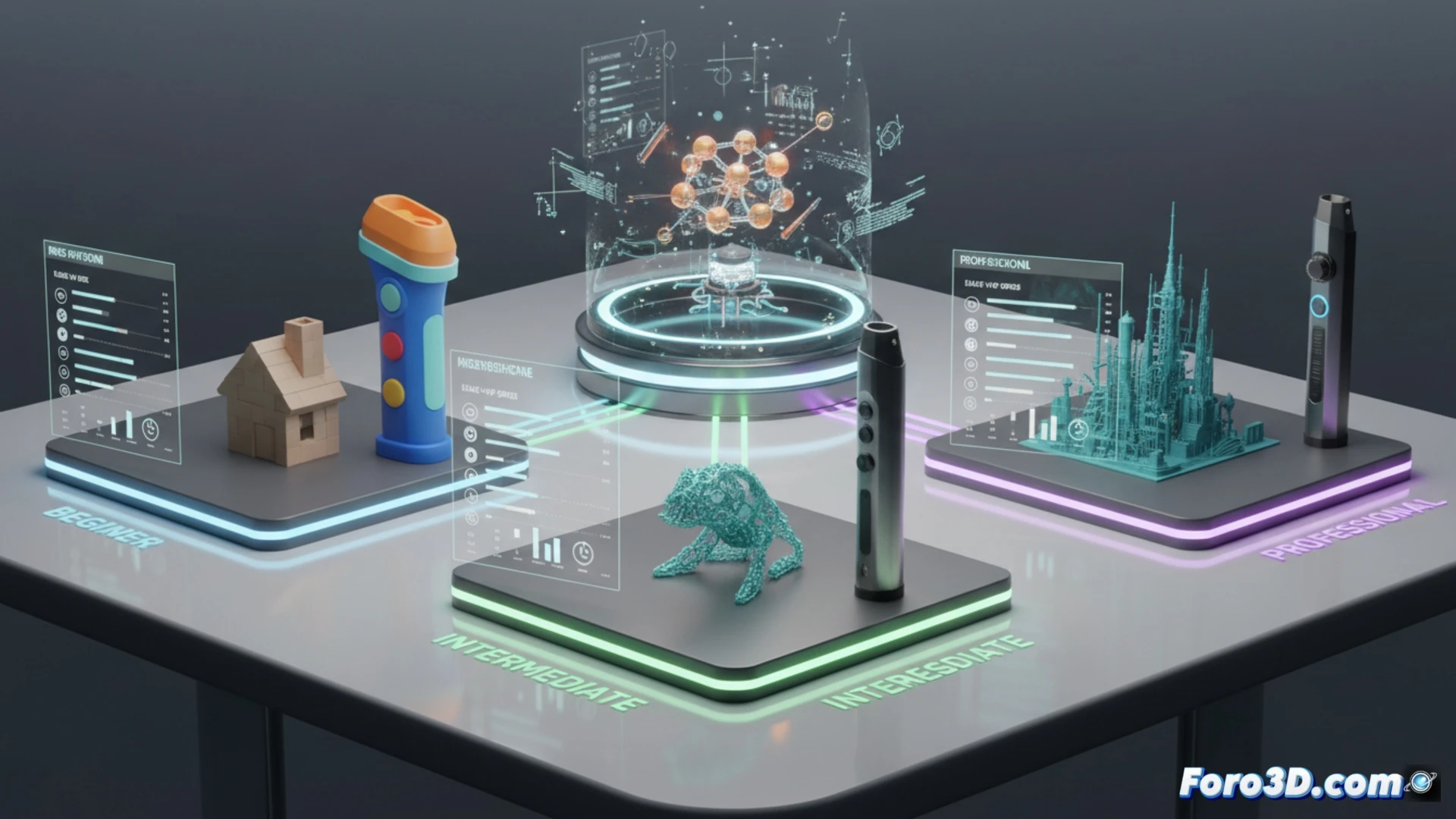
Performance metrics: speed, precision, and ergonomics compared 📊
Heating speed is crucial for workflow fluidity; the evaluated models show notable differences, from those ready in seconds to those requiring almost a minute. Precision in extrusion and filament flow control define stroke quality, being a strong point in pens with continuous speed adjustment. Regarding ergonomics, weight, balance, and non-slip grip are determining factors for prolonged sessions. Beginner models prioritize operational simplicity with few buttons, while advanced ones incorporate OLED screens and granular temperature controls for special filaments.
Final choice: from simple hobby to expert complexity 🎯
The final decision comes down to aligning the device with your level and creative ambition. For initiation and simple projects, we recommend pens with intuitive operation, fast heating, and an affordable price, sufficient to explore the technique. For advanced users seeking detail, durability, and working with various materials, it is essential to invest in a model with precise adjustments, higher power, and robust construction. Both categories share the same goal: transforming ideas into tangible objects, but the right tool will make the difference in the result and experience.
What technical features differentiate a beginner 3D pen from one oriented toward professional users and how do they impact the precision and versatility of creations?
(PS: remember that a powerful GPU won't make you a better modeler, but at least you'll render your mistakes faster) ✨