The political decision to allow tourist apartments is not an abstract debate. It translates into streets empty of neighbors and unattainable rental prices. When a party supports this practice, even with a reduced quota, it is validating a model that expels the resident population. It is necessary to eradicate, not regulate. To demonstrate this impact irrefutably, 3D technology and digital simulation become our best tools for citizen debate.
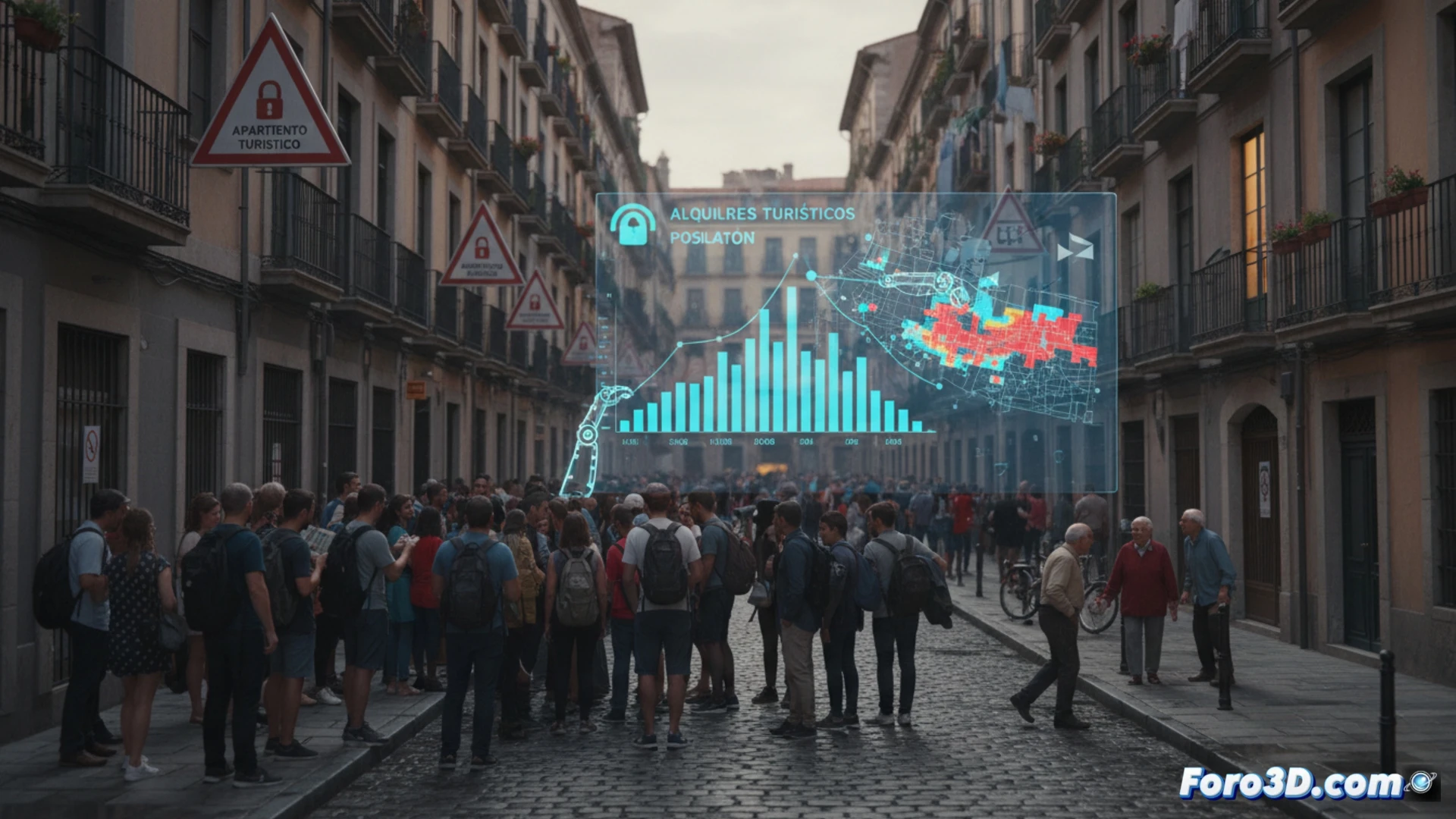
Urban digital twins: simulating residential collapse 🏙️
A digital twin of a municipality allows going beyond statistics. By integrating cadastral data, tourist licenses, and rental prices, we can visualize in an interactive 3D model the transformation of the housing stock. Buildings with residential housing can be represented in one color and those dedicated to tourism in another, showing the progressive substitution. In addition, simulations can be run: projecting the current scenario with the quota regulations against a scenario of total prohibition. The tool would model variables such as permanent population density, pressure on local services, and price evolution, offering clear visual evidence of the consequences of each policy.
From protest to data-driven proposal with volumetric data 📊
This technological approach transforms the complaint into a solid argument. Citizens, equipped with these comprehensible 3D visualizations, can demand accountability based on concrete projections, not just perceptions. Digital participation stops being a comment on social networks to become interaction with a model that proves how a political decision deteriorates urban cohesion. The eradication of tourist apartments stops being a slogan to become the logical conclusion of a data analysis made visible and tangible for everyone.
How can 3D modeling of real urban data become a decisive tool for citizen participation in the debate on the regulation of tourist rentals?
(PS: visualizing a political debate in 3D is easy, the difficult thing is that it doesn't look like a WWE fight)