The recent attack in Artibonite, Haiti, with dozens dead and thousands displaced, underscores an ongoing humanitarian catastrophe. Beyond the news report, 3D visualization technologies offer crucial tools for documenting and analyzing these disasters. This article explores how digital modeling can transform crisis response, moving from abstract figures to a spatial and tangible understanding of the devastation and forced displacement. 🚨
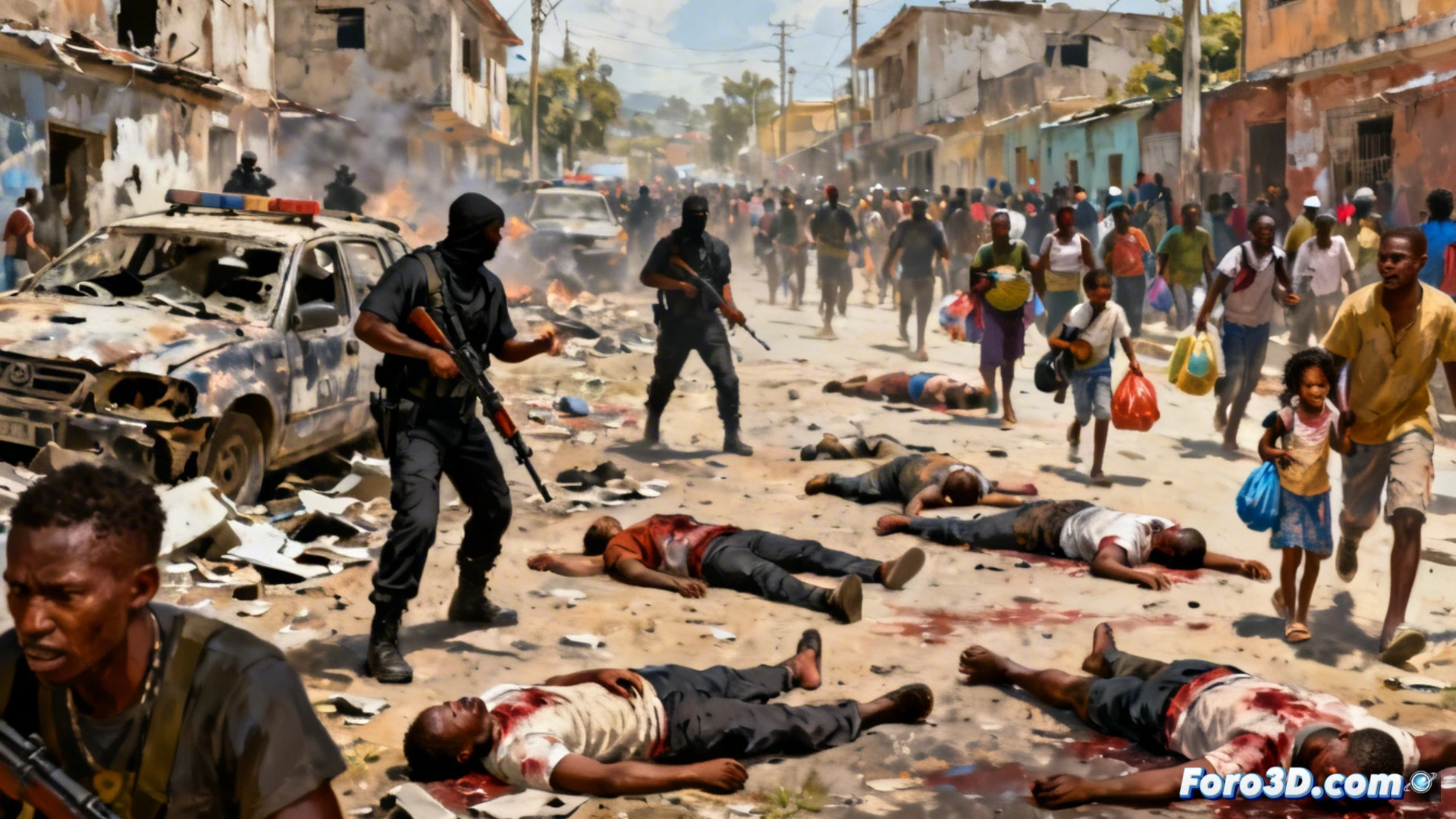
Forensic documentation and logistical planning with 3D tools 🗺️
Drone photogrammetry and terrestrial laser scanning would enable the creation of a precise geospatial model of the area affected by violence. This digital twin would serve as forensic evidence to document damage to critical infrastructure and possible crimes. Additionally, by integrating demographic data and displacement flows, logistical scenarios can be simulated for the efficient distribution of humanitarian aid, identifying safe routes and high-risk zones. 3D Geographic Information Systems are key to visualizing the territorial expansion of gangs and planning security operations more strategically and with less risk.
Visualization as a tool for awareness and memory 🧩
An interactive 3D model of the crisis goes beyond technical analysis. It can become a powerful advocacy tool, showing the international community the real scale of displacement and community destruction. These virtual reconstructions also serve as a historical archive and digital memorial, preserving the memory of what happened in a context where instability can erase physical evidence. 3D technology thus not only plans the response but also bears witness.
Would you export the results to GIS format?