Spain's request to the EU for an action plan on fertilizers reveals a deep crisis. The shortage and skyrocketing prices, worsened by the war in Ukraine, threaten European food security. This is a first-order geopolitical and logistical problem. At Foro3D, we propose using 3D visualization technology to break down this complex situation, transforming abstract data into interactive models that everyone can understand and analyze.
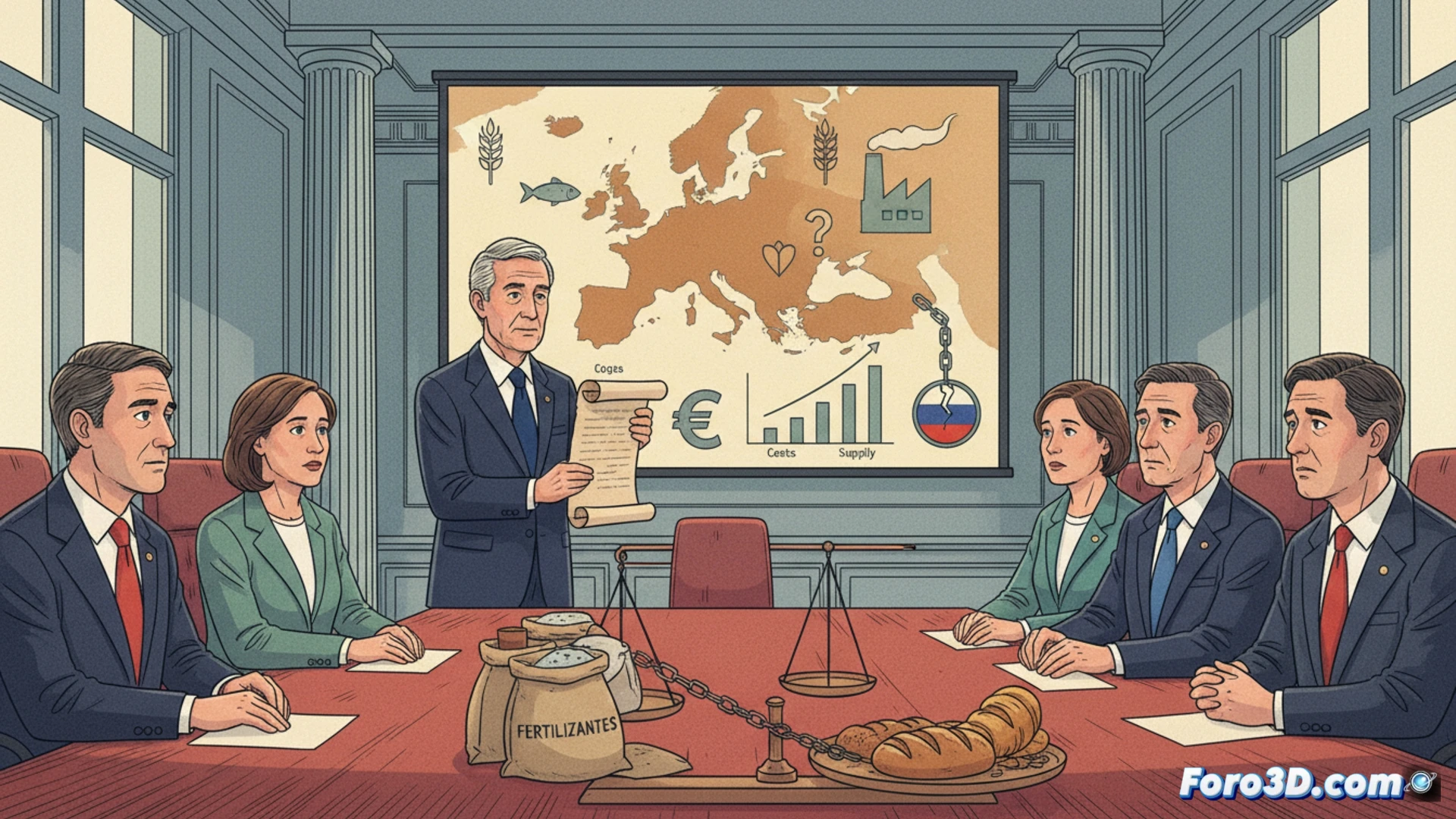
Interactive 3D Visualization of Dependencies and Bottlenecks 🗺️
A geospatial 3D model can map the global fertilizer supply chain. Blocked or diverted maritime and land routes could be modeled, along with key raw material producing countries like natural gas for ammonia, and flows to the EU. Information layers would show the percentage dependence of each member state, the impact on production costs by agricultural region, and the temporal evolution of prices. This simulation would allow identifying critical points, testing alternative supply scenarios, and clearly communicating the urgency of reducing external dependence, combining geopolitical analysis with concrete economic data.
Beyond Visualization: Simulation for Strategic Resilience ⚙️
The true power of 3D lies in prospective simulation. These models can become planning tools, testing the impact of new policies or investments in strategic autonomy. Visualizing a European factory for alternative fertilizers in a 3D environment, along with its new simulated supply chains, helps evaluate feasibility and costs. Thus, the technology not only explains the crisis but also contributes to designing solutions, balancing the green transition with immediate production security.
How can 3D modeling of the global fertilizer supply chain visualize and predict the impact of geopolitical tensions on Europe's food security?
(P.S.: visualizing the global supply chain is like following a trail of breadcrumbs... in 3D)