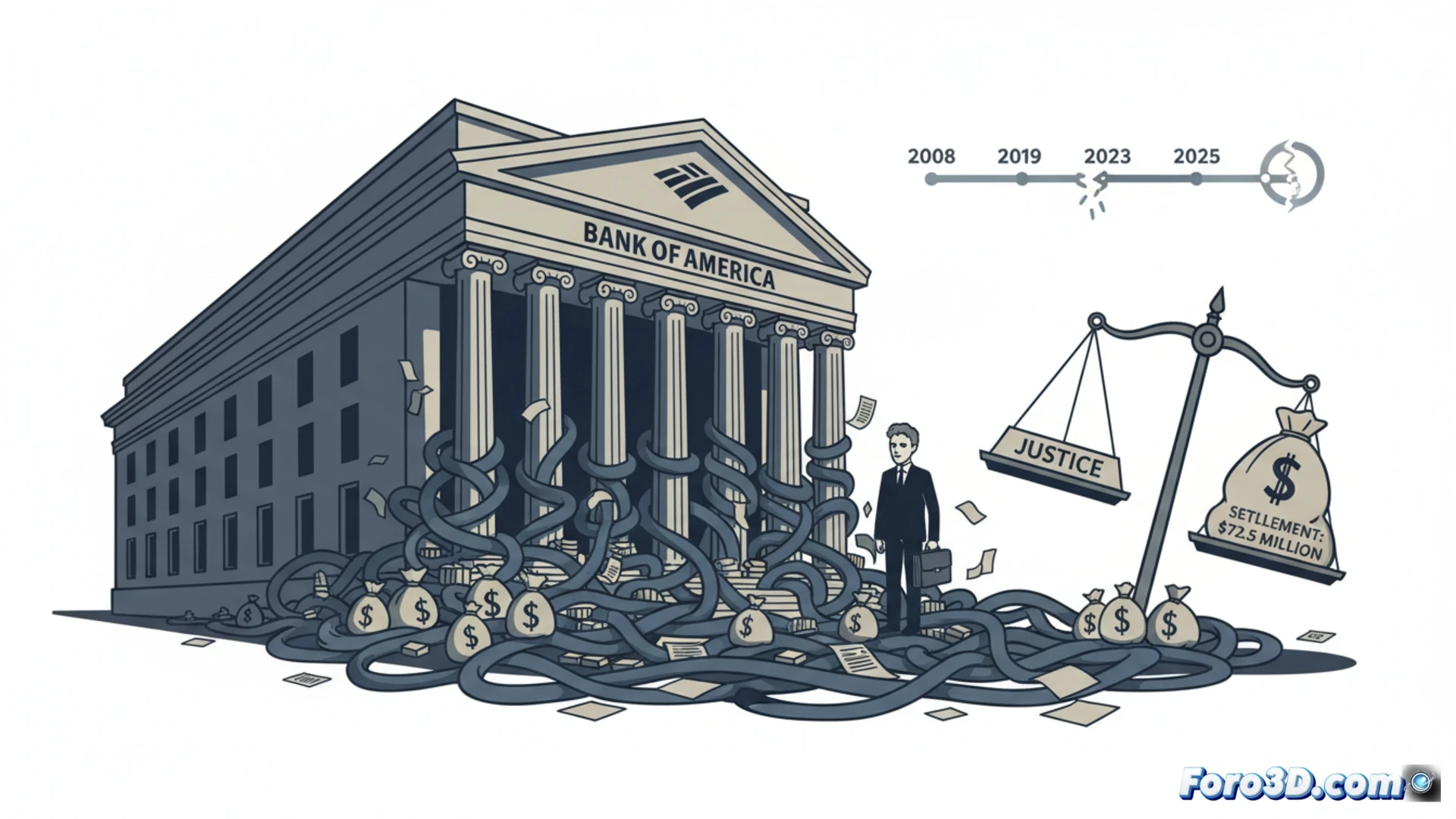
Bank of America's recent $72.5 million settlement, after being accused of ignoring transactions linked to Jeffrey Epstein's sex trafficking, underscores a critical failure in compliance systems. This case, along with similar ones from JPMorgan and Deutsche Bank, shows that traditional automated controls can be insufficient. This is where 3D data visualization and simulation emerge as transformative tools to audit and strengthen financial integrity. 🔍
Digital Twins to Simulate Suspicious Capital Flows 💎
A digital twin of a bank's transaction system allows recreating the entire network of financial movements in an interactive 3D environment. In a case like Epstein's, his payment patterns could be modeled, identifying unusual nodes, frequencies, and counterparties. Detection algorithms could be tested in real time on this model, visualizing how alerts are triggered or, crucially, overlooked. 3D dashboards allow auditors and regulators to fly through complex money flows, making hidden connections and blind spots in compliance filters tangible—something traditional reports fail to expose clearly.
Beyond the Fine: Prevention with Immersive Visualization 🛡️
The lesson is not just paying multimillion-dollar settlements, but preventing complicity. Immersive visualization turns abstract data into compelling narratives for top management, showing reputational risk as a corrupt network infecting the institution. Simulating what-if scenarios with better controls is not a theoretical exercise, but a way to quantify savings in penalties and the value of integrity. 3D technology makes compliance proactive, understandable, and, above all, unavoidable.
How can 3D modeling of financial transaction networks help compliance teams identify and demonstrate patterns of systemic failures, like those evidenced in the Bank of America case?
(PS: fines of €79,380 are like failed renders: they hurt more the longer you've been working on them)