A team from the University of Southern California has achieved a crucial breakthrough in 3D biomedicine: creating three-dimensional kidney organoids from human cells that multiply sustainably without showing signs of aging. The key was manipulating the p38 and YAP cellular signaling pathways. This control over growth turns these mini organs into realistic and perpetual models, ideal for testing drugs with precision and laying the groundwork for future regenerative therapies that could replace dialysis.
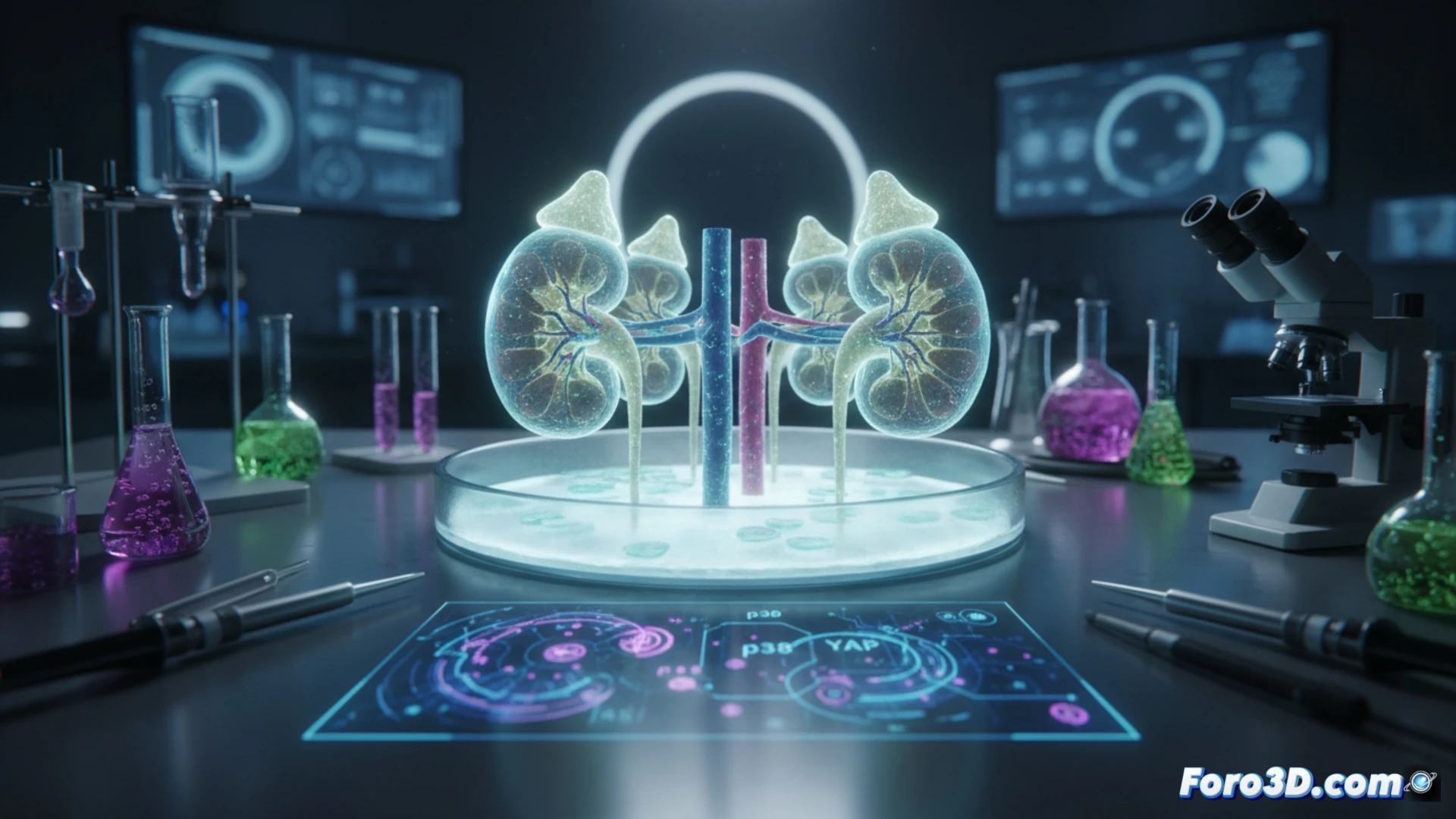
3D Biofabrication and Control of p38/YAP Pathways 🔬
3D biofabrication allows assembling cells into complex three-dimensional structures that mimic the architecture and function of real tissues. In this case, the researchers not only built the organoid but also intervened in its fundamental biology. By inhibiting the p38 stress pathway and simultaneously activating the YAP growth pathway, they reprogrammed cellular behavior. This prevents senescence (cellular aging) and enables sustained expansion of renal progenitor cells, maintaining tissue functionality. The result is a stable and scalable laboratory model.
The Future of Research and Personalized Medicine 💊
These immortal organoids are much more than a cell culture. They represent an ethical and precise platform for drug development, drastically reducing reliance on animal models. In the long term, the technology opens the door to creating patient-specific disease models with a patient's cells, testing tailored treatments, and eventually manufacturing functional kidney tissues for transplantation. 3D biomedicine thus demonstrates its potential to transform nephrology from basic research to clinical therapy.
Could these non-aging 3D mini kidneys be the key to deciphering and treating chronic kidney diseases? 🧬
(P.S.: If you print a heart in 3D, make sure it beats... or at least doesn't have copyright issues.)