The recent intervention by the National Police in Ceuta, where a 15-meter tunnel used to introduce hashish was located, is a clear example of complex criminal infrastructure. For subsequent expert analysis, 3D documentation techniques are fundamental tools. A precise digital model of the scene, created in situ, becomes an objective and immutable piece of evidence that preserves all details for judicial investigation, overcoming the limitations of traditional photographs and sketches.
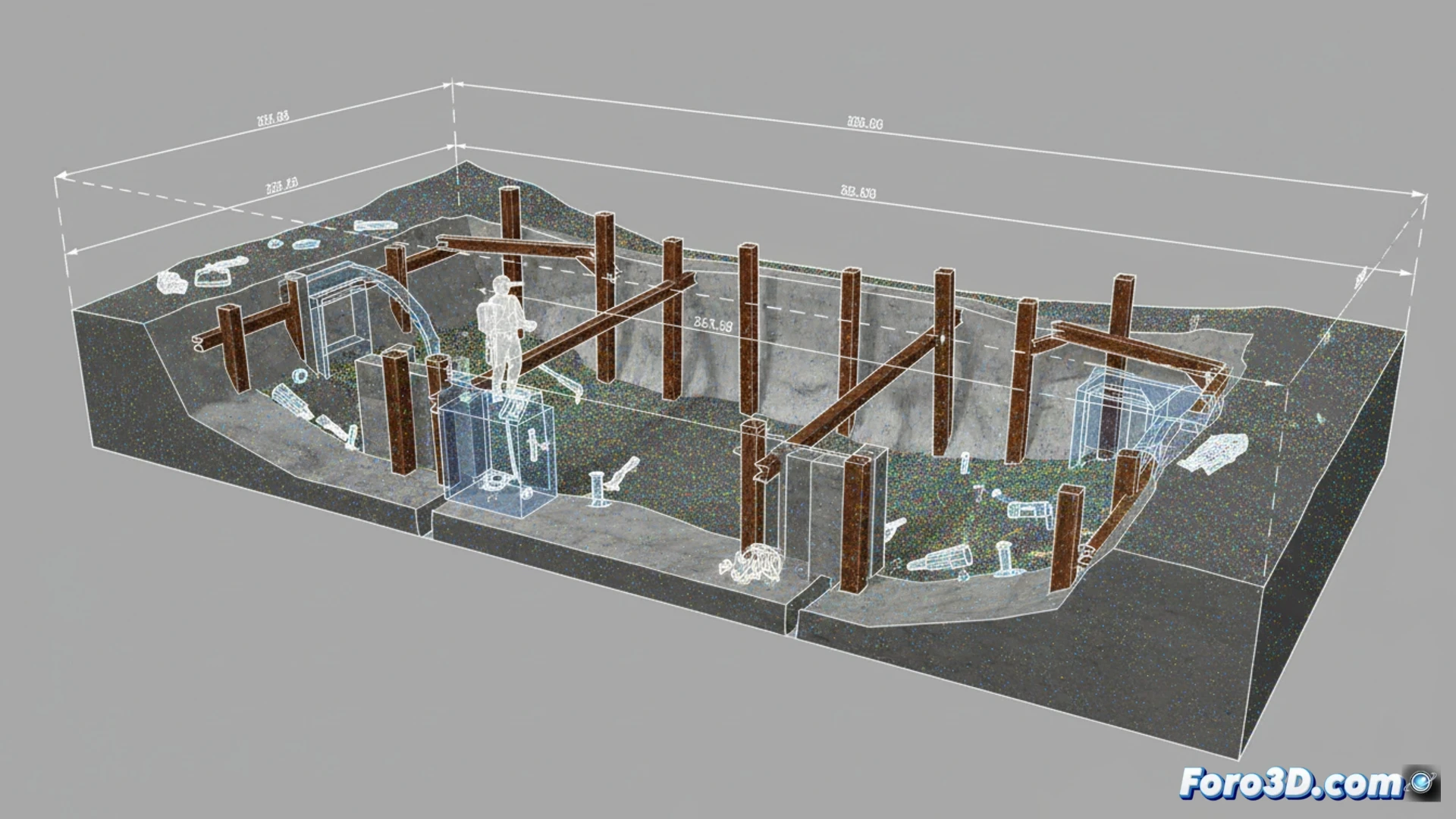
Laser scanning and photogrammetry: capturing underground evidence 🔍
The forensic documentation of this tunnel would require technologies such as 3D laser scanning and photogrammetry. A laser scanner would capture with millimeter precision the geometry, dimensions, and orientation of the passageway, ventilation and lighting systems, and entrance camouflage. Photogrammetry would complement with high-resolution textures and visual details. This 3D model would allow virtual measurements, analysis of construction methods, identification of tool marks, and simulation of operational flows or construction methods, all without altering the physical scene.
Probative and strategic value of the digital twin ⚖️
The resulting 3D model transcends mere documentation. In court, it allows the jury to virtually traverse the tunnel, understanding its complexity without the need for on-site visits. For law enforcement, it is an invaluable training tool to study narco tactics and improve detection. Additionally, this digital twin permanently preserves the evidence, crucial if the structure is destroyed, ensuring that expert analysis can be reviewed at any stage of the process.
How can 3D laser scanning and photogrammetry be used to forensically document and analyze the structure and excavation process of an intervened narco tunnel?
(P.S.: In scene analysis, every scale witness is an anonymous little hero.)