The successful series The Lincoln Lawyer immerses us in the legal world of Los Angeles through Mickey Haller. As we watch him build his defenses, a technical question arises: how would his work be with current crime scene analysis tools? In reality, 3D forensic reconstruction has revolutionized investigation, allowing crimes to be documented and analyzed with previously unthinkable precision. This article explores the bridge between television fiction and the real technology that is redefining justice.
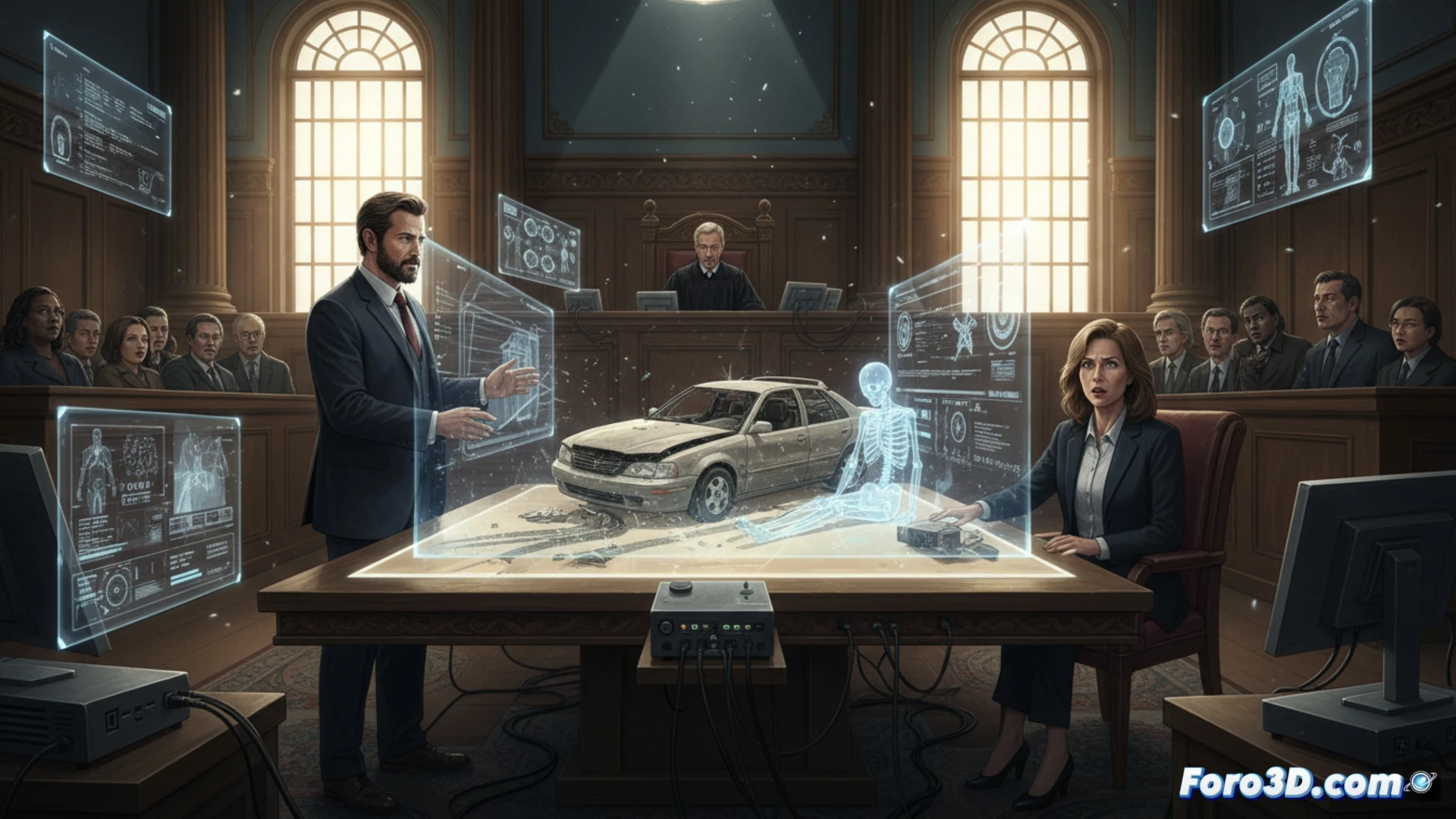
From Sketch to Point Cloud: Technologies the Series Omits 🔍
In the series, evidence is presented through photographs, testimonies, and physical objects. However, modern forensic practice employs 3D laser scanners and photogrammetry to create exact digital models of the crime scene. These point clouds allow measuring distances, analyzing bullet trajectories, or reconstructing accidents without altering the site. A lawyer like Haller could, in reality, examine the scene from any angle in a viewer, weeks later, looking for inconsistencies in the prosecution's narrative. This digital objectivity minimizes subjective interpretation errors by investigators and offers irrefutable visual testimony to a jury.
The Definitive Proof: Fiction or Augmented Reality? ⚖️
Legal narrative on television often focuses on the dramatic final blow. 3D analysis technology, on the other hand, builds a narrative based on pure data. The true revolution is not in the drama, but in the ability to dismantle theories with incontestable geometric evidence. For characters like Haller, these tools would not be a narrative trick, but the foundation of an impeccable and scientific defense. The future of legal drama may not lie in a surprise witness, but in a 3D model that speaks for itself.
How can 3D forensic analysis reconstruct and demonstrate crime scenarios irrefutably in court, overcoming the limitations of traditional photographs and plans?
(P.S.: In crime scene analysis, every scale witness is an anonymous little hero.)