An apparently isolated incident, such as the theft of a backpack on a crowded terrace, contains repeatable patterns and quantifiable risk factors. Through 3D forensic reconstruction, we can transform these events into technical case studies. This analysis allows decomposing the crime into its spatial and temporal elements, offering a powerful tool for prevention and police training, going beyond mere anecdote.
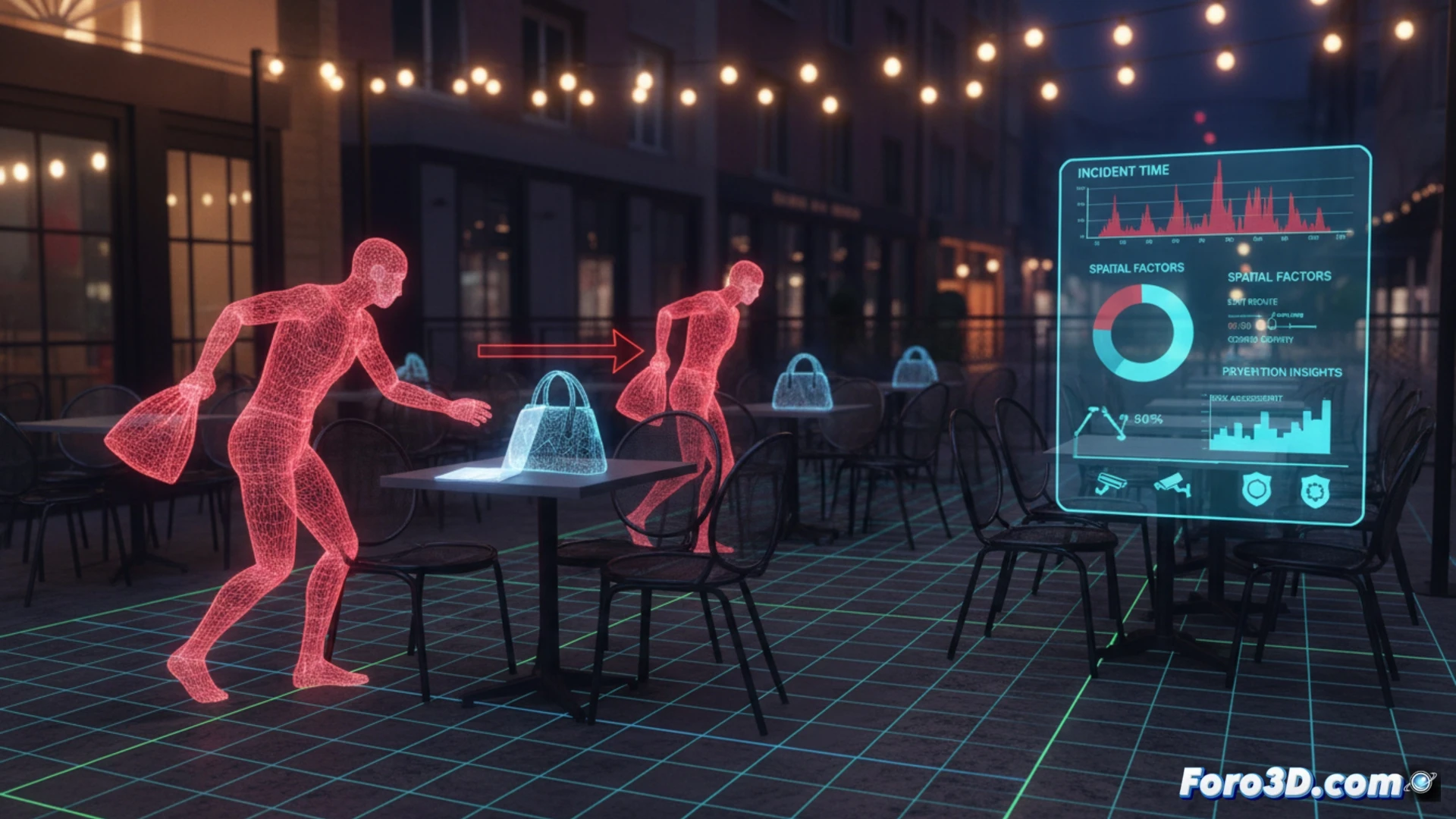
Scene reconstruction: modeling vulnerabilities 🔍
The reconstruction begins with the precise modeling of the scene: the arrangement of tables, chairs, visual barriers such as planters or signs, and the movement flows of customers and staff. The criminal sequence is animated, positioning the distracted subject and the thief. This 3D model allows identifying critical blind spots, approach and escape trajectories, and the exact moment of exploiting the distraction. Variables such as the height of a chair backrest or the location of a phone stand become analyzable data to evaluate their influence on the criminal opportunity.
From visualization to active prevention 🛡️
The final value of the model is its practical application. The 3D visualization serves as high-impact training material to establish protocols in hospitality, such as redistributing furniture to eliminate dead angles or placing warnings. For law enforcement, it is a tool to study modus operandi and plan surveillance. Thus, a theft becomes a set of optimizable parameters, where 3D technology bridges the gap between the consummated fact and proactive security.
How can 3D forensic analysis identify and quantify blind spots and movement patterns that facilitate thefts on hospitality terraces?
(PD: In scene analysis, every scale witness is an anonymous little hero.)