The legend of the Liérganes Fish Man poses a perfect historical enigma for digital forensic reconstruction. The disappearance of Francisco de la Vega in the Miera River and his subsequent return in an altered state constitute a traumatic event scene. Using 3D documentation technologies, we can transcend the myth and analyze the case as a real incident, investigating the environment and reported facts with objective tools to separate the documentable from the fabrication.
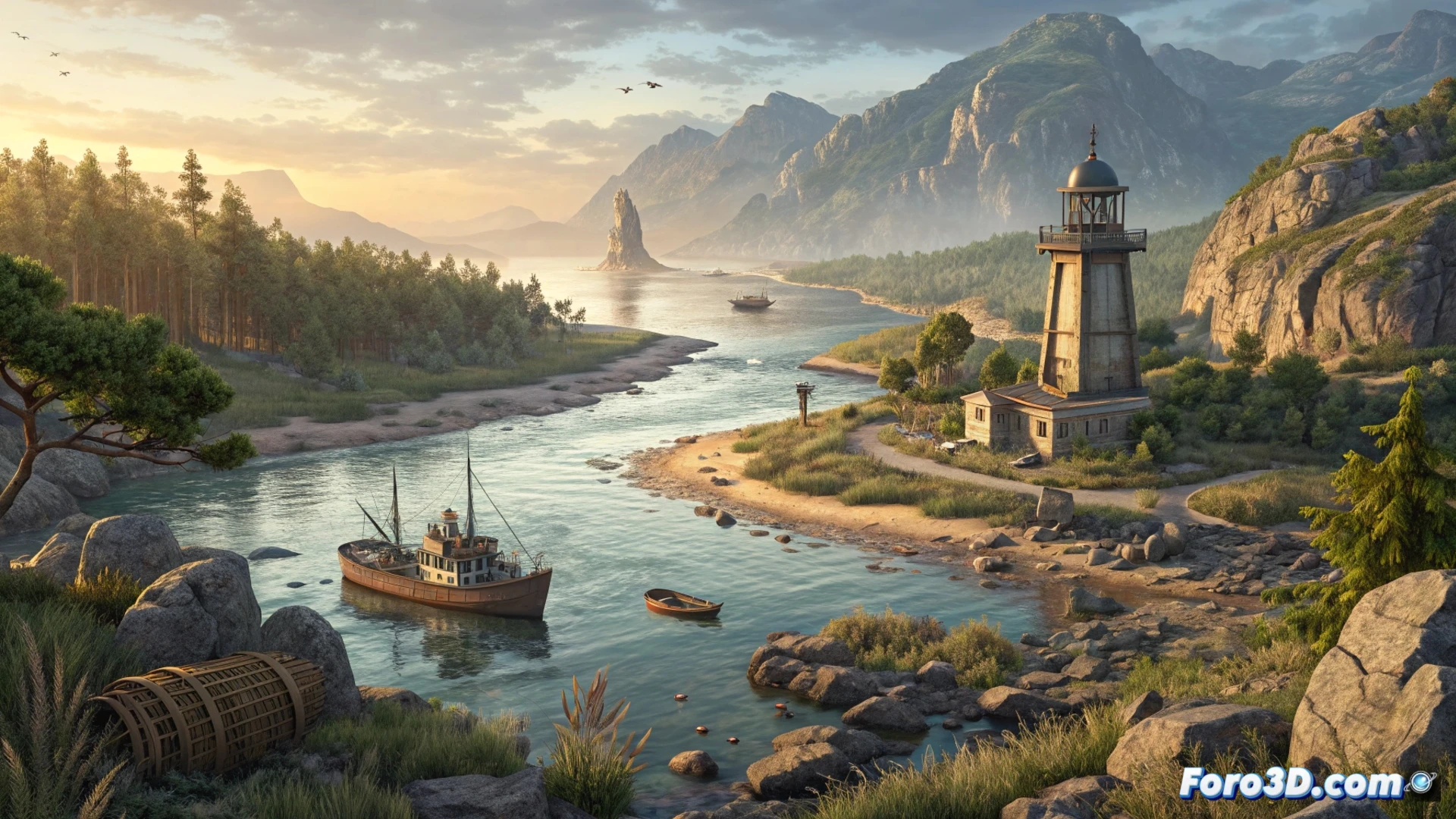
Environment reconstruction and hypothesis simulation 🧩
The application begins with the documentation of the key scenario: the course and banks of the Miera River in the 17th century. Using current aerial and terrestrial photogrammetry of the site, combined with historical data, the topography and hydrology of the time would be modeled. A laser scan would provide the exact geometric base. In a game engine like Unreal Engine 5, these data would be integrated to simulate currents, visibility, and accessibility. This would allow analyzing plausible disappearance trajectories, possible reappearance points, and evaluating the logistics of the narrative under real physical parameters.
The scene as a demystification tool 🔍
The power of this reconstruction does not lie in proving the supernatural, but in visualizing and quantifying the factual elements of the case. An interactive 3D environment would allow historians and anthropologists to examine the narrative from multiple perspectives, identifying inconsistencies or aspects reinforced by oral tradition. 3D technology turns a disturbing legend into a structured object of study, where the man's empty gaze is transformed into a contextual analysis problem, not an abyssal terror.
How can 3D forensic analysis and digital facial reconstruction provide scientific evidence to the legend of the Liérganes Fish Man, contrasting historical accounts with the physical anthropology of the time?
(P.S.: In scene analysis, each scale witness is an anonymous little hero.)