The recent drone attack on a military base in Saudi Arabia, which injured twelve U.S. soldiers, transcends the news to become a case study for digital forensic analysis. In our niche, 3D reconstruction stands out as the definitive tool to unravel the mechanics of the incident. We propose a virtual model of the base, created from satellite images, to accurately simulate the drone's trajectory, impact point, and affected radius, providing a spatial understanding impossible with 2D photos.
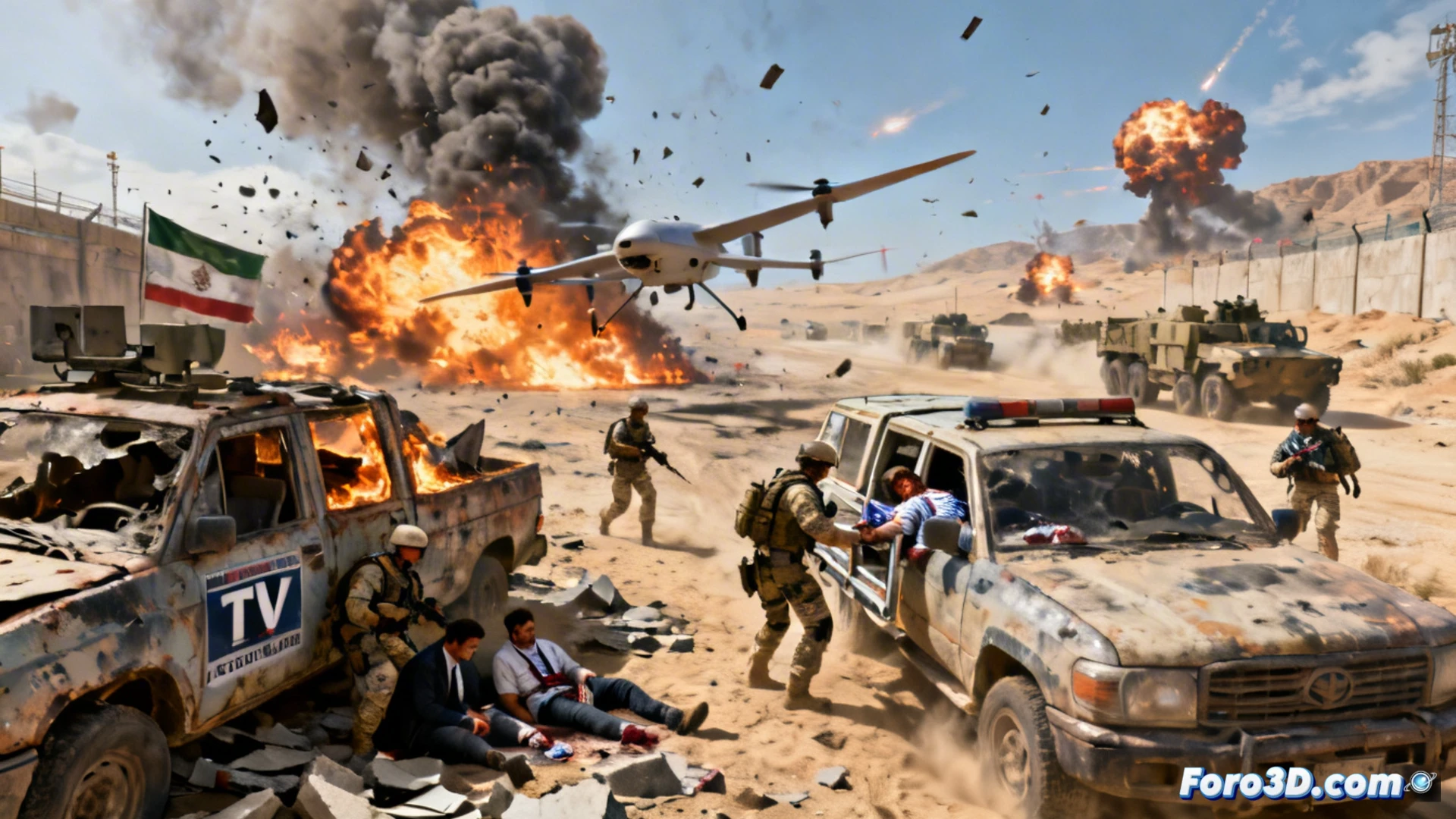
Reconstruction Methodology: From Satellite Image to Dynamic Simulation 🧩
The reconstruction would begin with photogrammetry of high-resolution commercial satellite images to generate a georeferenced 3D model of the facility. Identifying key structures and reported impact points, data from defense systems (such as C-RAM positions) and the probable technical characteristics of the Iranian drone would be integrated. In a simulation engine, optimal approach trajectories would be calculated, evaluating blind spots and the theoretical effectiveness of countermeasures. For the attack in Lebanon, a similar terrain model would allow analysis of the line of sight, possible fire origins, and the dynamics of the attack on the press vehicle.
3D Visualization as a Geopolitical Tool 🗺️
Beyond the technique, these 3D models offer an objective visual narrative that clarifies the operational reach of proxy militias and the vulnerability of bases. By visualizing the attacks in their exact geographic context, asymmetric tactics and logistical challenges are better understood. This spatial clarity is crucial for strategic analysis, transforming scattered data into a virtual scenario to evaluate responses and future escalation scenarios in an increasingly unstable region.
How can the trajectory and impact point of a drone be reconstructed and analyzed in 3D to forensically determine its origin and attack method with precision?
(P.S.: 3D war maps are like renders: the more realistic they are, the more time you need to process them) 🖥️