The recent attempted attack near the Bank of America in Paris underscores the need for cutting-edge investigation methods. In such cases, precise documentation of the scene is crucial. 3D scanning technologies, such as laser scanning and photogrammetry, emerge as fundamental tools for capturing and analyzing the environment where the explosive device was found in an immutable way, serving as objective evidence and facilitating collaborative work between agencies.
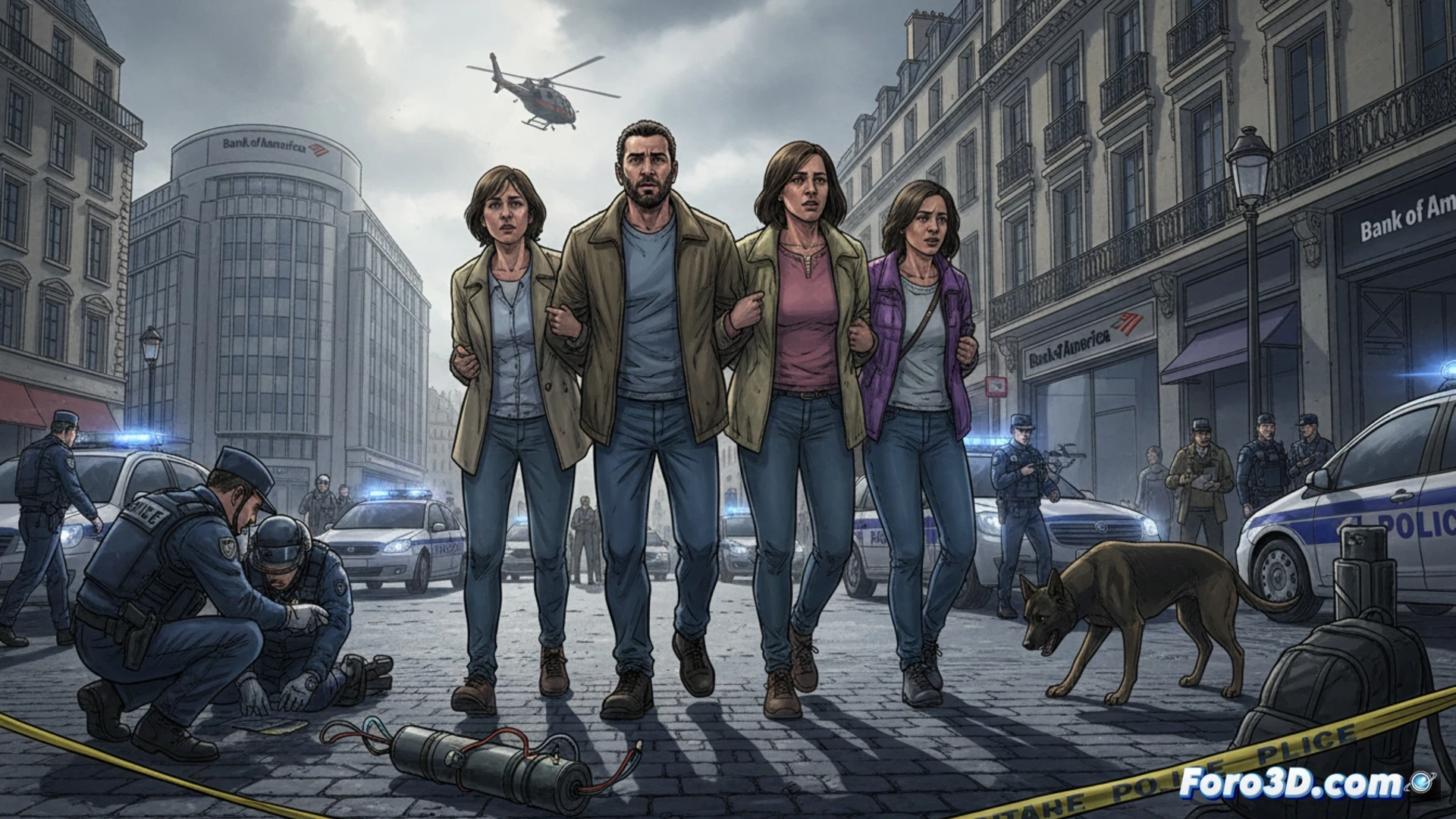
Immutable Documentation and Dynamic Reconstruction 🔍
A laser scanner can capture millions of points from the scene in minutes, creating a digital clone that preserves the exact location of the device, distances to potential targets, and environmental conditions. Photogrammetry, from photographs, adds photorealistic texture. This foundation allows digitally reconstructing the suspects' movements, simulating hypotheses about the possible blast radius, or visualizing the scene from any angle for investigators and experts, overcoming the limitations of traditional plans and photographs.
Precision for Justice and Prevention ⚖️
The precision of these models is vital for courts, where a clear representation can be decisive. Beyond the specific case, 3D analysis enables studying patterns and methodologies used by terrorist networks, providing valuable data for intelligence and the prevention of future attacks. Investment in these technologies is not just a technical improvement; it is an essential reinforcement for security and justice in a context of complex threats.
Would you combine scanning with photogrammetry?