The recent commemoration of the 75th anniversary of the annexation of El Pardo to Madrid, with its historical parade and tribute to residents, is a perfect example of how institutions seek to strengthen community ties. However, these acts, due to their ephemeral nature, limit their reach. This is where 3D visualization emerges as a key tool for digital democracy, allowing a one-time event to be transformed into an interactive and permanent educational resource, accessible to all citizens.
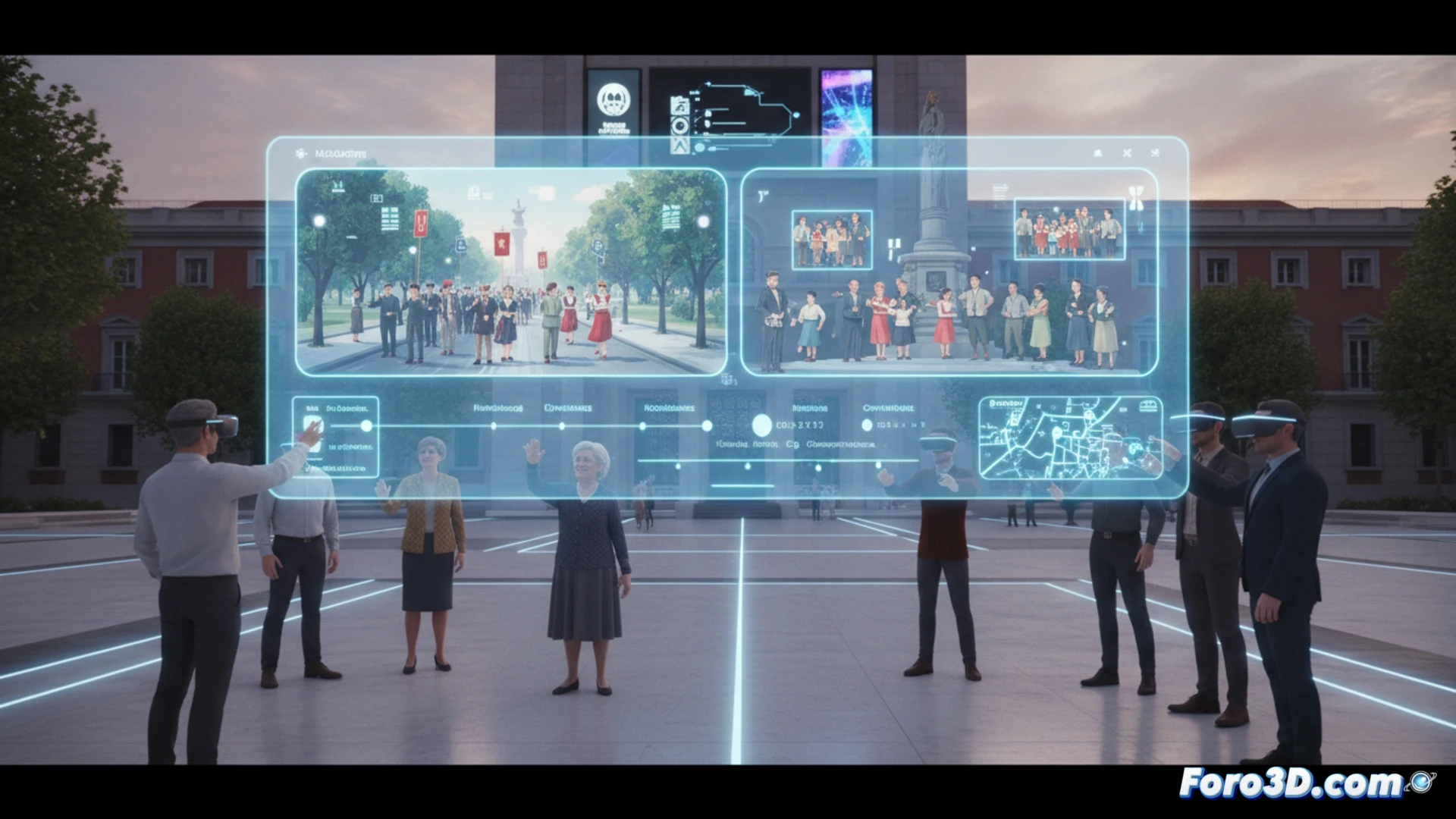
Technical proposal: from the street to the interactive model 🛠️
Technology allows going beyond the photographic report. A geolocated 3D model of the parade route could be developed, enriched with informative landmarks. Each point would offer access to historical archives, comparative old/current photographs, or recreations of key moments. Using a graphics engine, an interactive web experience could be created where the user navigates a spatial timeline. For institutional events, an animated 3D infographic projected at the event would show the urban evolution of the district, offering immediate and high-impact visual context.
Collective memory in the digital era 💾
The true power of these tools is not only technical, but civic. Such a project democratizes access to local history, especially for young people. It transforms memory, safeguarded by the oldest residents, into a living digital legacy. This turns institutional outreach into a participatory process, where citizens can contribute their own memories and documents, strengthening digitally the identity and sense of belonging that celebrations like that of El Pardo aim to preserve.
How can interactive 3D models and digital archives democratize historical memory, allowing citizens not only to visualize, but also to contribute and collectively decide which local history milestones are preserved and how they are narrated?
(PD: visualizing a political debate in 3D is easy, the hard part is making it not look like a WWE match)