The recent robbery at an embroidery workshop in Jaén, involving the theft of gold thread and pieces valued at 23,000 euros, highlights the vulnerability of high-value heritage assets. Beyond traditional investigation, this case is a clear example of how 3D documentation of the crime scene can be crucial. Digitally preserving the state of the premises after the crime offers decisive forensic advantages for analyzing the modus operandi and strengthening the chain of custody of the evidence.
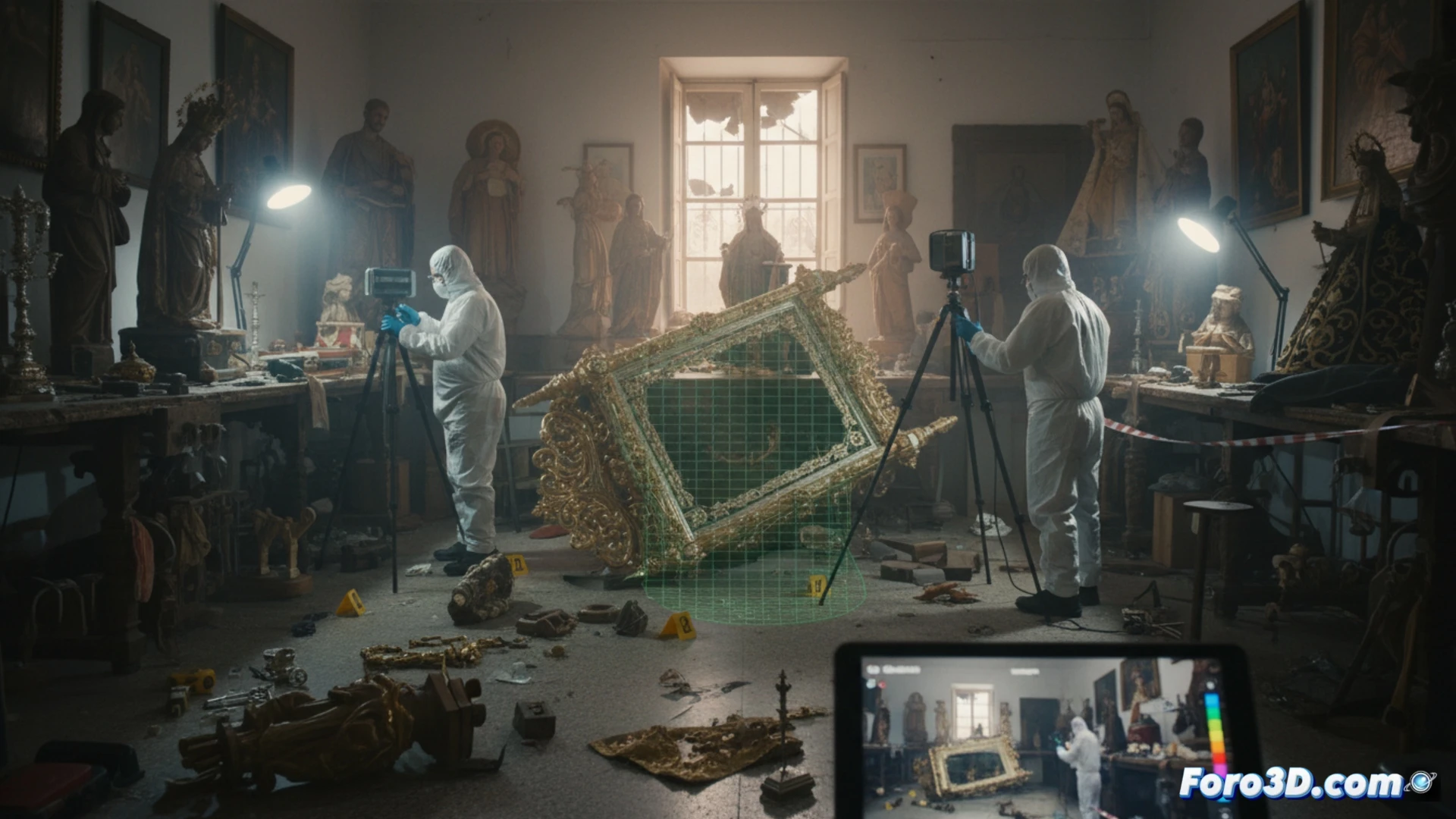
Photogrammetry and laser scanning for forensic preservation 🔍
The application of photogrammetry or laser scanning would allow the generation of a millimeter-accurate and geo-referenced 3D model of the workshop. This model would capture the exact arrangement of the furniture, forced display cases, possible access points, and the location of any residual evidence. Unlike photos or videos, a navigable 3D model allows investigators to measure distances, analyze lines of sight, and recreate movement hypotheses within the scene frozen in time. This objective documentation is invaluable for expert analysis and serves as irrefutable visual evidence in court, long after the workshop has returned to normal.
The digital scene as a procedural guarantee ⚖️
3D digitization goes beyond mere technical documentation. It acts as a procedural guarantee, preserving the scene in an immutable way for all parties involved in the case. In cases like this, where the stolen items have significant cultural and economic value, having a precise model strengthens the investigation and can help track the fate of very specific pieces. Implementing these protocols in crimes against heritage should be considered an investment in justice and forensic precision.
How can 3D documentation of the crime scene transform the investigation of robberies in cultural heritage, such as the case of the Jaén brotherhood workshop?
(PD: In scene analysis, every scale witness is an anonymous little hero.)