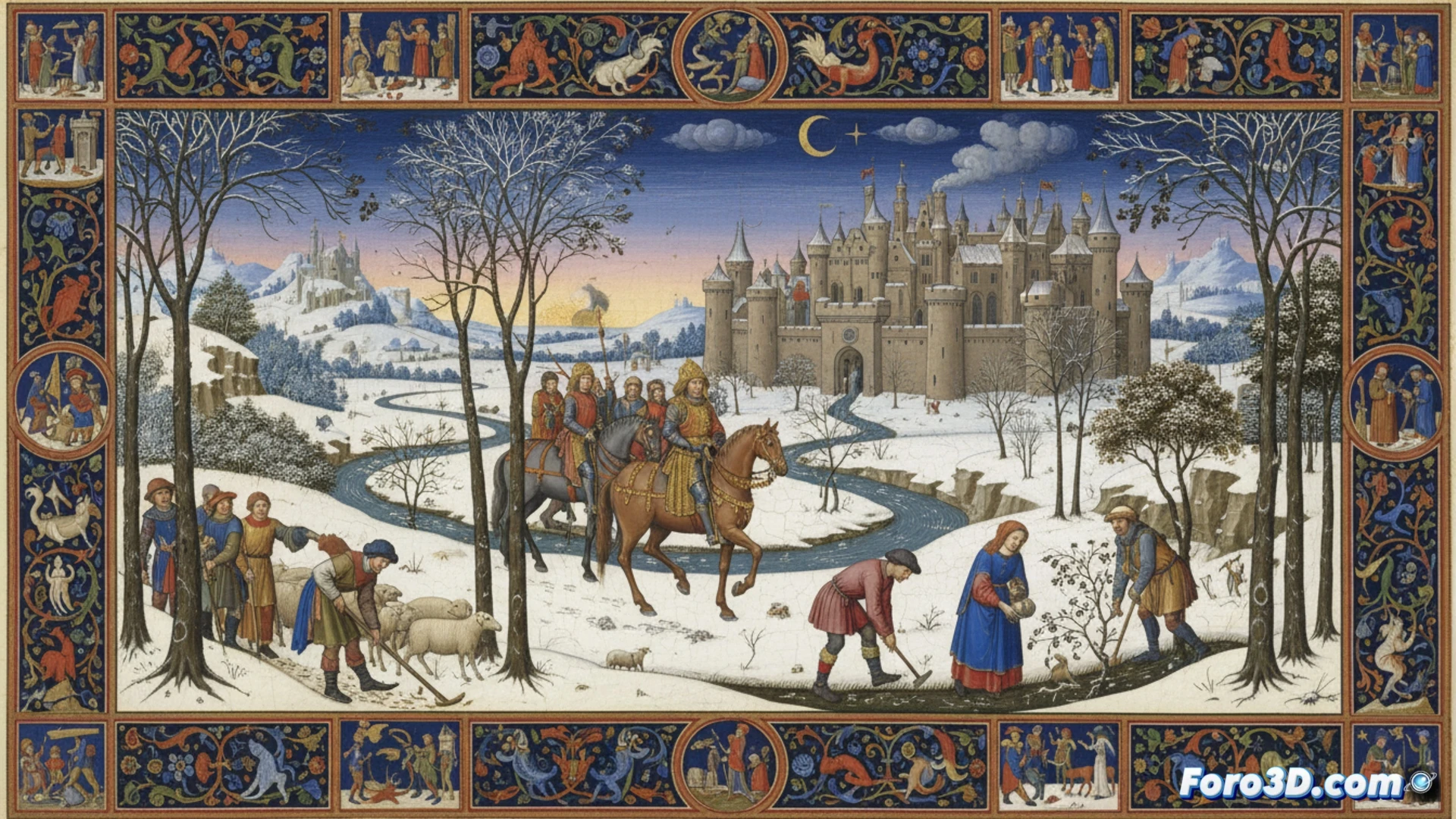
The Book of Hours of the Limbourg Brothers is a jewel of the 15th century, whose miniatures are an invaluable testimony of medieval life. Its extreme fragility and value demand restricted access, limiting its study and enjoyment. This is where 3D technology reveals itself as a revolutionary conservation tool. Through techniques such as high-resolution photogrammetry and laser scanning, it is possible to create an exact digital twin. This replica not only preserves the original from wear due to handling, but also democratizes access to a heritage that would otherwise remain hidden.
Technical process: from the physical page to the interactive model 🛠️
The process begins with non-contact data capture. High-precision planetary scanners or photogrammetric systems with controlled lighting are used to record each page. Hundreds of overlapping images are taken, which, processed with specialized software, generate a 3D mesh and a texture with extremely high chromatic fidelity. This model enables analyses impossible to the naked eye, such as examining the topography of the painting, identifying pigment layers through relief maps, or detecting micrographies and signs of incipient degradation. The 3D data also facilitate the creation of physical replicas through high-end 3D printing for exhibitions, protecting the original manuscript from the risks of lending.
Beyond conservation: dissemination and digital legacy 🌐
3D digitization transcends mere preservation to become a powerful dissemination tool. An interactive model allows any user, from anywhere, to explore the manuscript with a level of detail that not even a researcher in the room could achieve, bringing virtual lenses to every brushstroke. This digital legacy ensures the perpetuity of the work against potential catastrophes. In the end, 3D technology does not replace the experience of the original, but ensures that its beauty and knowledge survive and are shared with future generations in an accessible and enriching way.
How can 3D digitization and high-resolution photogrammetry overcome the challenges of capturing the volumes, gildings, and raised pictorial enrichments of the miniatures in the Book of Hours for their conservation and study?
(P.S.: Virtual restoration is like being a surgeon, but without bloodstains.)