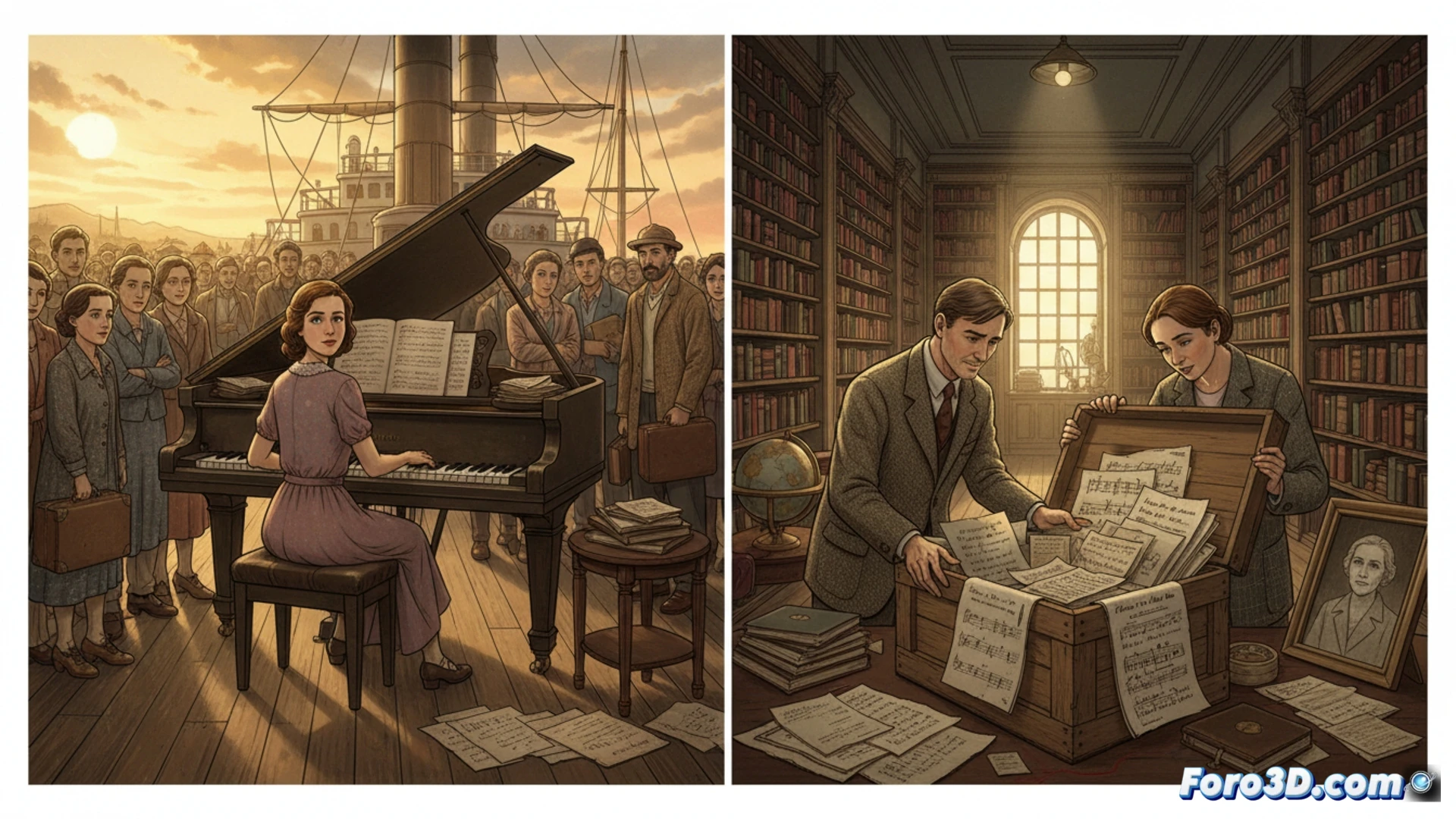
The National Library of Spain has incorporated the archive of the exiled composer and pianist Diana Pey Casado. This legacy, rescued in Chile, includes handwritten scores, drafts, and personal documents, fragile testimonies of an artistic career. Its physical preservation is a priority, but the true revolution for its conservation and universal access comes with three-dimensional digitization technologies, which allow safeguarding these cultural assets in an innovative and enduring way.
3D Scanning and Photogrammetry: Precision for Documentary Heritage 🎯
Techniques such as high-resolution 3D scanning and photogrammetry are key to digitizing this type of archives. It's not about simple flat photographs. These methods capture the geometry, texture, and even the deformations of the paper, folds, or pencil marks on drafts. For handwritten annotated scores, this is vital, as it preserves the gesturality and corrections of the author. The result is an exact digital model, accessible to researchers worldwide without risk of deterioration from handling, and serving as a perpetual backup copy against possible damage to the original.
Beyond the Archive: Perpetuating Immaterial Memory 🕊️
3D digitization transcends mere physical conservation. By capturing the unique materiality of each document, it also preserves the human trace of the creative process. In cases like that of Diana Pey, this allows studying her composition method, offering a new dimension to her legacy. This technology ensures that future generations not only know her final work, but can explore, in an interactive and respectful way, the intimate journey behind each sonata, connecting with cultural history in a previously impossible manner.
How does 3D digitization guarantee the preservation and future accessibility of fragile documents and objects in cultural heritage archives, such as Diana Pey's legacy?
(P.S.: Virtual restoration is like being a surgeon, but without blood stains.)