Madame de Sévigné's correspondence, a documentary treasure from the 17th century, faces the risks inherent in its fragility: degrading paper, fading inks, and handling that, however minimal, accelerates its deterioration. In the field of Conservation and Restoration, 3D technologies emerge as a revolutionary solution. They allow capturing not only the textual content, but the complete materiality of the object, creating an exact digital duplicate that preserves its physical essence for future generations.
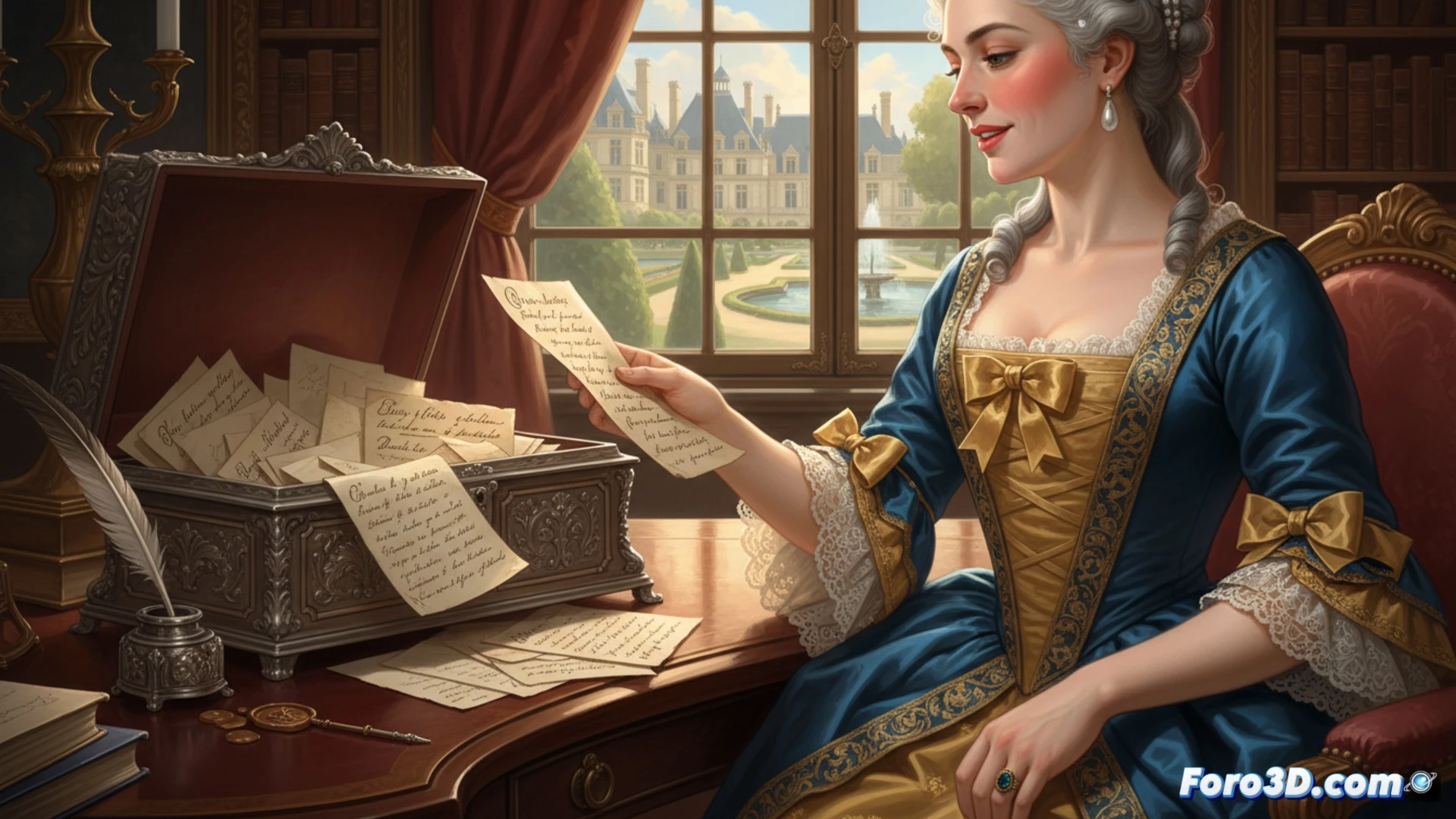
3D Capture Techniques for Fragile Documents: Photogrammetry and Scanning 🧐
For a flat document like a letter, high-resolution photogrammetry is an ideal and non-invasive technique. Through hundreds of overlapping photographs taken with controlled light, a 3D model with real texture is generated that reveals details impossible to appreciate with the naked eye: the depth of pen strokes, the fibrous texture of ancient paper, fold marks, or even corrections. Alternatively, structured light 3D scanners can document the surface topography with micrometric precision. These 3D files, in formats like OBJ or PLY, become globally accessible study tools, allowing calligraphy or degradation analysis without touching the original.
Beyond Archiving: Interactive Dissemination of Heritage 🚀
The true power of this digitization goes beyond mere storage. 3D models can be integrated into interactive web platforms or virtual reality experiences, allowing the public to manipulate a 1670 letter virtually, zoom in on the marquise's signature, or observe the wax seal. This democratization of access transforms restoration from an act of closure to one of opening, ensuring physical preservation through digital dissemination. Thus, 3D technology not only preserves the support, but revitalizes the human connection with the history it contains.
How can high-resolution 3D digitization overcome the limitations of flat photography to document and analyze physical deteriorations (folds, tears, watermarks) in 17th-century historical letters without needing to handle the original?
(P.S.: Virtual restoration is like being a surgeon, but without blood stains.)