The recent discovery of Mark Twain's manuscript drafts, riddled with cross-outs and annotations, offers a unique window into his creative mind. To preserve these fragile documents and study his writing process without risk, 3D technology emerges as the definitive tool. Advanced digitization allows preserving not only the text, but the complete materiality of the object, ensuring its legacy for future generations of researchers and the general public.
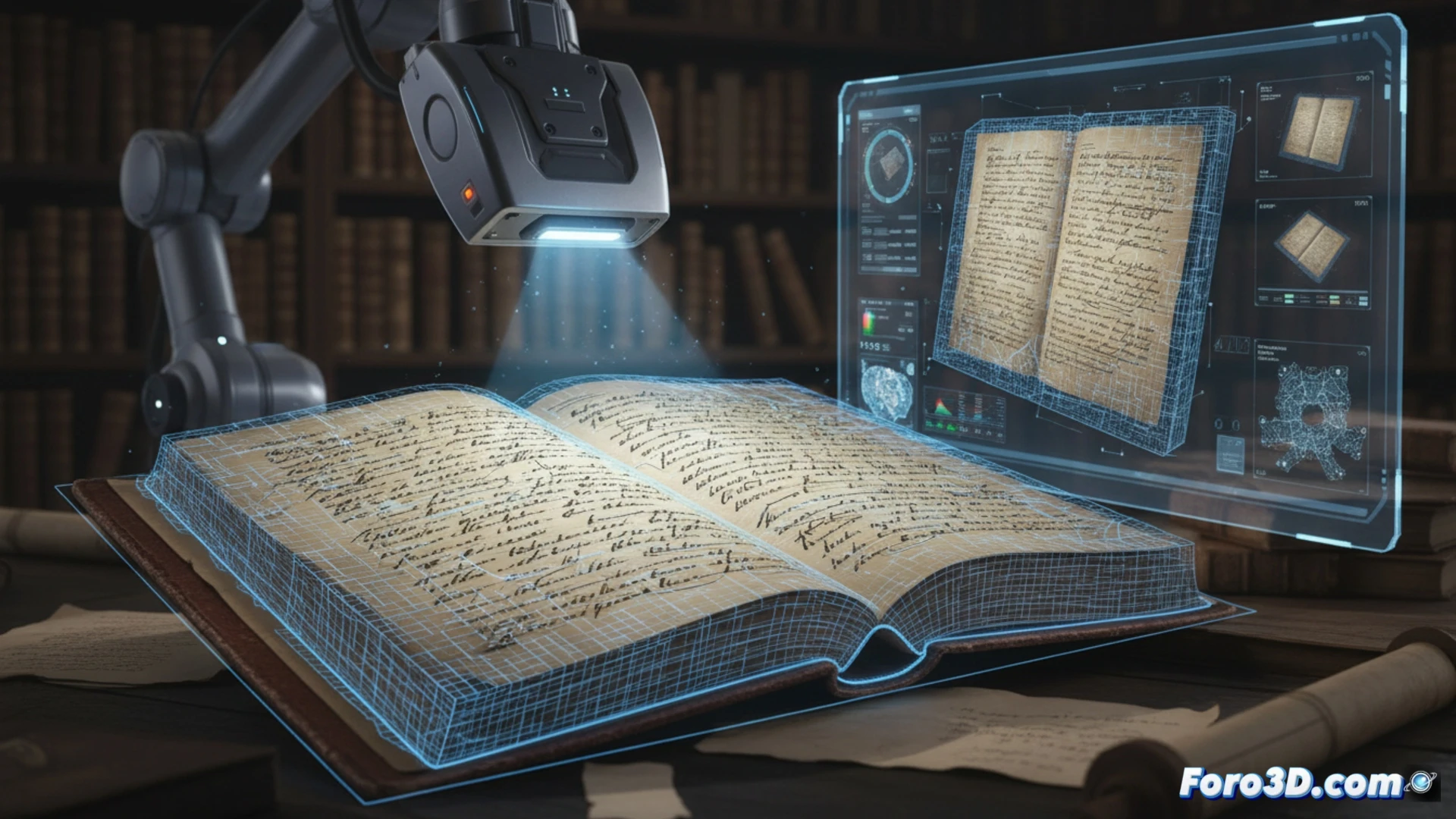
Capture and analysis techniques for historical documents 🔍
High-resolution photogrammetry and structured light 3D scanning are ideal for this purpose. These methods capture the microscopic topography of the page, recording every pen indentation, the texture of aged paper, and the superimposed layers of ink. The result is an interactive three-dimensional model where grazing light filters can be applied to enhance reliefs, or writing layers can be digitally isolated to follow the evolution of a paragraph. This goes beyond simple photography, enabling forensic analysis of the text's genesis and the physical support's conservation state without any contact.
Beyond preservation: access and new scholarship 🌐
The true revolution lies in accessibility. These 3D models can be published online, allowing anyone in the world to examine the manuscript as if they had it in front of them. For scholars, it opens a field of quantitative research on writing habits. The technology not only freezes the document in time, but transforms it into a dynamic artifact for education and outreach, democratizing access to a cultural heritage that was previously reserved for a few.
How can 3D digitization surpass traditional 2D methods to capture and analyze the complex layers of information (cross-outs, stroke pressure, paper texture) in historical manuscripts like Mark Twain's drafts?
(P.S.: Virtual restoration is like being a surgeon, but without bloodstains.)