Carla Pensa, 85 years old, has been crowned world champion of Genoese pesto made with a mortar in Genoa. Her victory, based on manual skill, texture, and harmony of flavors, celebrates a centuries-old know-how. In the niche of Nutrition and Food Education 3D, this news is the perfect starting point to explore how three-dimensional visualization technology can document and teach patrimonial culinary techniques, transforming Grandma Carla's art into a universal educational resource.
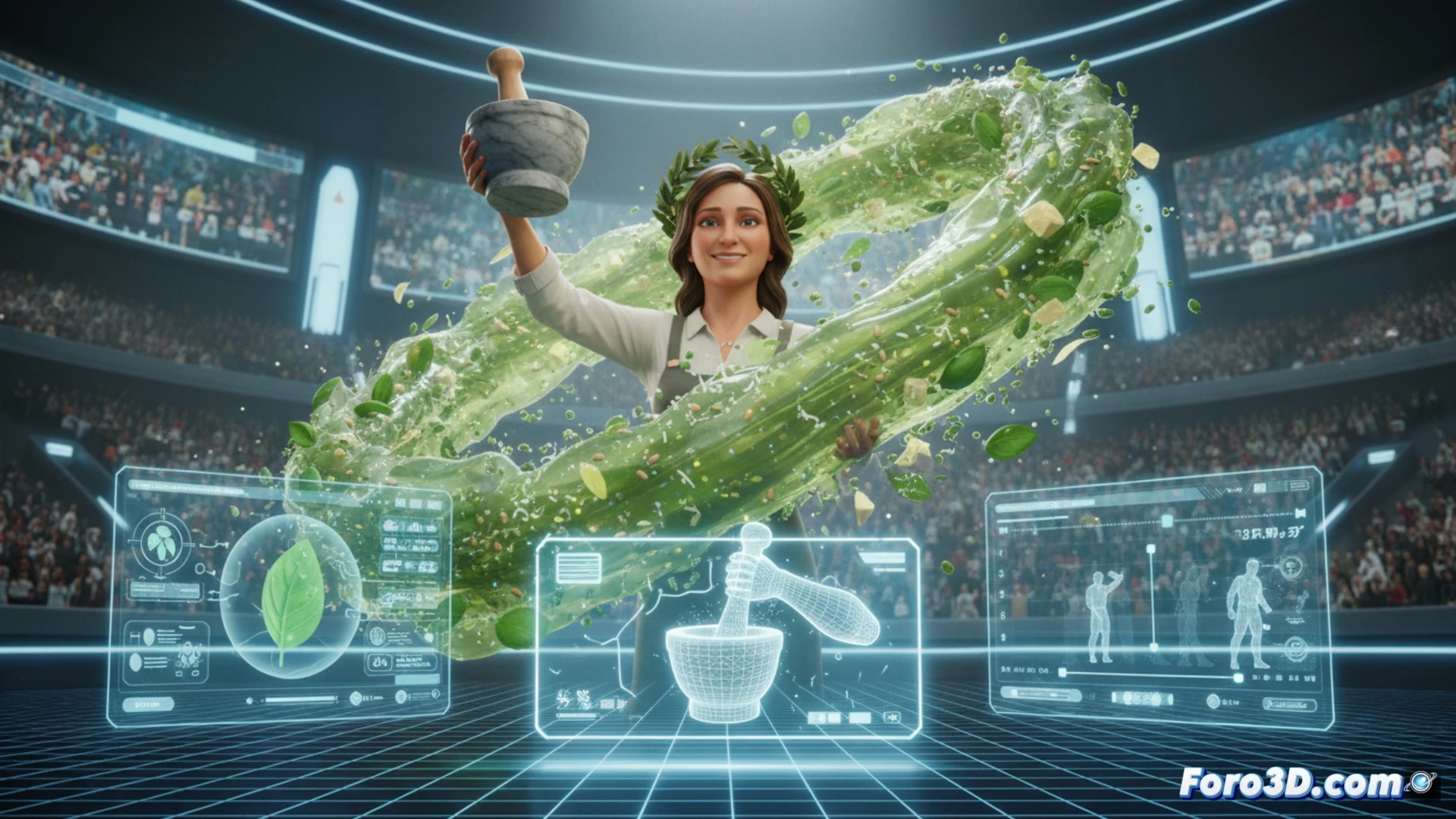
From hand to model: an educational 3D visualization project 🧑🏫
I propose an interactive 3D model that breaks down the winning process. This resource would allow isolating and studying each phase: the exact circular pressure of the arm, the angle of the pestle, the sequence of ingredient incorporation, and the physical transformation of the texture. We could visualize the breaking of basil cells to release their oils, the emulsion with olive oil, and the uniform distribution of garlic and pine nuts. The model would include layers of information on the function of each component in the final sensory profile, creating an immersive experience that goes beyond the written recipe.
Preserving intangible heritage with digital tools 🏺
This approach does not seek to replace the tactile experience, but to complement and preserve it. A well-documented 3D model becomes a permanent archive of a technique that depends on oral transmission and practice. In an educational context, it allows nutrition or gastronomy students to understand the science behind the tradition. Thus, 3D technology allies with manual wisdom, ensuring that the legacy of champions like Carla endures and is taught to new generations in an innovative way.
How could we model Carla Pensa's pesto texture and artisanal process in 3D to preserve and teach her champion technique to new generations?
(P.S.: simulating a balanced diet in 3D is like promising that this year we will go to the gym)