Biochemist Paula Aristizabal has developed a revolutionary technique that uses 3D biofabrication to create up to 300 functional replicas of a breast tumor from a single patient sample. These 3D tumor organoids allow testing the efficacy of dozens of drugs simultaneously and in just days, a process that takes months in traditional trials. This advance represents a crucial leap toward precision oncology, where identifying the most effective treatment for each person can make the difference between life and death. 🔬
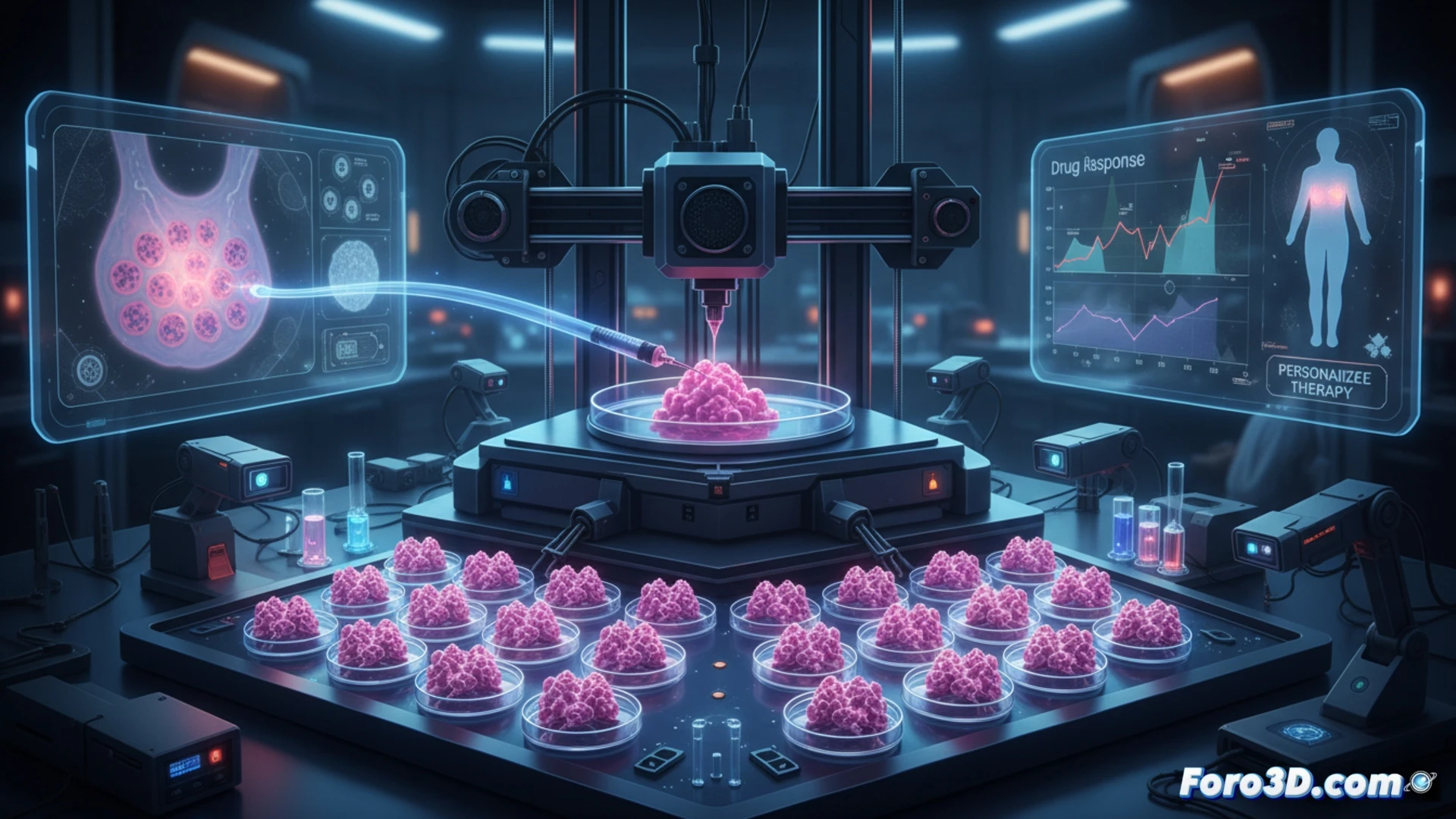
From real tissue to 3D model: a workflow for drug testing 🧫
The technique focuses on creating scaffolds or 3D microstructures that replicate the tumor microenvironment. From a biopsy, the patient's cells are cultured and combined with special biomaterials to be arranged in these three-dimensional architectures using bioprinting or advanced molding methods. The result is hundreds of identical organoids that preserve the heterogeneity and genetic characteristics of the original tumor. This army of replicas enables massive parallel screenings, exposing each group to a different therapeutic cocktail and analyzing their response quickly and systematically, something impossible with traditional flat cell culture.
Beyond the anatomical model: toward a living test system ⚙️
This work goes beyond creating static 3D anatomical models for surgical planning. It represents the evolution toward living and dynamic systems that mimic the physiology of the disease. Just as 3D printing of organs for surgical practice improved precision, bioprinting of tumor organoids perfects the therapeutic strategy. It is a firm step in personalized medicine, where 3D technology not only represents the form but also the biological function, radically shortening the path to the most appropriate treatment for each breast cancer patient.
What segmentation software do you recommend for this medical data?