A team from the Bauhaus University of Weimar presents an advance in regenerative medicine: a 3D bioprinting method to create artificial elastic cartilage. The technique is designed for auricular reconstruction in cases of microtia or trauma. It combines precision 3D printing with traditional design principles, seeking to overcome the limitations of current surgeries with customized and biocompatible implants.
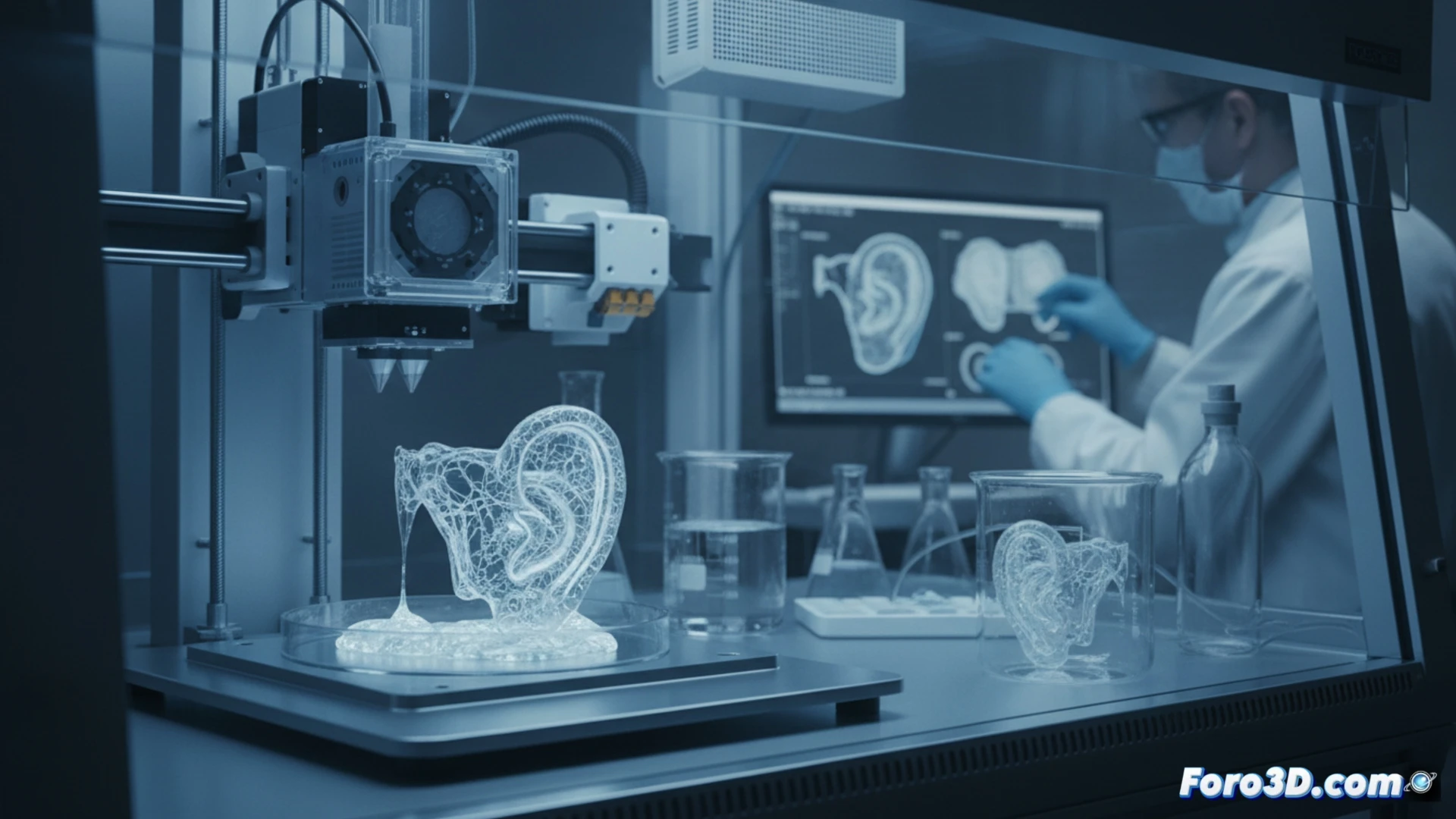
The technical process: from bio-ink to functional tissue 🔬
The core of the method is a specialized bio-ink loaded with chondrocytes, the cells that generate cartilage. This ink is deposited layer by layer, building a scaffold that replicates the complex anatomy of a human ear. After printing, the structure is subjected to culture under controlled laboratory conditions. This period allows the cells to grow, organize, and mature, transforming the printed scaffold into cartilaginous tissue with the required flexibility and mechanical properties.
The end of the rib cartilage era? ⚙️
This could change the game for plastic surgeons. Traditionally, reconstructing an ear involved sculpting cartilage extracted from the patient's ribs, a laborious process. Now, the proposal is to print it on demand. One can almost imagine the options catalog: Do you prefer the standard model or the version with greater rumor-catching capacity? That said, we'll have to see how the body reacts to an implant that, technically, was born in a printer.