Mariano García's victory in the 1,500 meters at the Torun World Championships was an exercise in strategy and mental strength. His decision to launch a long attack, risking the podium to put on a show, was based on a key physical sensation: the strength that increased with each lap. Analyzing this race from 3D technology allows us to go beyond the result and break down the elements that converged in that gold, offering a unique perspective on elite performance.
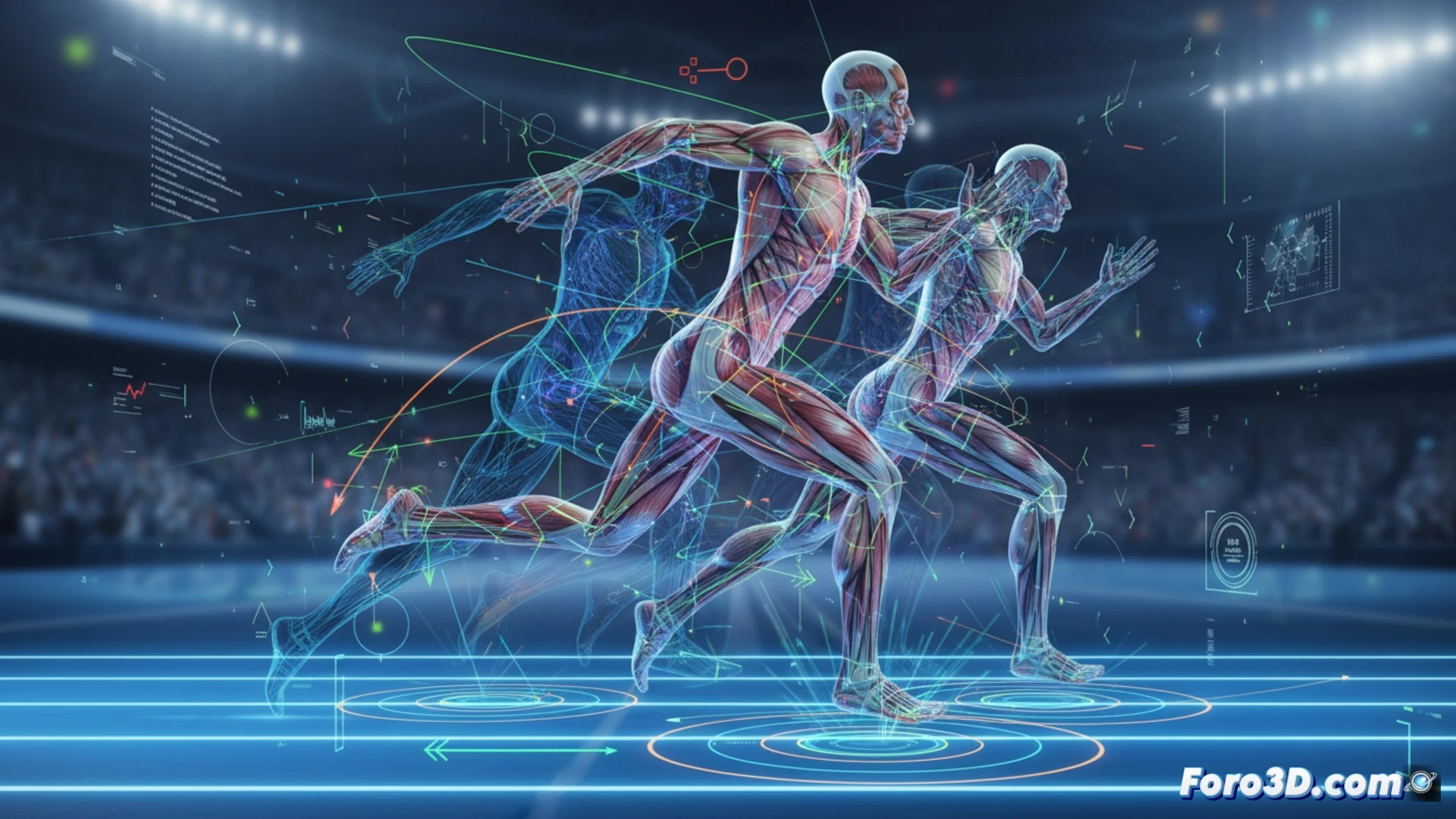
3D Simulation and Analysis of the Race Strategy 🏃♂️
Using 3D simulation software, we can reconstruct García's tactic. By modeling the track and the athletes, the critical moment of his prolonged attack is visualized, calculating the energy expended and the speed maintained in that phase. The technology allows comparing his choice with a more conservative strategy, simulating different scenarios to quantify the risk he took. Additionally, the 3D biomechanical analysis of his stride in the final laps could reveal the efficiency of his technique under fatigue, explaining how he managed that increase in strength that he perceived and which was key to sustaining the advantage.
Beyond the Stopwatch: Visualizing the Effort 📊
The true value of this technical analysis lies in making the intangible tangible. An animated 3D model of García's effort, with layers of data on energy consumption or muscle stress, translates his feat into a comprehensible visual language. This not only enriches the experience for fans but also points to the future of training: using these reconstructions to optimize tactics and preparation. His triumph, dedicated to study and routine, is a perfect argument for integrating these tools and delving deeper into sports science.
How can 3D biomechanical analysis quantify the efficiency and tactical advantage of the long attack in Mariano García's victory in the 1,500 meters?
(P.S.: VAR in 3D: now with replays from angles that didn't even exist)