On March 30, 2026, Turkish air defenses neutralized a ballistic missile over the eastern Mediterranean, in the fourth incident of this type since the start of the conflict. This event, confirmed by Turkey and NATO, offers an ideal case study for a spatial and technical analysis in 3D. We will digitally reconstruct the trajectory, the interception zone, and the defensive deployment, visualizing the operational complexity in a regional escalation scenario.
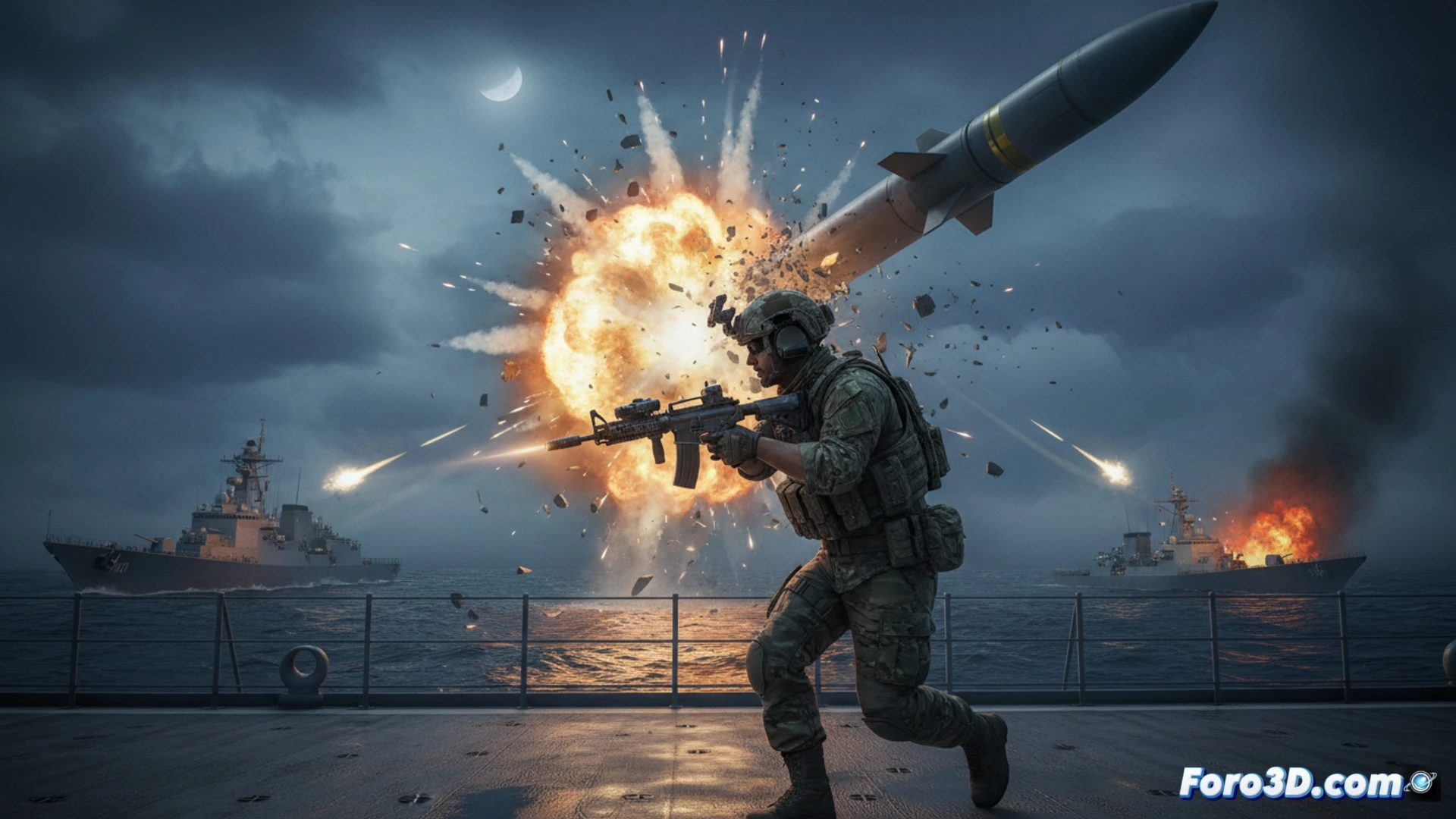
Technical Reconstruction and Simulation of the Interception 🎯
The 3D reconstruction starts from a hypothetical launch point in Iranian territory, modeling a ballistic trajectory that would cross the airspace of neighboring nations before its final target. The focus is on the interception zone south of Turkey. Through simulation, the range of Turkish air defense systems, possibly S-400 or Patriot systems, deployed on the Mediterranean coast is visualized. The model allows analysis of reaction time, the optimal interception point, and the fragmentation of the threat over the sea, minimizing collateral damage.
Risk Cartography and Technological Escalation 🗺️
This incident, visualized in 3D, transcends the isolated event. The cartographic modeling highlights a wide risk zone where international air and maritime traffic converge. The repetition of these events suggests a normalization of shows of force in critical air corridors. The technical visualization underscores how territorial defense now depends on complex detection and denial-of-space systems, marking an escalation where deterrence is exercised through demonstrated interception capability.
How can the trajectory and interception point of a ballistic missile be reconstructed in 3D to validate official statements about a military incident?
(P.S.: At Foro3D, we document war damage with the same precision as our meshes: millimetric)