Iñigo Pérez, coach of Rayo Vallecano, faces the match at the Camp Nou with a clear message: it's not a miracle, it's a challenge that demands perfection. To achieve that excellence, modern teams no longer rely solely on 2D videos. 3D technology has become an indispensable ally, allowing deep tactical analysis and preparation that transcends the conventional, offering the analytical advantage the coach seeks to counter an elite rival.
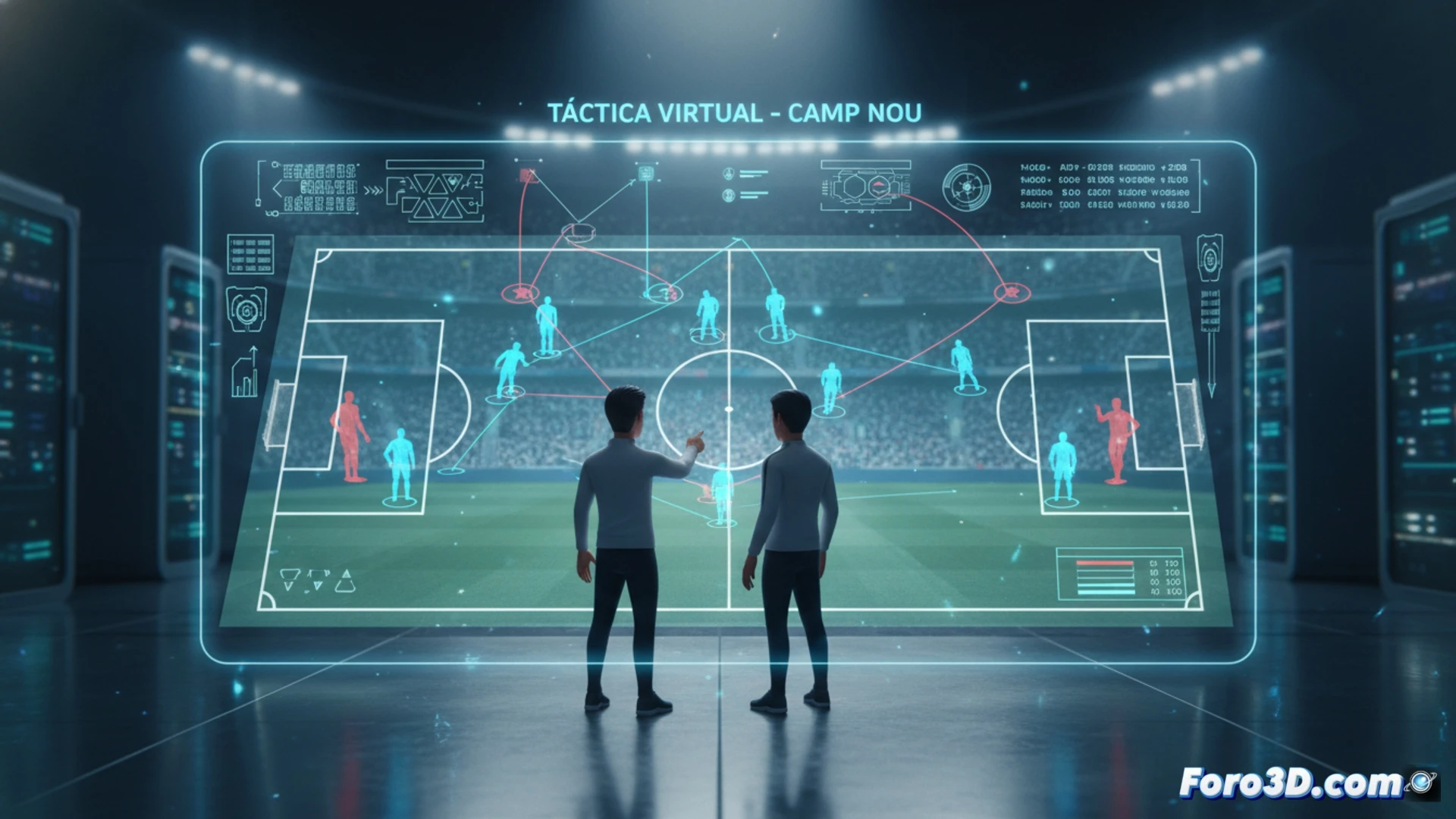
From the whiteboard to the interactive 3D model: simulation and competitive advantage 🧠
3D modeling and simulation tools allow recreating the field and players as dynamic entities. Analysts can program and visualize Barcelona's defensive transitions under Flick, or simulate thousands of variants of a set-piece play to find the weak point. Virtual reality takes this to the extreme, allowing footballers to experience movements and decisions in a virtual Camp Nou before stepping onto it. This immersive training strengthens tactical confidence and eliminates the feeling of inferiority, as the scenario and the rival's responses cease to be an unknown.
Beyond tactics: mentality in a simulated environment 💡
Mental preparation is crucial, as Pérez points out. 3D technology contributes here too. By familiarizing players with every corner of the rival stadium and possible pressure situations in a controlled environment, anxiety is reduced and excitement is fostered. Visualizing success in a realistic simulation sets a cognitive precedent. Thus, the pursuit of perfection on the field is first trained in a digital space, where discipline and excitement are reinforced with the certainty provided by exhaustive analysis.
How can 3D analysis of movements and positions unlock the tactical keys to neutralize a team in a stadium like the Camp Nou?
(P.S.: reconstructing a goal in 3D is easy, the hard part is making it not look like it was scored with the leg of a Lego doll)