The 2026 Formula 1 season presents an unprecedented panorama for Red Bull. Despite having two balanced cars and a promising Isack Hadjar performing at the level of Max Verstappen, the team has fallen to a worrying fourth force. The initial analysis points to intrinsic limitations of the car, a problem that 3D simulation and modeling tools are helping to diagnose with millimeter precision, shifting the blame away from the drivers and centering it on the technique.
Digital twins and CFD: diagnosing the performance gap 🧠
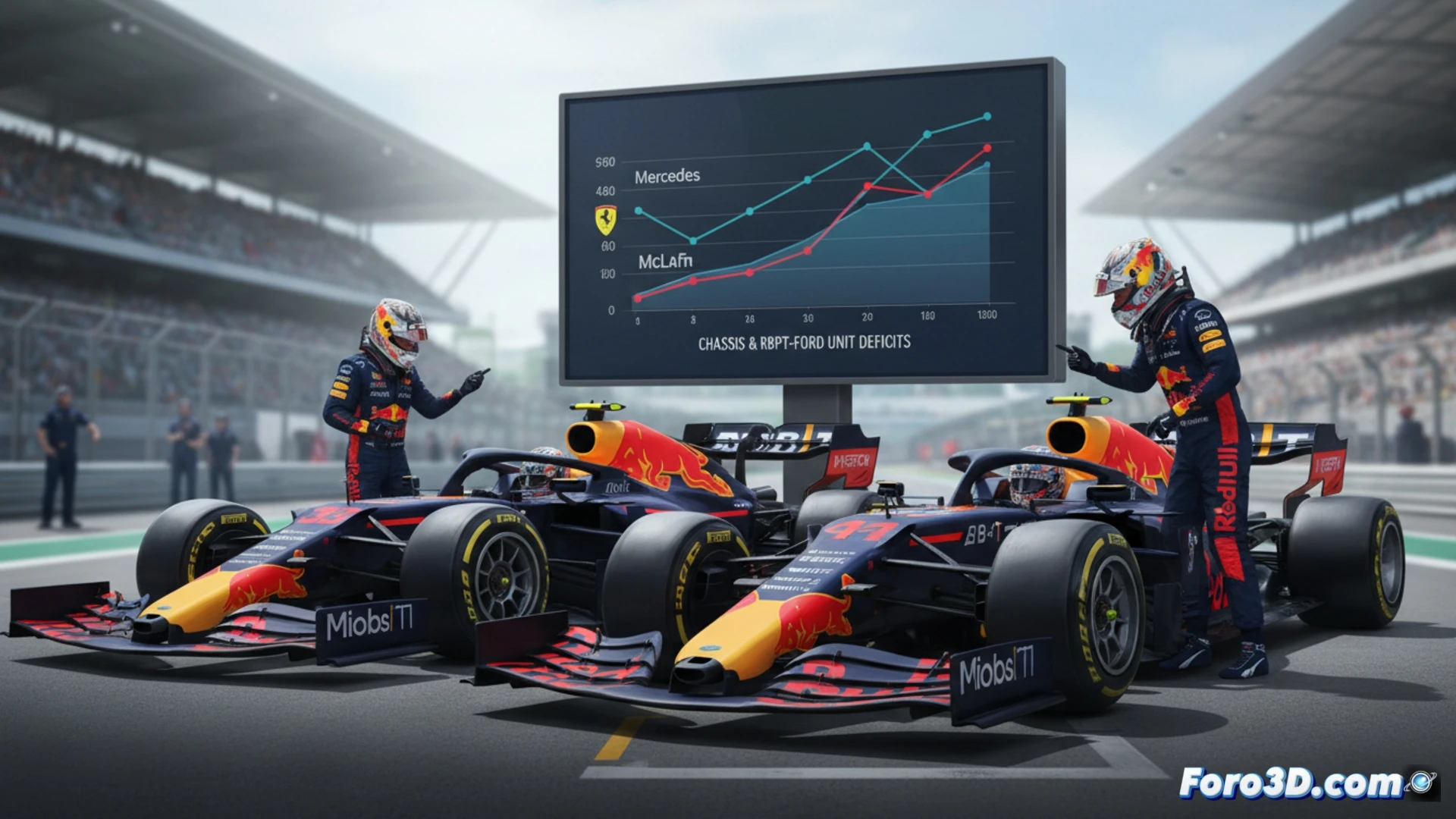
The key to understanding the situation lies in comparative analysis using digital twins. Engineers can recreate rival cars (Mercedes, Ferrari, McLaren) in 3D from photogrammetric data and compare them with the virtual model of the RB22. This technique allows isolating specific deficiencies. Computational fluid dynamics (CFD) in 3D environments reveals losses of aerodynamic load in critical chassis areas. Simultaneously, the 3D visualization of the RBPT-Ford power unit, compared to leading models, can show inefficiencies in packaging or thermal management, limiting energy delivery. These simulations confirm that, even with Verstappen's talent, the car lacks the physical potential to fight for victories.
Simulation as the only path to recovery 💻
In this context, 3D technology becomes the fundamental tool for the comeback. Red Bull must massively employ virtual simulations to test radical chassis concepts and engine solutions within the regulations before taking them to the track. Every improvement must first be validated in the digital world, comparing it with the twins of the leading cars. The ability to iterate quickly in 3D environments will define whether Red Bull can close the gap or stagnate in the midfield, far from its original ambitions.
How can 3D aerodynamic analysis and computational fluid dynamics (CFD) explain the technical deficiencies of the Red Bull F1 car for the 2026 season?
(P.S.: reconstructing a goal in 3D is easy, the hard part is making it not look like it was scored with the leg of a Lego doll)