Villarreal's dramatic draw at Mendizorroza left two plays for the memory: Rafa Marín's unfortunate own goal and Nicolas Pépé's powerful left-footed shot in stoppage time. Beyond the result, these actions are the perfect candidate for analysis using 3D technology. Reconstructing these moments with millimeter precision would allow dissecting technical, tactical, and biomechanical factors impossible to appreciate at real speed, transforming the report into an advanced study tool.
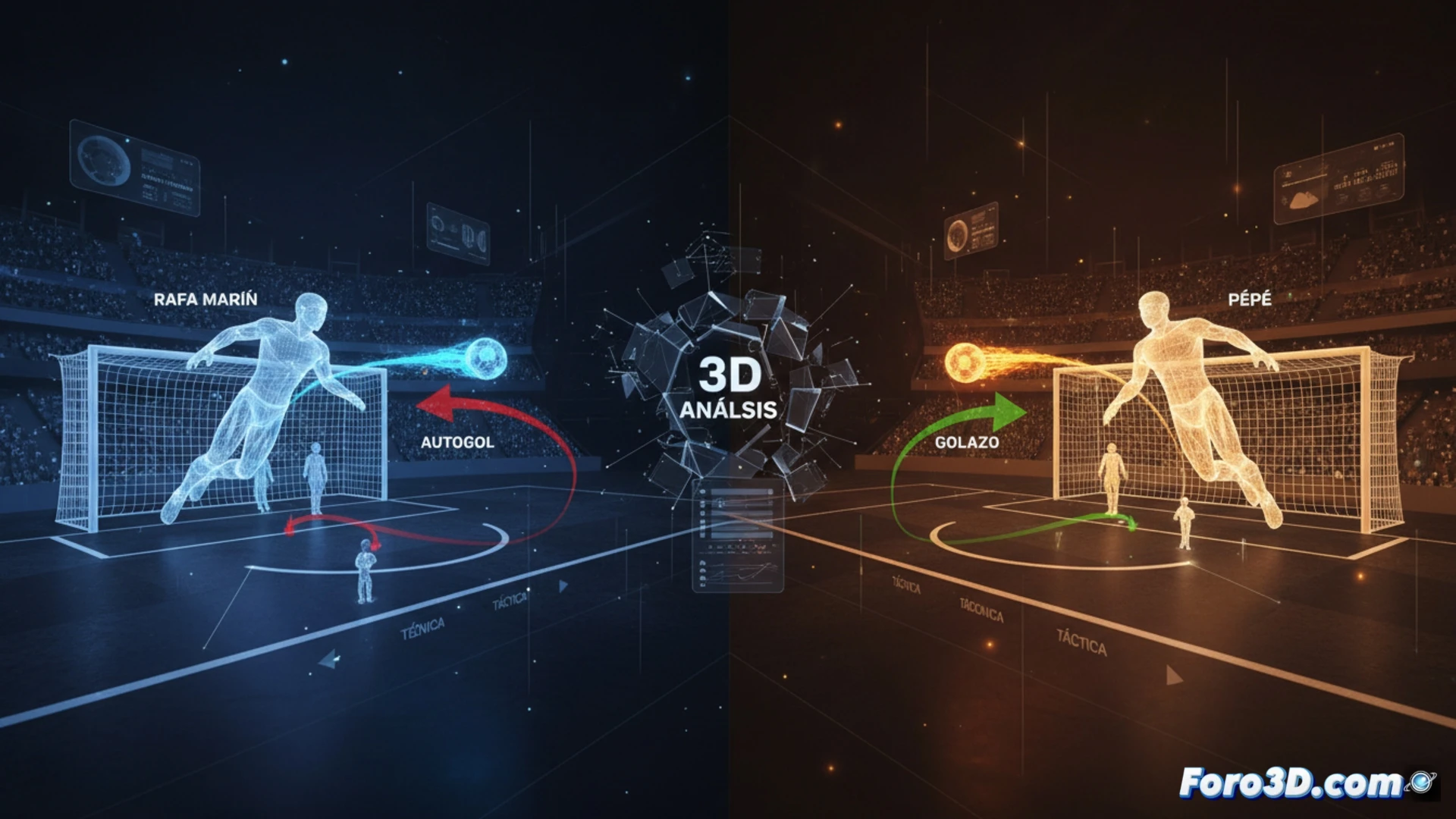
3D Reconstruction for Tactical and Technical Analysis 🧠
Imagine a 3D model of the stadium with all players positioned using tracking data. For the own goal, we could analyze the ball's trajectory, Marín's body angle, and the pressure from Alavés attackers in a frozen environment and from any perspective. For Pépé's goal, the technology would allow measuring the ball's rotation speed, shot power, and the exact curve that took it to the top corner. A digital twin of the player would facilitate a biomechanical study of his posture and movement, invaluable for coaches and physical trainers.
Beyond Replay: Simulation and Training ⚙️
The application of these technologies goes beyond post-match analysis. With the created 3D models, alternative simulations could be run: What if a defender closed a different angle? Or if Pépé opted for a pass? These tools are revolutionary for the team's tactical training and preparation for future opponents. Integrating performance data into these visual models offers a layer of strategic understanding that brings football closer to science.
How can 3D analysis of trajectories and biomechanics explain the technical difference between an accidental own goal and an intentional wonder goal in similar plays?
(P.S.: VAR in 3D: now with replays from angles that didn't even exist)